
AI financial stability risk tops Fed survey
AI is now the top worry in the Federal Reserve's latest survey of financial stability risks, with 87 percent of contacts naming it a salient risk.
by Trends DeskNovember 19, 20264 min read
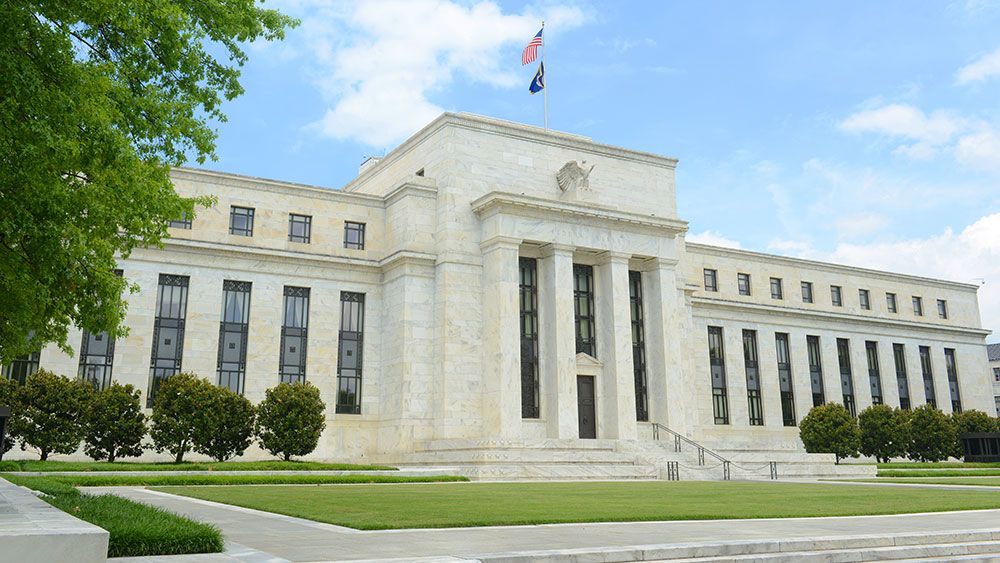
Risks tied to artificial intelligence surged to the top of worries about the financial system in the Federal Reserve's latest survey, with 87 percent of contacts naming AI a salient risk. The AI financial stability risk now ranks ahead of every other concern in the central bank's semi-annual Financial Stability Report, released on Friday. Just 50 percent of those surveyed cited AI as a risk in the May version of the survey.
The survey was conducted in September and October, before chief executive Jensen Huang stepped down at chipmaker Nvidia on Thursday. It also came before the results of recent midterm elections, in which rising public concern about AI was a central issue. The Federal Reserve survey asked market contacts to name the risks they saw as most pressing for the financial system over the coming year, and the AI financial stability risk was the answer that came back most often.
The second most cited concern was a broad correction in risk assets, named by 52 percent of those surveyed. Cyberattacks were flagged by 43 percent, while 48 percent pointed to higher long-term interest rates and 43 percent cited fiscal debt sustainability. The specific fear was a market correction driven by an AI earnings slowdown.
AI financial stability risk and the debt behind it
The report devoted a large section to the rapid rise in borrowing tied to data centers and other advanced computing infrastructure. Advanced computing-related debt issuance had reached $680 billion by October 2026, a fivefold increase on debt issued in all of 2023. AI debt now accounts for nearly a third of all nonfinancial investment-grade corporate debt issuance, after amounting to less than 6 percent three years ago.
Long-term contracts, leases and guarantees let hyperscalers and other large firms support financing by smaller third parties, while graphics card designers and hyperscalers often add equity to the deals. Debt, guarantees and leases not yet started on this infrastructure could exceed $3 trillion. The AI financial stability risk in these arrangements is that losses could land on firms whose exposure is far larger than their balance sheets show.
The Fed compared the spending rush to the broadband telecom investment cycle of the late 1990s, and said the current cycle may soon pass that era in size. It described the pattern as circular financing, in which the largest firms can absorb losses in a downturn, limiting the damage to the wider system. The same links could also leave those firms with much larger exposure than their reported liabilities suggest. The AI financial stability risk sits in those links, since a shock in one part of the chain can travel to the others. The report said the complex links among firms in the data center buildout, public credit markets, private lenders and special purpose financing vehicles create vulnerabilities that need close monitoring.
AI financial stability risk for markets and lenders
Asset valuations across a range of classes stayed high, helped in part by investor enthusiasm for AI. Investment in the AI sector has been a significant driver of US economic growth this year, the report said. An unexpected downturn in corporate earnings could prompt a market decline, tighter credit and reduced investment. A market correction of that kind would test lenders and investors at the same time.
Leverage in parts of the financial sector adds to the concern. The Fed said leverage among hedge funds, and in particular the largest firms, remains at the highest levels recorded since it began gathering the data in 2013. AI debt sits at the centre of that picture, since much of the new borrowing funds the same data center and computing buildout. The AI financial stability risk is not one weak link but several at once: high valuations, heavy borrowing and the chance that earnings fall short of what investors expect.
The report did not call for new rules. It presented the survey as a snapshot of what market contacts see as the main threats, and the AI financial stability risk was the answer that came back most often. The Federal Reserve survey will be repeated in six months, when the same contacts will be asked whether the worries have eased or grown. A market correction remains the second concern, and the AI financial stability risk will be judged then against what actually happened to earnings, borrowing and share prices.
Related articles in Finance
View all Finance →Browse more stories in Finance.