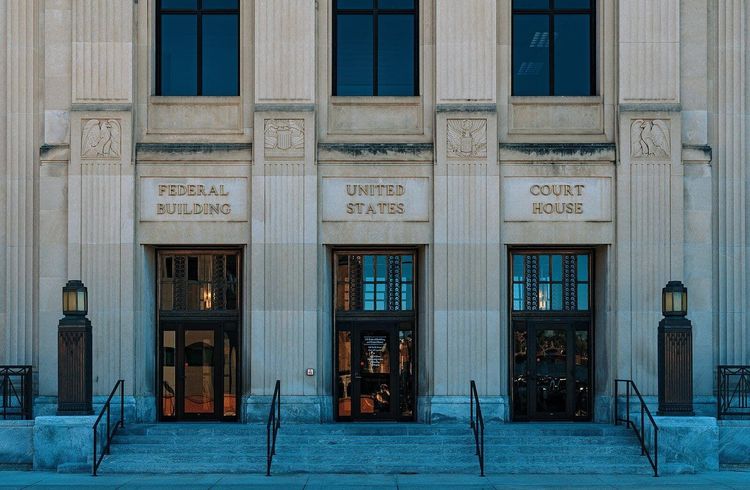
Arizona law school wins first non-ABA accreditation
Arizona law school approval: the state approved its first non-ABA accredited law school, a landmark for legal education reform.
by Trends DeskOctober 18, 20263 min read

Arizona has approved the state's first non-ABA accredited law school, a landmark decision that breaks the American Bar Association's long-standing hold over legal education in the state. The approval, reported by Reuters, opens the door for a new model of training lawyers outside the accreditation system that has governed the profession for generations. The Arizona law school decision could reshape how attorneys are educated, licensed and priced into the market, and it has reignited the ABA accreditation debate.
For more than a century, ABA accreditation has been the gatekeeper of the legal profession. Nearly every state requires a degree from an ABA-accredited school to sit for the bar exam, giving the association enormous influence over curriculum, faculty hiring and facilities. Arizona's move to approve a non-accredited school challenges that monopoly directly, in what supporters call a long-overdue legal education reform.
Supporters argue that ABA standards, while well-intentioned, have inflated law school tuition costs and limited innovation. Tuition has soared for decades, saddling graduates with debt that shapes their career choices and keeps legal services expensive. The Arizona law school approval is premised on the idea that alternative paths can produce competent lawyers at lower cost.
Arizona law school approval breaks ABA monopoly
The significance of the Arizona law school decision lies less in a single institution than in the precedent it sets. If Arizona's experiment succeeds, other states may follow, gradually eroding the ABA's role as the profession's sole accreditor. Legal education reformers have pushed for such competition for years, arguing that a single standard-setter cannot serve a diverse profession, and the ABA accreditation debate is now playing out in statehouses, not just faculty lounges.
The ABA is unlikely to yield quietly. The association has defended its standards as essential consumer protection, warning that unaccredited schools could graduate underprepared lawyers. The Arizona law school will operate under state oversight instead, and its outcomes, bar passage rates, employment figures and graduate debt, will be scrutinized as a referendum on the alternative model and on Arizona bar admission standards.
For prospective students, the new school offers a potentially cheaper route into the profession, though with a caveat on mobility. Lawyers licensed through a non-ABA school could face hurdles seeking Arizona bar admission reciprocity in states that still require accredited degrees, a trade-off applicants must weigh against lower law school tuition costs.
What the Arizona law school means for legal education
Legal education is ripe for disruption. Applications have fluctuated, costs keep rising and diversity efforts have been hampered by the price of entry. The Arizona law school approval gives reformers a live experiment: can a school operating outside ABA rules deliver quality training and practice-ready graduates affordably? The answer will shape the ABA accreditation debate for years.
Innovation in curriculum is the most promising frontier. Freed from certain ABA requirements, the school could emphasize practical skills, technology and alternative fee structures that traditional schools have been slow to adopt. If employers embrace its graduates, the Arizona law school could pressure accredited schools to rethink their own models and confront law school tuition costs directly.
Challenges facing Arizona's non-ABA law school
Skepticism remains warranted. Past experiments with unaccredited legal education have produced uneven results, and the burden of proof sits with the new school. Bar passage will be the first and most public test; sustained low passage rates would vindicate the ABA's warnings and chill similar legal education reform efforts elsewhere.
Student protection is the deeper concern. Law students invest years and fortunes in their degrees, and a failed experiment leaves them holding the risk. Arizona regulators will need robust oversight to ensure the school delivers on its promises, including transparent reporting on outcomes. For now, Arizona has placed a bold bet on competition, and the Arizona law school decision will be judged by its graduates, in courtrooms and on bar exam score sheets, for years to come.