Campaign finance watchdog sits out US midterms
The US campaign finance watchdog is sitting out the midterms, raising questions about oversight of election spending in the 2026 contests.
by Trends DeskOctober 18, 20263 min read
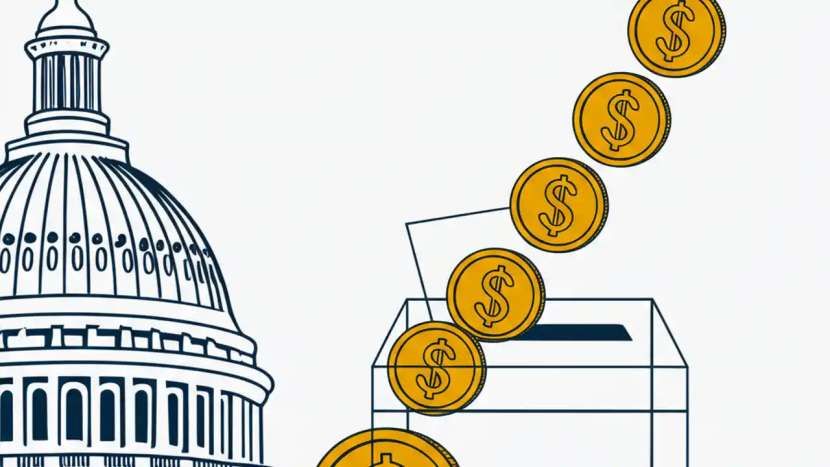
The nation's campaign finance watchdog will effectively sit out the midterm elections, the Washington Post reported, raising questions about who will police the flow of money into the 2026 contests. The development leaves the regulatory body that oversees US midterms campaign money on the sidelines at precisely the moment spending typically surges. What the absence of an active campaign finance watchdog means for candidates, donors and voters is now the subject of growing debate.
What the campaign finance watchdog normally does
The federal campaign finance watchdog — the Federal Election Commission (FEC) — is charged with enforcing the laws that govern money in American politics. Its core jobs are disclosure, ensuring the public can see who gives and who spends, and enforcement of contribution limits that cap how much individuals and groups may donate to candidates. It also issues advisory opinions that campaigns rely on to stay within the law. When the campaign finance watchdog functions normally, it is the backstop that keeps the system transparent.
Oversight matters most when the stakes are highest. US midterms draw enormous sums — House and Senate races, along with ballot measures and party committees, attract billions in election spending across the cycle. With the campaign finance watchdog on the sidelines, the task of flagging potential violations falls more heavily on rival campaigns, journalists and outside transparency groups, none of which carry the FEC's enforcement powers.
Why a sidelined campaign finance watchdog matters
The practical consequences cut several ways. Disclosure deadlines still exist on paper, but without an active enforcer, late or incomplete filings may face little timely scrutiny. Candidates pushing the boundaries of coordination rules — the lines separating campaigns from nominally independent spenders — may calculate that the risk of punishment has fallen. And donors testing novel vehicles for election spending could move faster than the system built to track them.
Supporters of a lighter regulatory touch argue the change simply reflects the reality that campaign finance law has long been contested terrain, with the commission frequently deadlocked along partisan lines. Critics counter that an absent watchdog invites a race to the bottom, where the campaigns willing to stretch the rules gain an edge over those that comply. Both sides agree on one thing: the 2026 US midterms will be a live experiment in what American elections look like with the referee off the field.
What happens next
Reform advocates are likely to press Congress to restore the body's capacity, while others will argue the episode proves the system needs structural change rather than a return to the status quo. Courts, too, may play a larger role, as disputes that once went through the commission end up in litigation. Whatever the outcome, the amount of election spending in the cycle is unlikely to shrink; the question is how much of it the public will be able to see, and how quickly.
For voters, the takeaway is straightforward: follow the money yourself. Disclosure databases remain public even when the campaign finance watchdog is not actively policing them, and independent trackers continue to publish their analyses. The 2026 elections will test whether transparency can survive without its traditional guardian — and whether anyone in Washington decides the guardian is worth bringing back. Until then, every dollar spent in the dark is a question voters cannot fully answer.