
Colleges condemn plan to end tax exemptions
Higher education groups condemned a Treasury and IRS proposal that could strip private nonprofit colleges of tax exempt status over discrimination findings.
by Trends DeskNovember 19, 20264 min read
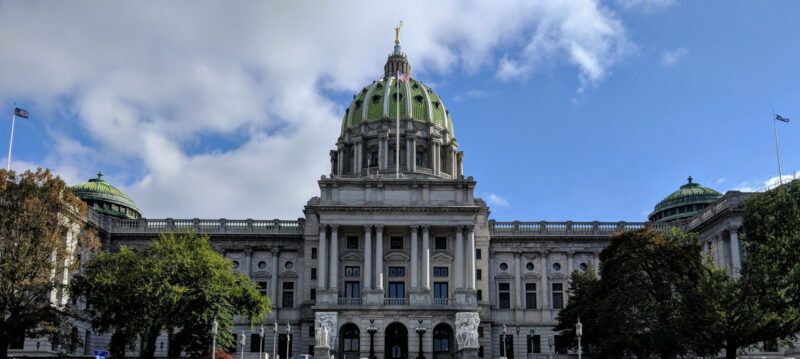
Higher education advocacy groups and institutions condemned a proposed rule that threatens private, nonprofit institutions' tax-exempt status. The tax exemption proposal covers private colleges that hold nonprofit status. If enacted, the Treasury Department and Internal Revenue Service proposal would allow officials to revoke that exemption if they determine a private college or university has discriminated based on race or ethnicity.
Colleges argued in public comments on the plan that it is unclear and unlawful, and they criticised the agency's sweeping language in explaining the rule's intent. The Internal Revenue Service said its regulation would mean "all forms of racial discrimination in education, regardless of the intent behind or the legality of such discrimination (for example, where such discrimination is defended as serving remedial or diversity-related objectives), are against a fundamental public policy of the United States and thus preclude a school's exemption from Federal income tax."
Losing the federal income tax exemption could make donors hesitate to give to universities because they would not be able to write contributions off on their taxes. The change could also "severely undermine institutional financial stability," according to the National Association of College and University Business Officers.
What the tax exemption proposal covers
The Internal Revenue Service specified that the rule would consider "race-based action for the purpose of ameliorating societal discrimination" or "past racial discrimination" to be forms of further discrimination, costing universities their tax exemption. The rule would prohibit any racial, ethnic or national origin based discrimination "in the administration of any educational policy, admissions policy, scholarship and loan program, athletic program, or other school-administered or school-supported program."
American Council on Education President Ted Mitchell submitted a roughly 15-page comment on behalf of his and 40 other higher groups, including the National Association of Independent Colleges and Universities and the American Association of University Professors. Mitchell wrote that the tax exemption proposal leaves it entirely to the Internal Revenue Service's discretion to decide what conduct is sanctionable.
"It is unclear, for example, whether contentious or even offensive classroom instructions on race or history topics could fall into the IRS's broad definition of 'discrimination,'" Mitchell wrote. ## The Bob Jones precedent behind the tax exemption plan
To back up its proposal, the Internal Revenue Service cited the 1983 case Bob Jones University v. United States. In that 8-to-1 decision, the Supreme Court upheld the Internal Revenue Service's revocation of the conservative Christian institution's tax exemption because Bob Jones denied admission to applicants who, as the court put it, "engaged in an interracial marriage" or were "known to advocate" for it.
Mitchell wrote that the Bob Jones case set a "high bar" for exemption revocation, one in which the "standard is plainly met where institutions have intentional policies of unlawful and invidious race-based discrimination in admissions." He wrote that every case the agency cited dealt with admissions policies, but the regulation could punish universities for incidents outside admissions that are "isolated, episodic, unintentional, or otherwise not a formal policy or practice of the institution as a whole."
Kristen F. Soares, president of the Association of Independent California Colleges and Universities, wrote that the proposed regulation relies "on an expansive interpretation of the 2023 Supreme Court decision" on admissions. A school that loses its tax-exempt status could also see donations fall, since donors could no longer write off gifts.
Colleges warn of pressure on private colleges
The Emergency Campaign to Support Higher Education, which said it includes more than 30 groups, called the proposal "an overt effort to weaponize the U.S. tax code to roll back decades of progress toward increasing access to college for Black, Brown, first-generation, immigrant, and Indigenous students."
Occidental College President Tom Stritikus wrote that the proposal would grant the Internal Revenue Service "sweeping authority to review and examine a set of institutional practices that fall well below the Bob Jones threshold." Treasury Secretary Scott Bessent said in a news release in September when he unveiled the plan: "Schools rebranding race-based preferences as equitable, inclusive, or diversity-enhancing does not change their discriminatory nature."
An Internal Revenue Service spokesperson referred Inside Higher Ed to the proposed regulation. As of publication time Tuesday, the last day to submit public comments, the agency had received nearly 2,400 comments, which it must review and respond to before possibly finalizing the change. The tax exemption proposal drew those comments by the Tuesday deadline. The tax exemption proposal now moves to agency review of those comments.
Related articles in Jobs & Education
View all Jobs & Education →Browse more stories in Jobs & Education.