
Judge rules federal alien voting ban unconstitutional in one case
A federal judge in Miami held Oct. 1 that the federal ban on voting by noncitizens is unconstitutional as applied to one defendant, Chelsea Cox.
by Trends DeskNovember 19, 20263 min read
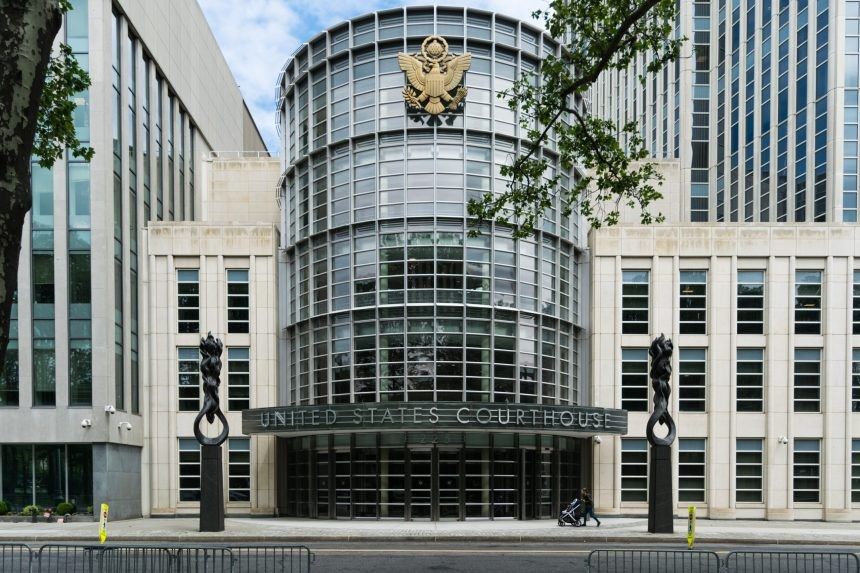
A federal judge in Miami has held that the federal alien voting ban is unconstitutional as applied to one defendant, dismissing a criminal charge in what reporting describes as the first time a court has ruled that way. U.S. District Judge David Leibowitz issued the 31-page order on Oct. 1 in the case of Chelsea Cox, a Jamaican national living in Florida. The Justice Department appealed to the U.S. Court of Appeals for the Eleventh Circuit almost immediately.
The federal alien voting ban, 18 U.S.C. 611, was enacted in 1996 and makes it unlawful for a noncitizen to vote in a federal election. Prosecutors said Cox entered the United States on a tourist visa in 1999 and stayed after it expired. They said she obtained a Florida driver's license using a fraudulent U.S. Virgin Islands birth certificate, registered to vote in 2012, and cast ballots in multiple federal elections. The government charged her on Oct. 22, 2025, in a one-count information for a misdemeanor violation of 18 U.S.C. 611, accusing her of knowingly voting in the 2020 presidential election in Broward County.
Chelsea Cox asked the court to dismiss the charge, arguing that Congress had no power to enact the federal alien voting ban. David Leibowitz agreed. He held that the Constitution commits the power to set voter qualifications to the states, and that Congress's power over the time, place and manner of elections does not cover who the electorate is. The court found that 18 U.S.C. 611 is a voter qualification statute, and that Congress has no power to say who can vote or who cannot vote in federal elections. The judge appointed former Solicitor General Paul Clement as an independent amicus, and Clement reached the same conclusion.
What the federal alien voting ban ruling does not do
The ruling does not make noncitizen voting legal anywhere. Every state, Florida included, requires citizenship to vote. Florida's constitution and statutes still limit voting to citizens, and voting by an unqualified elector is a third-degree felony under Florida law. The order also leaves untouched a separate federal statute, 18 U.S.C. section 1015(f), which bars falsely claiming citizenship to vote. The ruling binds only Cox's case and is not binding on other judges.
The federal alien voting ban ruling arrives as the government has brought a wave of such cases. Reuters has counted at least 60 prosecutions under the statute since January 2025, and about 45 federal noncitizen-voting cases are pending nationwide. At least four other defendants have raised the same argument against the federal alien voting ban. Similar motions to dismiss are pending in the Southern District of Florida and in the Western District of Wisconsin, where two defendants have raised the same challenge and one case is set for trial on Nov. 9, 2026.
Why the federal alien voting ban case matters beyond one defendant
The case turns on a question no federal court had answered until now: whether Congress had constitutional authority to enact the federal alien voting ban. Leibowitz wrote that, except for very specific constitutional provisions that cannot support the statute, Congress has no power to set voter qualifications for federal elections, and that power is reserved for the states. The government argued in response that the statute draws its authority from Congress's plenary power over immigration and naturalization, and from its authority to guard the safety and integrity of federal elections.
The Congressional Research Service noted the ruling in a report on the decision, which has drawn attention because the statute had stood unchallenged on this ground for nearly 30 years. The Eleventh Circuit is now expected to weigh in. A ruling before the Nov. 3 election was unlikely, according to reporting on the appeal.
Related articles in Law & Government
View all Law & Government →Browse more stories in Law & Government.