Five central bank decisions in three days
Five central bank decisions arrive in three days from Oct 28, starting with the Federal Reserve, Bank of Canada and Reserve Bank of New Zealand.
by Trends DeskOctober 25, 20264 min read
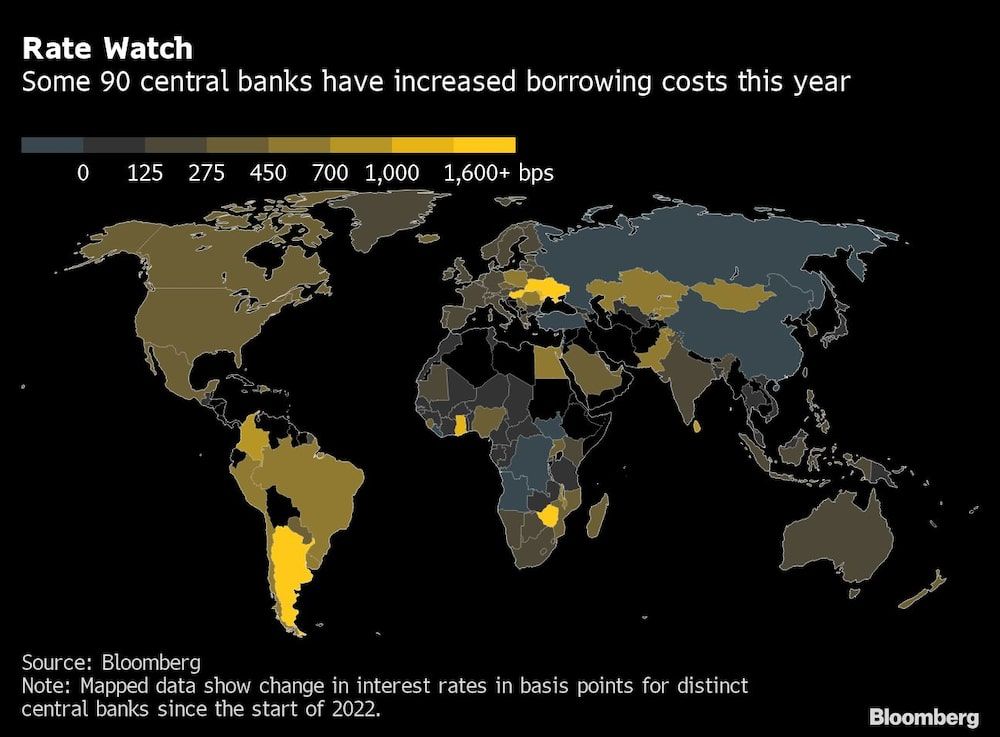
Five central bank decisions arrive in only three days, from October 28 to 30, in one of the most concentrated policy calendars of the year. The Federal Reserve, the Bank of Canada and the Reserve Bank of New Zealand are scheduled for October 28, the European Central Bank for October 29 and the Bank of Japan for October 30. An energy price shock, inflation uncertainty and doubts about the pace of AI investment make the timing unusually consequential for markets.
The starting rates show how far apart the five banks stand. The Federal Reserve targets 3.75 percent to 4.00 percent. The Bank of Canada overnight rate is 2.25 percent, and the Reserve Bank of New Zealand official cash rate is 2.75 percent. The European Central Bank deposit facility is at 2.50 percent, and the Bank of Japan policy rate is 1.25 percent. These are distinct operating benchmarks, and they should not be mistaken for comparable government bond yields.
Markets can reprice multiple currencies and yield curves in quick succession as central bank decisions land. Even if all five banks leave rates unchanged, revisions to projections or the wording of future guidance may move short term borrowing costs and affect assets from mortgages to long duration technology equities. That is why guidance often matters as much as the rate decision itself.
What the central bank decisions cover
On October 28, three central bank decisions land on the same day. The Reserve Bank of New Zealand decision is listed at 01:00 GMT, with a consensus of 3.00 percent against a previous 2.75 percent, according to the Financial Oracle calendar summary dated October 25. The Canadian decision is listed at 13:45 GMT, with a consensus of 2.25 percent, unchanged from its previous rate. The Fed decision is listed at 18:00 GMT, with a consensus of 3.75 percent to 4.00 percent, unchanged from its previous range.
How the central bank decisions may move markets
A hawkish hold is one outcome traders watch closely as central bank decisions stack up. It means a bank leaves rates unchanged while signalling that a hike is still likely. Markets can react more to that guidance than to the decision itself. As of mid October 2026, December hikes were the consensus at three of the five banks, according to the Admirals central bank super week guide, so any wording that moves December odds could move currency pairs.
The European Central Bank decision on October 29 is listed at 13:15 GMT, with a consensus of 2.50 percent, unchanged from its previous rate, and market implied odds of a 95 percent chance of a hold. A Reuters poll reported by the Admirals guide found 70 of 73 economists expected the ECB to hold on October 29. The Bank of Japan decision on October 30 is listed at 03:00 GMT, with a consensus of 1.25 percent, unchanged, and market implied odds of a 96 percent chance of a hold. Swaps priced under 5 percent odds of a Bank of Japan hike to 1.50 percent on October 30, according to BBH via FXStreet as cited in the same guide.
Why three days of central bank decisions matter
The cluster lands in the middle of a global re-tightening cycle. Higher energy prices pushed headline inflation up again in 2026, as Admirals noted in its ECB preview. Several banks that had been cutting rates in 2025 turned back to hikes this year. That backdrop gives each statement added weight in a run of central bank decisions, because traders read it for signs about December as well as October.
The central bank decisions sequence starts with the Fed decision on October 28, which will be followed by its press conference, where Chair Kevin Warsh faces questions about December. Longbridge reported that Warsh has eschewed guidance on future moves and probably will not offer much insight about December, but may also not want to sway market bets away from the current expectation for a hike. The ECB and Bank of Japan decisions that follow will show whether that expectation holds across regions.