
Graduate unemployment stays high despite more degrees
Only about 7% of jobless young graduates in India find permanent salaried work within a year, Azim Premji University's State of Working India 2026 report finds.
by Trends DeskNovember 19, 20264 min read
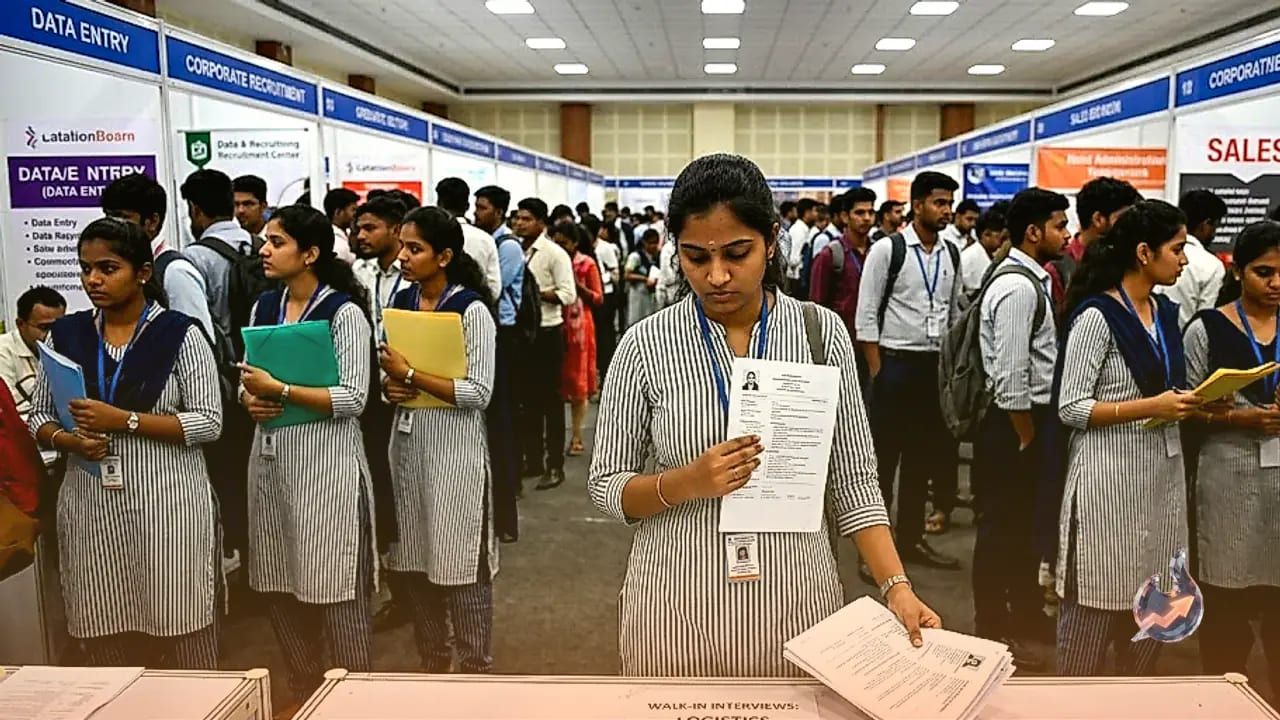
Education still raises lifetime earnings in India, but it no longer leads reliably to a good job. Graduate unemployment has stayed between 35% and 40% since 1983, according to the State of Working India 2026 report from Azim Premji University, and nearly 40% of graduates aged 15 to 25 were unemployed. The report, released in March 2026 by the university's Centre for Sustainable Employment, traces how young workers move from education into work over four decades.
The report puts numbers on a gap that has widened as enrolment has grown. Between 2004-05 and 2023, India added about five million graduates to the workforce each year and absorbed fewer than three million of them into employment. Only about 1.7 million graduates became salaried workers each year. As of 2023, about 11 million of the 6.3 crore graduates aged 20 to 29 were out of work, and graduate unemployment on that scale has become a fixed feature of the labour market rather than a passing phase.
The figures behind the headline are stark. Among graduates aged 25 to 29, unemployment stood at about 20%. The report says the rapid expansion in the number of graduates has not been matched by commensurate growth in graduate employment. Rosa Abraham, lead author of the report and associate professor of Economics at Azim Premji University, said the study aims to understand the move from education to employment and support more coordinated policymaking.
Graduate unemployment has stayed high for decades
Graduate unemployment is not a new problem, the report says. The rate has sat in the 35% to 40% band since 1983, through periods of fast growth and slow growth alike. People aged 15 to 29 number about 36.7 crore, close to a third of the working-age population, and the report warns that the demographic window for that age group will narrow after 2030. Azim Premji University president Indu Prasad said rising levels of education and awareness among young people are significant achievements.
The India Employment Report 2024, prepared by the International Labour Organization with the Institute for Human Development, reached a similar conclusion. It found unemployment among graduates at 29.1%, against 3.4% among people who are illiterate, and the share of educated people among unemployed youth rose from 54.2% in 2000 to 65.7% in 2022. The gap reflects waiting as much as joblessness: graduates with family support can hold out for a matching job, while people without savings take whatever work is available. Graduate unemployment, on this reading, is partly a measure of how long graduates can afford to wait.
Graduate unemployment and the wait for a permanent job
Tracking young men who reported themselves unemployed, the report found about half found some form of work within a year. Only about 7% found permanent salaried jobs in that time, and only 3.7% reached white-collar jobs. That wait is the clearest face of graduate unemployment in the data. The State of Working India 2026 report says the transition from education to employment remains uncertain, and for many it does not lead into stable, remunerative employment.
Pay has not kept pace either. Graduates still earn about double over a lifetime compared with people without higher education, but wage growth has slowed since 2017, and entry-level salaries for young male graduates have largely stood still over the past decade. The India Skills Report found that in 2026 only 56.35% of Indian graduates were counted as employable, up from 46.2% four years earlier, which means nearly half still fall short of what employers look for.
Graduate unemployment and the poverty link
The picture is mixed rather than bleak. Graduate unemployment sits alongside real progress, not instead of it. World Bank data shows the share of Indians living below the lower middle-income line of $4.20 a day fell from 57.7% in 2011 to 16.1% in 2023, lifting an estimated 496 million people out of poverty, while extreme poverty fell from 27.1% to 2.6%. Education played a part in that rise. The India Skills Report points the same way, with employability rising over four years even as it stays below 60%.
What the data leaves open is how the next cohort of graduates will fare. India adds about five million graduates a year, and the report says fewer than three million find work. The permanent salaried jobs that graduates wait for remain scarce, and the report puts the share who find one within a year at about 7%.
Related articles in Jobs & Education
View all Jobs & Education →Browse more stories in Jobs & Education.