Home affordability crisis hits a third of US counties
ATTOM's Q3 report: ownership costs top 43% of local wages in a third of US counties; median price fell to $368,000 but 7.3% rates kept buyers out.
by Trends DeskOctober 23, 20264 min read
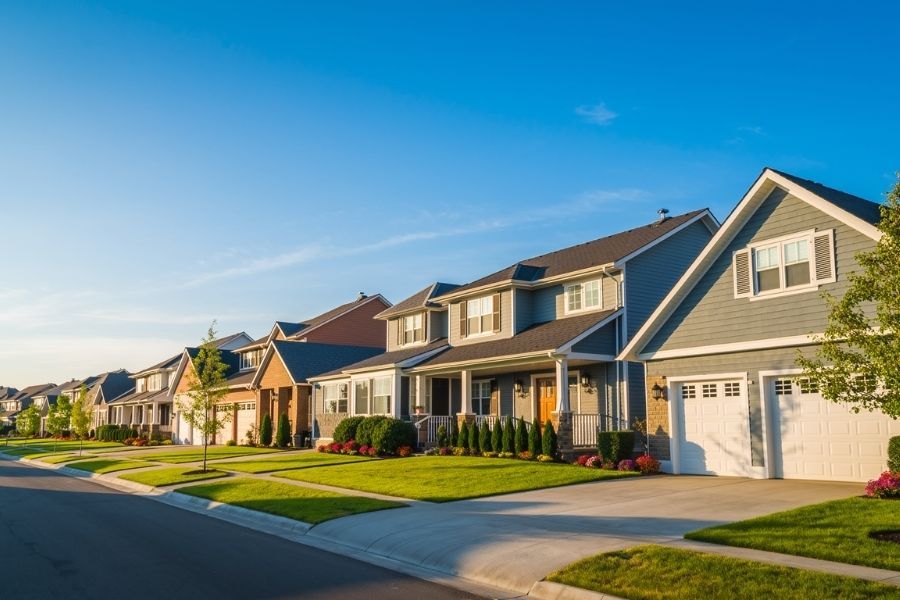
Homes in nearly a third of American counties are now "seriously unaffordable," according to a new report, and home affordability stayed under strain even as prices eased. ATTOM's third-quarter 2026 Home Affordability Report found that major housing costs ran above historical norms in 98 percent of the 583 counties it analyzed, up 1 percent from the first quarter, when the firm last measured the market.
ATTOM, a real estate analytics firm, judged counties for average wage earners. It compared the income needed to cover mortgage payments, mortgage insurance, property taxes and homeowners insurance on a median-priced single-family home or condo with average local wages, using a 28 percent front-end debt-to-income ratio. A county counts as "seriously unaffordable" when typical housing costs consume more than 43 percent of local wages. One in three counties met that definition in the third quarter.
"Affordability remained a challenge in the third quarter, even as some of the underlying factors moved in a favorable direction," ATTOM CEO Rob Barber said. "Home prices declined nationally, and wage growth outpaced price growth in many counties, but those gains were not enough to meaningfully improve affordability across much of the country."
The median home price for single-family homes and condos fell to $368,000 in the third quarter, down 1 percent from $370,000 in the second quarter and 2 percent from $375,000 a year earlier. But mortgage rates kept climbing, reaching 7.3 percent by the end of the quarter, and rising inflation kept ownership out of reach for many households, another drag on home affordability.
In 467 of the 583 counties studied, major monthly home expenses exceeded the typical county resident's wages. The ATTOM report puts the national average annual wage at $79,534, while a buyer needs to earn $90,191 a year to afford the median-priced home with a 20 percent down payment. That gap is why home affordability feels worse than the headline price drop suggests.
Home affordability by county
The counties where home affordability is worst will look familiar to anyone who follows the coasts. Twelve of the 25 counties where ownership costs consumed the largest share of local wages were in California. New York's Kings County, which covers Brooklyn and parts of Long Island, was the most unaffordable county in the country measured against wages. There, the median home price is $1.1 million, and expenses for a median-priced home consumed 114.1 percent of a resident's wages.
Santa Cruz County, California, ran close behind. Home prices there fell 5 percent from a year earlier but remain elevated, with a median of $1,105,000 in the third quarter. Residents spent an average of 105.5 percent of their wages on housing. Marin County workers spent 102.4 percent of their typical wages on housing, Orange County residents spent 92.6 percent, and Monterey County residents spent 91.8 percent.
Among large metro areas, Los Angeles County and San Diego County were the least affordable, with ownership costs consuming 69.9 percent and 69.6 percent of local wages, respectively. Maricopa County, Arizona, came in at 37.0 percent, and Cook County, Illinois, at 30.2 percent.
The highest incomes needed to afford a median-priced home under the 28 percent guideline were concentrated in New York and the Bay Area. In New York County, where the median price was $1,675,000, a buyer would need $409,992 a year. San Mateo County required $381,550, Santa Clara County $363,242, and San Francisco County $361,805.
Where home affordability held up
Texas stood out on the other side of the ATTOM report. Several counties in the state, including Harris County, Dallas County and Bexar County, stayed well under the 28 percent affordability threshold. Earlier this year, Realtor.com ranked Houston, in Harris County, among the most affordable metros in the country, citing both affordability and its homebuilding permit-to-population ratio. Dallas, located in Dallas County, ranked 15th among metros, while San Antonio, in Bexar County, ranked 35th.
The contrast shows how local the math is. Nationally, home prices fell, yet home affordability barely moved, because mortgage rates rose faster than wages could absorb. For home affordability to recover, wages, rates or both will have to move decisively in buyers' favor, since price dips alone did not fix the imbalance.