ICE ID law blocked as court backs federal agents over state
Ninth Circuit judges blocked California's ICE ID law for federal agents, ruling the visible-ID mandate violates the Constitution's Supremacy Clause.
by Trends DeskOctober 17, 20263 min read
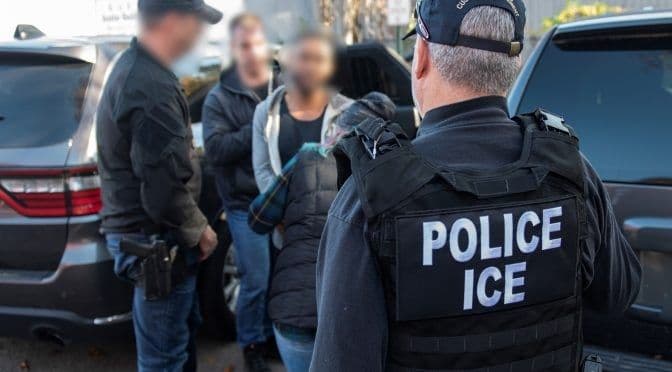
A federal appeals court on Wednesday blocked California from enforcing its ICE ID law, ruling unanimously that the state cannot require federal immigration agents to display visible identification while doing their jobs. The three-judge panel of the U.S. Court of Appeals for the Ninth Circuit held that California's "No Vigilantes Act" likely violates the Constitution's Supremacy Clause because it directly regulates federal law enforcement operations. The opinion, written by Judge Mark J. Bennett, found that the measure "attempts to directly regulate the United States in its performance of governmental functions." The court ordered a preliminary injunction barring California from enforcing the identification mandate against federal agents while the appeal moves forward. The ruling, issued Oct. 14, 2026, hands the Trump administration another courtroom win in its running confrontation with Sacramento over immigration enforcement. ## Why the ICE ID law failed constitutional review The No Vigilantes Act required plainclothes officers operating in California to "visibly display identification." The Justice Department sued the state and Gov. Gavin Newsom in November, arguing the mandate endangered officers already facing harassment and threats. The panel agreed the state had overstepped. Because the Constitution's Supremacy Clause bars states from dictating how federal officers perform federal duties, California could not impose its own identification rules — backed by the threat of misdemeanor prosecution — on federal agents. A lower court had refused to block the identification requirement, but the appeals court reversed that decision and put the injunction in place. ## California's public-safety argument State leaders framed the law as a transparency measure. California enacted the requirement in September 2025 after raids by masked federal immigration agents in Los Angeles drew public anger, and state officials argued that unidentified agents could be confused with criminals. The state also pointed to warnings that criminals were impersonating immigration agents to commit violent crimes. California Attorney General Rob Bonta has said that deploying masked, unidentified immigration agents falls well outside normal law enforcement practices. The court did not weigh those public-safety claims in detail, holding that once a Supremacy Clause violation is established, the constitutional defect decides the case. A companion measure, the No Secret Police Act, barred federal officers from wearing masks during operations. That provision followed a different path: a trial judge already blocked the mask ban for federal officers, finding in February that while agents could perform their duties unmasked, the law was flawed because it exempted state officers. ## What the ICE ID law decision leaves open While the appeal proceeds, California cannot enforce the identification rule against federal immigration agents. Someone stopped by a masked agent may never see the agent's face or learn a name or badge number at the scene. The preliminary injunction does not end the case. California could seek further review, and the panel's reasoning could shape how courts treat similar measures in other states — New York's separate disputes over ICE face coverings have already drawn national attention. The decision extends a pattern of federal courts curbing state efforts to regulate federal immigration operations. The Justice Department has made such challenges a centerpiece of its immigration strategy, suing states and cities whose policies it says obstruct enforcement. California, for its part, has enacted a series of statutes aimed at constraining federal tactics inside the state, including the mask ban the trial court already struck down for federal officers. Legal observers said the panel's reasoning could reach beyond California. Several Democratic-led states have considered measures governing how federal agents identify themselves during operations. Under the Ninth Circuit's analysis, any state rule that directly dictates how federal officers perform federal duties faces the same constitutional problem. For now, the message from the Ninth Circuit is categorical: a state does not get to write the identification protocol for federal officers executing federal law.
Related articles in Law & Government
View all Law & Government →Browse more stories in Law & Government.


