IMF walkout: BoE governor leads delegate protest
About half of IMFC delegates, including Bank of England governor Andrew Bailey, walked out in Bangkok as Russia's Anton Siluanov addressed the session.
by Trends DeskOctober 18, 20263 min read
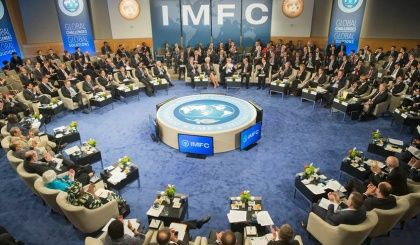
An IMF walkout by about half of the delegates at a session of the International Monetary and Financial Committee has underscored how geopolitical divisions continue to shadow global economic diplomacy. The walkout took place in Bangkok as Russia's finance minister Anton Siluanov began to address the session, according to the Guardian, with the episode also covered by Reuters and the Business Times. Among those who left the room was Bank of England governor Andrew Bailey, in what was described as a coordinated protest against Russia's participation.
IMF walkout in Bangkok: what happened
The International Monetary and Financial Committee, known as the IMFC, is the IMF's ministerial-level advisory body, bringing together finance ministers and central bank governors to discuss the global economy. The IMF walkout began when Siluanov took the floor: roughly half of those present rose and left the room, while the remaining delegates stayed to hear Siluanov's remarks. Such walkouts are a familiar, if blunt, instrument of diplomatic protest at international gatherings, allowing delegates to register dissent without derailing the formal agenda.
The participation of the Bank of England governor gave the IMF walkout particular weight. Central bankers rarely join set-piece protests at multilateral meetings, and Bailey's decision to leave the room alongside other Western officials signaled how strongly some delegations feel about Russia's presence at the IMF summit. The session itself continued, as is customary in such protests, with the remaining delegates hearing the remarks before the agenda moved on.
The IMFC meets during the IMF's flagship gatherings, where ministers and governors review the state of the world economy and set the Fund's strategic direction. Sessions are typically choreographed to project consensus, which is precisely why a coordinated departure — particularly one involving a central bank chief of Bailey's standing — carries diplomatic force well beyond its few minutes of disruption.
Why the IMF walkout matters for global finance
Multilateral institutions such as the IMF depend on the willingness of member countries to work through disagreements in the same room. An IMF walkout is therefore more than theater: it is a visible measure of how far geopolitical rifts have strained that willingness. Finance ministers and central bank governors attend the IMF summit to coordinate on issues — from debt relief to financial stability — that require broad consensus, and a split of this kind makes that coordination harder.
For markets, the direct economic impact of the IMF walkout is likely to be limited. Currency and bond traders are accustomed to diplomatic set-pieces at global meetings and tend to focus on policy signals rather than protocol disputes. The indirect message, however, is harder to ignore: the architecture of global economic governance is under visible strain, and moments of open division at an IMF summit can foreshadow tougher negotiations on sanctions, energy policy and development finance.
What comes next after the IMF walkout
In the near term, little changes. The delegates who staged the IMF walkout returned to the broader program of meetings, and the IMF's technical work — surveillance reports, lending programs and capacity building — proceeds regardless of who sits in which session. But the protest adds to a pattern of Western officials refusing to share a platform with counterparts from Moscow at economic forums, a stance reflecting the rupture in relations between Moscow and Western capitals.
For now, the episode stands as a reminder that the world's economic forums are not insulated from its political conflicts. Delegates came to Bangkok to talk about growth, inflation and financial stability; they left one session early to make a point about who belongs at the table. The Bank of England governor's departure ensured the point was seen around the world.