
India weighs frontier AI safeguards ahead of new AI law
India is examining a separate safety framework for frontier AI models, with pre-release checks and sandbox testing, as the government prepares a new AI law.
by Trends DeskNovember 19, 20263 min read
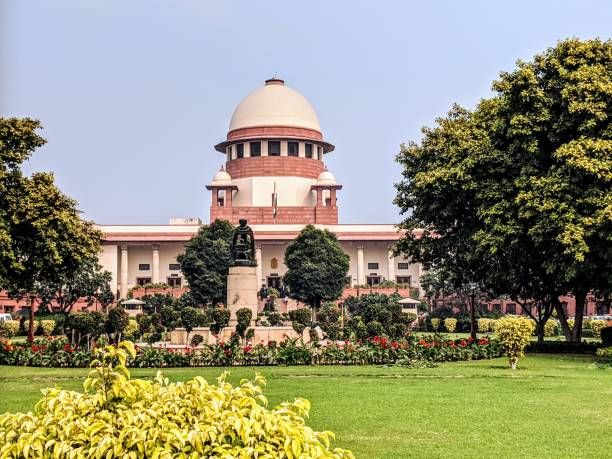
India is weighing a separate safety framework for frontier AI as the government prepares a new law on artificial intelligence, according to a report by NDTV citing officials familiar with the discussions. The framework would treat the most capable AI systems differently from everyday applications, and could require developers to show that safeguards are in place before release. Union Electronics and Information Technology Minister Ashwini Vaishnaw has said a consultation paper on AI regulation will be released in the coming weeks.
The proposal marks a shift in how India regulates frontier AI, moving from a largely technology-neutral approach. Officials say the risks of the most advanced systems have reached a point where legislation is needed. Vaishnaw has said that "the risks of AI have crossed a threshold" and that the government is already working on a new regulatory framework. The consultation paper will invite views from industry, civil society, citizens and other stakeholders before legislation is drafted.
Pre-release checks for frontier AI
Among the options under discussion are pre-release evaluations, testing in controlled environments and safeguards set in proportion to what a model can do. One approach would require developers of particularly capable models to run them through sandbox testing before wider deployment, so researchers can study behaviour and spot weaknesses first. Officials have described this as "a vetting process before it rolls out."
The government could also consider whether developers should restrict certain functions, limit access for specific users, or apply different safeguards depending on the risk a model poses. The exact obligations, and which models they would cover, would be settled through the legislative process. A frontier AI regime would apply added scrutiny only to models capable of causing serious harm, rather than placing the same duties on every AI developer.
Defining frontier AI for the new AI law
Defining a frontier AI system is expected to be one of the hardest questions. A threshold based on the computing power used in training is one possibility, but officials accept that compute alone may not capture every risk, so capability-based assessments may also be needed. The government is examining how to draw the line so that ordinary applications face lighter duties while the most powerful models face pre-release checks.
The risks driving the discussion include cyberattacks and highly realistic synthetic content, which officials say the most capable models could enable. A separate frontier AI framework could slow the deployment of the most powerful systems in India, giving regulators time to assess risks before wide use. Developers could face compliance costs and delays, a burden felt most by smaller firms with fewer resources for sandbox testing and pre-release evaluation.
What the consultation paper will decide
The paper, expected in the coming weeks, will form the basis for public input before final rules take shape. Nothing in the framework is final yet: the measures are being examined, not enacted, and the consultation process exists to test them against industry and public feedback. Clear safeguards could build public confidence in AI deployment and give companies operating in India regulatory certainty earlier than they might otherwise have it.
India's approach sits between the European Union, which has a detailed AI law with strict rules for high-risk uses, and the United States, which has no single national AI law and leaves much of the work to individual states. Vaishnaw has said India's bias has always been more towards innovation, while still keeping citizens safe. How the frontier AI rules balance those two aims will become clearer once the paper is published and the draft law takes shape.
Related articles in Law & Government
View all Law & Government →Browse more stories in Law & Government.