Ninth Circuit: California National Guard call-up unlawful
A divided Ninth Circuit panel ruled that the June 2025 federalisation of the California National Guard exceeded presidential authority.
by Trends Desk•October 25, 2026•4 min read
The California National Guard ruling
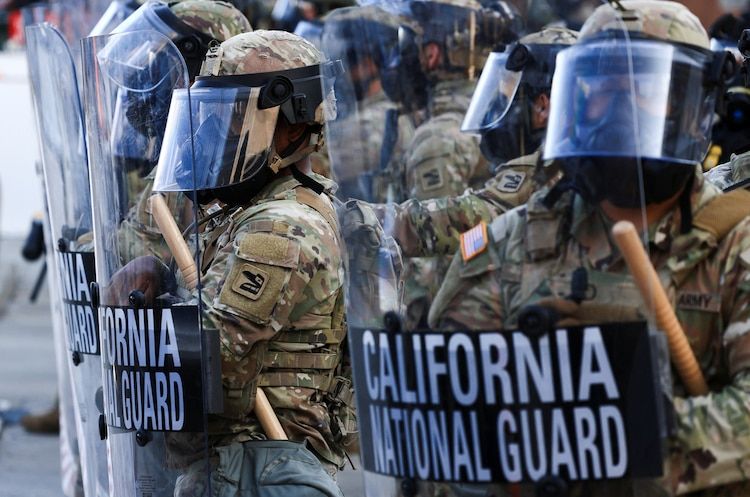
A divided panel of the United States Court of Appeals for the Ninth Circuit ruled on October 24, 2026, that President Donald Trump exceeded his legal authority in June 2025 when he took control of the California National Guard and sent it into Los Angeles during immigration enforcement protests. In a 2-1 decision in Newsom v. Trump, the panel affirmed a lower court order barring the deployment and directing the administration to return control of the California National Guard to Governor Gavin Newsom.
Judge Jennifer Sung wrote the opinion, joined by Judge Eric D. Miller. Judge Mark J. Bennett dissented. The ruling has little immediate effect, because the troops left Los Angeles last year. It is binding precedent for future deployments of the California National Guard in the nine Western states the circuit covers, and it sets a limit on how a president can use that power in those states.
On June 7, 2025, the president invoked 10 U.S.C. Section 12406 and ordered 4,000 members of the California National Guard into federal service for 60 days. The court record describes protesters throwing concrete chunks and bottles at federal officers, and in Paramount and Compton some throwing rocks and a Molotov cocktail, burning a vehicle and looting a gas station. The president's memo stated that protests or acts of violence inhibiting execution of the laws constitute a form of rebellion.
## Why the California National Guard call-up failed
The administration argued the federalisation was justified in two ways: under Section 12406(3), because the president was unable to execute federal law with regular forces, and under Section 12406(2), because there was a rebellion or danger of rebellion against the authority of the United States Government. It also argued that courts may not second-guess the president's determination.
The panel rejected both arguments. On the first, it relied on the Supreme Court's December 2025 order in Trump v. Illinois, which held that Section 12406(3) applies only if the president first shows authority to execute the laws with the regular military and inability to do so. The panel said the administration had made neither showing in support of the California National Guard call-up. On the second, the court said its review is highly deferential but must ask whether the president's determination was a colourable assessment of the facts. It cited the trial judge's finding of no evidence of organised, as apart from sporadic or impromptu, violence. "On this record," Sung wrote, "a determination that the conditions in Los Angeles on June 7, 2025, constituted 'a rebellion or danger of rebellion' does not reflect a colourable assessment within a range of honest judgment."
Because neither provision applied, the majority concluded that the order exceeded the president's statutory authority and encroached on Congress's calling forth power, and that California was likely to win its Tenth Amendment claim. Miller wrote separately that the administration had forfeited its argument that California could not bring this type of claim.
## The dissent and what comes next for the Guard
Bennett dissented in Newsom v. Trump, saying the panel should have granted the administration's motion to dismiss. He pointed to scant briefing on the intervening Supreme Court authority in Trump v. Illinois, and said the majority relied on outdated briefs prepared amid a shifting legal picture. He said that by issuing a published opinion binding future three judge panels, the majority disregards judicial restraint, and that California's Tenth Amendment claim was barely briefed and is unlikely to succeed.
The administration had initially prevailed, when the same panel stayed the district court's order in June 2025, concluding that the president likely acted within his authority in the Guard call-up. On December 31, 2025, after the Supreme Court ruled against a similar deployment in Illinois, Trump said he was withdrawing Guard troops from Los Angeles, Chicago and Portland. In January 2026, the administration moved to dismiss this appeal. The majority declined to dismiss, finding the appeal was not moot because a ruling could affect future federalisation of the California National Guard, and dismissed the separate appeal over later extensions.
The administration can ask the full Ninth Circuit for rehearing en banc in the California National Guard case or petition the Supreme Court. Because the order is a preliminary injunction, the underlying case continues before District Judge Charles R. Breyer in San Francisco. Breyer's September 2025 ruling that the California National Guard deployment violated the Posse Comitatus Act faces a separate appeal.