US charges five in ghost student aid fraud cases
Five defendants face charges in Operation Ghostbusters, a nationwide probe of fake student enrolments used to divert federal student aid.
by Trends DeskNovember 19, 20264 min read
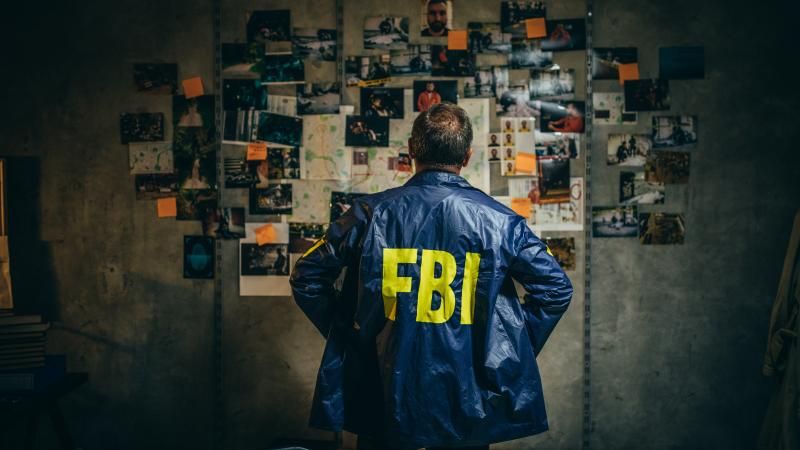
The US Justice Department has announced the first charges in Operation Ghostbusters, a nationwide investigation into ghost student fraud that used stolen American identities to obtain federal student aid. Five defendants face charges in cases spanning Nebraska, Virginia and New Jersey, and investigators seized more than $750,000 in cryptocurrency tied to the scheme.
Operation Ghostbusters targets a scheme in which criminal actors created fraudulent student aid accounts using stolen US citizen identities to enrol fake students, known as ghost students, in educational institutions. After loan and grant money was disbursed, the refunds were diverted to bank accounts controlled by foreign actors and facilitated by US based money mules.
Assistant Attorney General Colin M. McDonald of the Justice Department's National Fraud Enforcement Division announced the charges on October 29, 2026. He described the action as the first results of a nationwide effort to stop fraud targeting aid for low income Americans. An indictment, information or complaint is merely an allegation, and all defendants are presumed innocent until proven guilty in a court of law.
New Jersey case in the student aid probe
In New Jersey, Mabed Patricia Utate-Alberto, Patricia Arisleydi Perez and George Arturo Alfau Mendez were arrested on a criminal complaint. Prosecutors say that from about March 2021 through at least January 2026, the three conspired with people in Kenya to defraud the Department of Education and obtain more than $1 million in federal student aid funds.
The three acted as money mules in the US. They used US bank accounts to receive student aid money obtained through false FAFSA applications, took a cut, and transferred the rest to co-conspirators in Kenya linked to a purported safari company. The government says it will seek to charge two Kenya based co-conspirators as the case continues. The New Jersey case carries an intended loss figure of $1.5 million.
Virginia and Nebraska cases in the student aid probe
In the Eastern District of Virginia, a federal grand jury returned a multi count indictment on October 21 charging a Kenyan national with conspiracy to commit wire fraud and student aid fraud. The defendant allegedly conspired with fraudsters in Kenya to submit false FAFSA applications and steal over $1.4 million.
The Virginia defendant acted as a US based money mule. The defendant used multiple bank accounts to receive over 700 fraudulently obtained refund deposits, totalling approximately $1,439,548, then moved at least $1.3 million to accounts in the United States and Kenya.
In Nebraska, a federal grand jury returned a ten count indictment on October 19 against Francis Mogambi, a Kenyan citizen, on five counts of theft of government money and five counts of aggravated identity theft. He faces 10 years in mandatory minimums for his use of stolen identities.
According to the Nebraska indictment, Mogambi worked with associates in Kenya between November 2025 and May 2026 to steal US citizen identities, enrol American victims fraudulently, and redirect aid checks to himself. He kept 30% of the proceeds and sent the rest to his conspirators in Kenya. Court documents also say Mogambi told another person he received $2,000 a week from the scheme. Mogambi arrived in the United States on May 15, 2024 after winning the Diversity Visa lottery.
Scale of the student aid fraud and the response
The investigation reaches well beyond the five defendants. The FBI has identified more than $32 million in losses in similar ghost student fraud schemes, and investigators estimate the wider fraud at well over $200 million. The probe began after a referral from the Education Department's Office of Inspector General to the FBI's Richmond field office. There are now more than 40 open cases across 26 FBI field offices and more than 20 US Attorneys' Offices.
In September and October 2026, investigators identified 830,840 potentially fraudulent student aid IDs relating to nearly $130 million and recommended that the Education Department disable those IDs.
The cryptocurrency seizure in the case is also notable. Investigators seized over $750,000 from a cryptocurrency account belonging to a Kenyan national connected to the scheme, with help from Kenyan law enforcement partners. The Justice Department says this cryptocurrency seizure is the first international seizure of its kind in the Fraud Division's history.
The Education Department has also launched a real time fraud detection capability built into the FAFSA form, according to a department statement reported by Fox News Digital. Applicants flagged as a fraud risk must now present government issued identification before accessing student aid funds.