Public service loan forgiveness survives federal appeal drop
The government abandoned its appeal on Oct. 22, ending a challenge that would have let the Education Secretary cut employers from the loan forgiveness program.
by Trends DeskOctober 23, 20263 min read
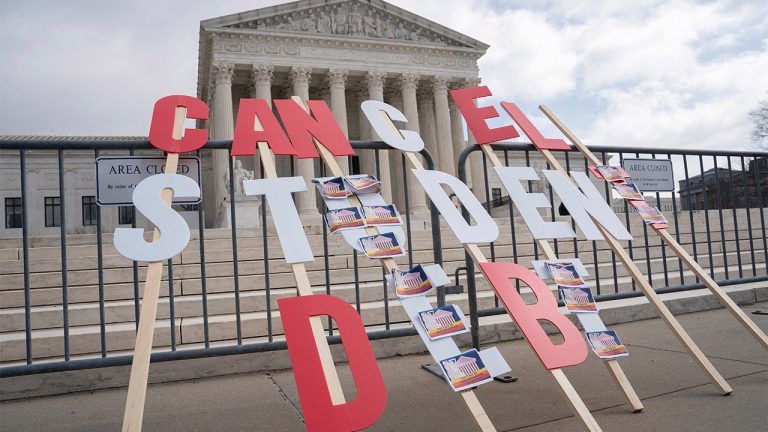
The federal government abandoned its appeal on Oct. 22 in National Council of Nonprofits et al. v. McMahon, preserving a court victory that blocked a new rule governing public service loan forgiveness. The rule, set to take effect July 1, 2026, would have allowed the Education Secretary to disqualify government and nonprofit employers that disagreed with the administration's policies. San Francisco City Attorney David Chiu and Santa Clara County Counsel Tony LoPresti, who led the coalition behind the lawsuit, said a joint stipulation of dismissal filed Wednesday will formally end the matter.
Earlier this year, the administration tried to rewrite the program through a rule that critics said punished employers for their political views. The lawsuit argued the change was arbitrary and capricious and violated the Administrative Procedure Act and the Higher Education Act. Congress created the Public Service Loan Forgiveness program in 2007 to forgive the remaining balance on direct federal loans after borrowers make 120 qualifying payments while working full time for a public service employer. The plaintiffs said that law categorically makes government and 501(c)(3) nonprofit organizations eligible employers.
How the public service loan forgiveness rule was blocked
On June 30, 2026, U.S. District Judge Myong J. Joun vacated the rule. He concluded: "The Final Rule is contrary to law and promulgated in excess of statutory authority, is arbitrary and capricious, and violates the First Amendment. I therefore hold it unlawful and set it aside. The Final Rule is vacated." The government appealed, but Wednesday's joint filing ends the federal appeal and keeps the ruling on public service loan forgiveness intact.
The rule would have handed the Education Secretary a new power to cut off nonprofit employers and public agencies from the program. According to the coalition, that tool could have been used against sanctuary jurisdictions, immigrant rights groups, health care providers that offer gender-affirming care, schools, colleges and universities, and employers committed to equal opportunity employment. Chiu said the effort would have had a chilling effect on the public service workforce.
What the public service loan forgiveness decision means for workers
"Millions of people in our country struggle under crushing student loan debt, so we're grateful loan forgiveness will remain available to public servants who dedicated their careers to bettering our communities," Chiu said. "This victory ensures the Public Service Loan Forgiveness program is here to stay and can continue to function as Congress intended."
"The federal government's decision to drop its appeal reaffirms what we have said from the start: this was a purely political effort to impose unlawful conditions on a congressionally created program," LoPresti said. "Public service loan forgiveness is critical to recruiting and retaining talented public servants, and our victory in court protects the promise made to those who dedicate their careers to serving their communities."
Who brought the lawsuit
The coalition behind the case included the City and County of San Francisco, the County of Santa Clara, the cities of Albuquerque, Boston and Chicago, the Amica Center for Immigrant Rights, the Coalition for Humane Immigrant Rights, Legal Aid DC, the National Association of Social Workers, the National Council of Nonprofits, Oasis Legal Services, the American Federation of Teachers, the American Federation of State, County and Municipal Employees and the National Education Association. Democracy Forward and Protect Borrowers represented the coalition, while San Francisco and Santa Clara County represented themselves. Borrowers carrying student loan debt through public service jobs were the people the program was built for, the cities said.
The case is National Council of Nonprofits, et al. v. Linda McMahon, et al., U.S. District Court for the District of Massachusetts, case No. 1:25-cv-13242. With the federal appeal dismissed, public service loan forgiveness keeps operating under the rules Congress wrote.