
Revenue entries cannot confer land ownership: Supreme Court
The Supreme Court has held that revenue entries made without authority cannot confer land ownership, dismissing a claim over nearly 600 acres of forest land.
by Trends DeskNovember 19, 20263 min read
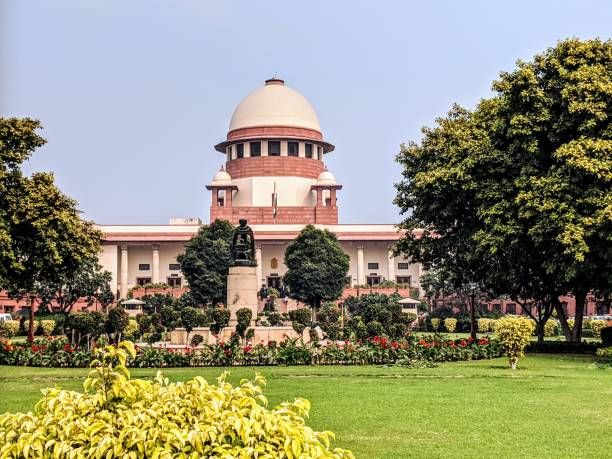
The Supreme Court has held that revenue entries made without authority cannot confer ownership of land, dismissing a claim over nearly 600 acres of proposed forest land in Telangana. A bench of Justices Pankaj Mithal and S.V.N. Bhatti said entries in revenue records serve only a fiscal purpose and are not documents of title. The judgment, delivered on 6 May 2026, restates the settled law on what revenue entries can and cannot prove.
The case was brought by Vadiyala Prabhakar Rao and others, who sought to exclude the land from a proposed reserve forest. The dispute traces back to a Gazette notification of 1950 under Section 7(1) of the Hyderabad Forest Act, 1326 Fasli, which proposed to include 787 acres in Survey No. 81 of Kalvalanagaram village as reserve forest. The claimants relied on old revenue entries, land ceiling proceedings and mutation records to support their claim.
What the court said about revenue entries
The court set out six principles on revenue entries and their legal effect on title. It said entries in revenue records or Jamabandi serve only a fiscal purpose, letting the person named in the records pay the land revenue due. A revenue record is not a document of title, the court said, and mutation neither creates nor extinguishes title and has no presumptive value on the question of title.
The court added that the mere acceptance of municipal or agricultural taxes, or the grant of a bank loan on the basis of these records, does not stop the state from challenging ownership. While revenue entries do not prove title, they can raise a presumption about possession. The court noted that the upkeep of revenue records is the work of the Patwari, and that records are at times altered to suit the needs of the moment.
Stray or solitary entries recorded for a single year do not raise a presumption of rights, the court said, and cannot be relied on against a long and consistent course of entries in favour of another party. The court also said that records created in collusion act as a cover to defeat the legal rights of the actual tiller, and the government is not bound by them.
How revenue entries were used in the claim
The claimants leaned heavily on old revenue entries, including Pahanies, Faisal Patti and Vasool Baqi, along with mutation records and reports from local revenue officers. Their case rested on the idea that a long run of entries in their names showed they owned the land. But the original title documents, the pattas said to have been issued by the Nizam, were never produced before the authorities or the courts.
The court observed that revenue records are kept mainly for fiscal purposes and cannot by themselves settle ownership. It repeated the settled rule that mutation entries neither create nor extinguish title and show only possession for revenue administration. The claimants' reliance on the entries, without the pattas, could not carry their claim.
Why the court dismissed the appeal
The court also held that writ proceedings are not the right forum for settling disputed questions of title, especially where the papers are incomplete or point in different directions. The claimants had asked the High Court to declare their title in a writ petition, but the court said questions of fact and title of that kind belong in a civil suit. The appeal was dismissed, and the land stays part of the proposed reserve forest.
The ruling in the case of Vadiyala Prabhakar Rao v. the Government of Andhra Pradesh, citation 2026 INSC 450, was written by Justice S.V.N. Bhatti, with Justice Pankaj Mithal sitting alongside him. The bench stressed that the 1950 notification under the Hyderabad Forest Act still stands, and that the land in Survey No. 81 of Kalvalanagaram village stays within the proposed reserve forest. The revenue entries the claimants relied on remain what they always were: a record for collecting revenue, not a proof of title.
Related articles in Law & Government
View all Law & Government →Browse more stories in Law & Government.