
Philadelphia teens weigh shipbuilding jobs without college
Shipbuilding jobs in Philadelphia pay more than $20 an hour, but teens must pass placement tests and relearn basic maths before they can start work.
by Trends DeskNovember 19, 20264 min read
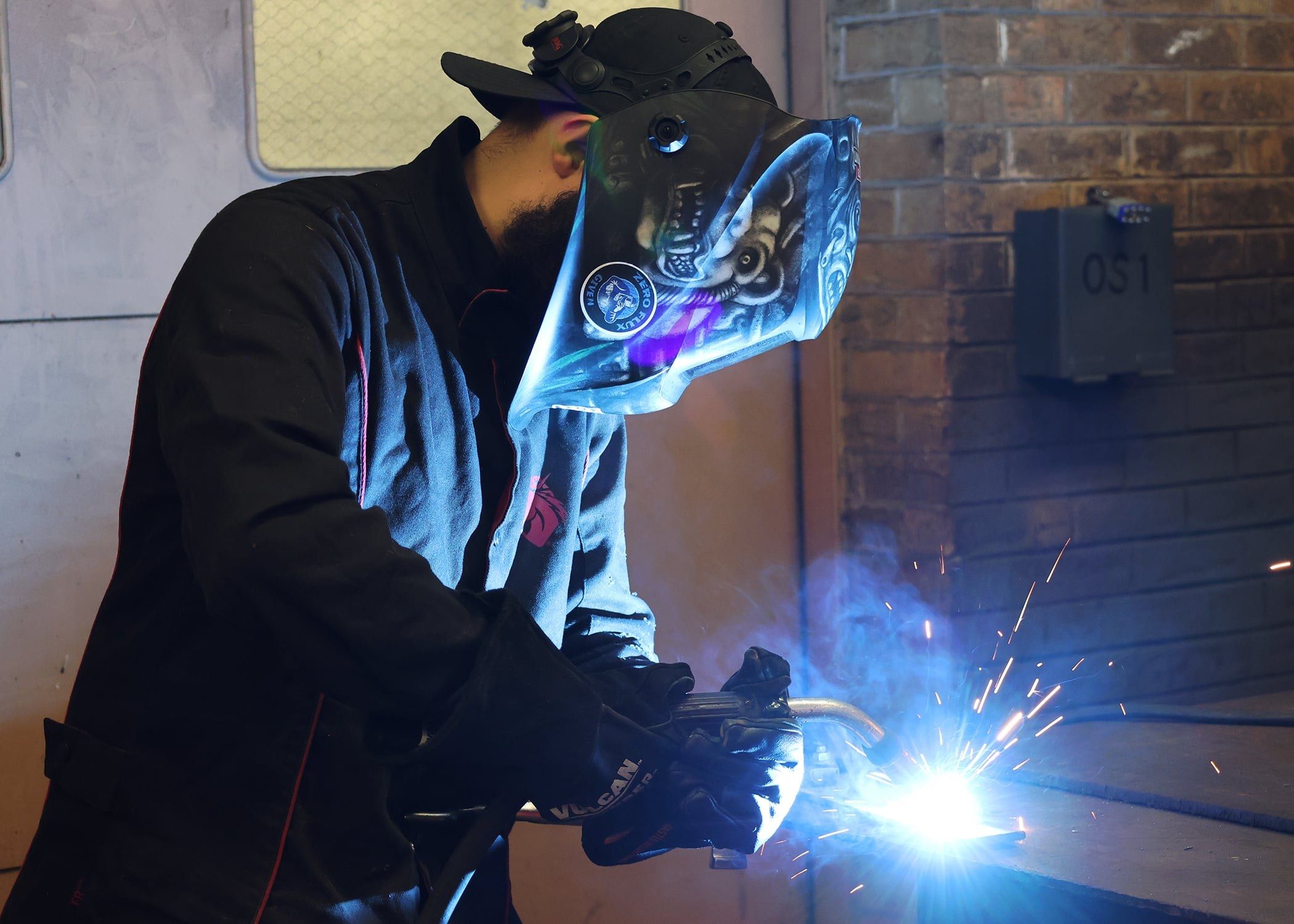
Shipbuilding jobs in Philadelphia are drawing in teenagers who do not plan to go to college. The city has been brimming with welding and machinist jobs since President Donald Trump set out to bring shipbuilding back in 2025. Backed by a $2 billion White House investment, one company plans to raise production at the Philadelphia shipyard from less than two vessels a year to up to 20, and create more than 7,000 jobs over five years. Most start at more than $20 an hour, nearly three times the state minimum wage of $7.25.
These shipbuilding jobs are the kind officials say suit graduates who do not go to college: good pay, on-the-job training, no debt, and work that looks hard to automate. Many teens are behind in the basic maths they need to pass job placement tests. Some balk at the physical toll and risk. Most have never even heard of shipbuilding.
Kristopher Purnell, 17, wants to be an underwater welder when he graduates from high school. He said he had been "arc flashed", a severe sunburn on the cornea from a helmet worn wrongly. He has had minor skin burns since joining his school's welding training program in 10th grade. Purnell, an 11th grader at Ben Franklin High School, is not put off by the physical toll. "What motivates me, I gotta say, it's the pay stub," he said.
Aahayla Capers joined the same welding training program in 10th grade. After almost three years, the 17-year-old has decided welding is not for her as a full career. She does not like the physical toll and tight quarters the jobs require. "If I can't move around and move my body, I don't want to do it," she said. She was arc flashed several times and now often has to wear glasses.
Shipbuilding jobs pay well for students who make it
The pay explains the draw of shipbuilding jobs. In the basement of Ben Franklin High School, retired ironworker Harry Graham runs welding classes three periods a day for 24 students sharing 16 practice booths. "They've got incentives to graduate," he said. Graham said he tries to help the city's mostly Black and Latino students see a place for themselves in the trades. Survey data released last year shows less than a third of the district's career training graduates working a year later were in jobs related to the trade they studied.
Shipbuilding jobs test the maths teens must relearn
The tests stand between teens and shipbuilding jobs: students also need to pass certification and placement tests, instructors said. Last school year, only about half of seniors in the district's construction and manufacturing programs scored competent or advanced on the state-required NOCTI assessment. Some join Graham's program in 10th grade unable to add fractions, a middle school skill, and must relearn basic maths to pass. Only a quarter of district high school students scored proficient on last year's state math test. Adam Ring, who teaches the district's only precision machining program, spends much of class teaching students maths, even basic addition.
Shipbuilding jobs and the training gap
The Philadelphia shipyard needs workers, but the pipeline is narrow. Only four out of the district's roughly 55 high schools offer welding. A few charter and private schools offer welding training too, as do some nonprofit workforce groups. That leaves many young people out of the loop, said Carol de Fries, who runs the city-run City College for Municipal Employment. The city is working with the school district to expand middle school programs that introduce the trades to 12- and 13-year-olds.
The need for shipbuilding jobs is national. Bringing shipbuilding back will require training up to 250,000 new workers, by some estimates. Cities such as Baltimore and Mobile hope young people can get in on the jobs too. "The question becomes, how do you create interest, and then house and upskill that interest in a way that is actually truly accessible to anyone across the city?" said Maya Heiland, director of apprenticeships at the Community College of Philadelphia. Companies at the Navy Yard are using high salaries to entice workers into shipbuilding jobs. Some say young people entering apprenticeships in dangerous parts of the industry, like underwater welding, can earn more than $100,000 a year by 25. Ron Sizer, who directs the advanced manufacturing program at the Community College of Philadelphia, said many programs are free, with funding from the US Navy. "I have more job opportunities than seats," he said.
Related articles in Jobs & Education
View all Jobs & Education →Browse more stories in Jobs & Education.