Snap-on third quarter earnings fall on inventory cuts
Snap-on third quarter earnings fell to $4.64 per share as franchisees cut inventories after a diesel price surge, the toolmaker reported on October 22.
by Trends DeskOctober 25, 20264 min read
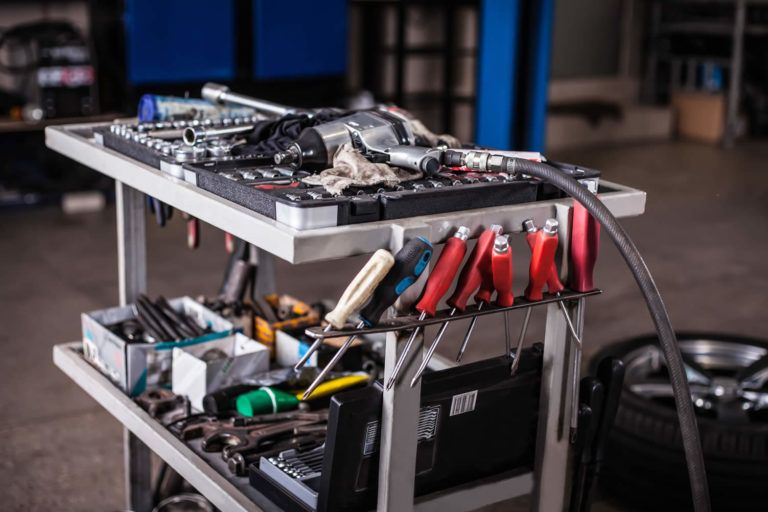
Snap-on third quarter earnings fell as franchisees cut inventories after a sharp rise in diesel prices, the toolmaker reported on October 22, 2026. Net sales were $1.1837 billion, down 0.6 percent from a year earlier, and net earnings attributable to Snap-on were $243 million, or $4.64 per diluted share, compared with $265.4 million, or $5.02 a share, a year earlier. Organic sales declined 2.8 percent, partly offset by $25.6 million in acquisition-related sales.
The quarter covered the period ended October 3, 2026. Snap-on, based in Wisconsin, sells tools and repair systems through franchisee vans, direct sales and distributors, and it also provides financing for product purchases and its franchise business. Its professional customers work in vehicle repair, aerospace, the military, natural resources and manufacturing. The earnings figure came in below the $4.93 analyst consensus cited by Investing.com, and revenue also fell short of the $1.24 billion consensus.
Snap-on third quarter sales by segment
Snap-on third quarter sales split in two directions. The Tools Group, which sells through franchisee vans, saw organic sales fall 7 percent. The Commercial and Industrial Group, by contrast, recorded organic sales growth of 7.4 percent, and Chief Executive Nick Pinchuk described its performance as a record. Segment operating earnings showed the same split. The Tools Group earned $84.8 million, down from $109.9 million a year earlier, while the Commercial and Industrial Group earned $74.7 million, up from $57.5 million.
Pinchuk said the inventory reduction weighed on the Tools Group and outweighed the record performance in the Commercial and Industrial Group. The Snap-on third quarter story is therefore a channel story more than a demand story, since end demand from technicians did not fall away. The cause, according to the company, was a sharp rise in diesel prices, which prompted franchisees to reduce inventories in the mobile-van channel even though demand from technicians stayed stable. Franchisees run vans that carry stock to customers, so higher diesel costs hit them directly, and cutting inventory is one way to protect cash. The result was lower sales for Snap-on even though end demand from technicians did not fall away.
Snap-on third quarter earnings and the prior year
Snap-on third quarter earnings need context from the prior year. The year-earlier figure of $5.02 per share included a legal-settlement benefit of 31 cents a share, so part of the decline reflects a gain that did not repeat. Even allowing for that, earnings fell short of analyst expectations, and the miss on both sales and earnings marked a reversal from the second quarter. In the quarter reported on July 23, 2026, net sales increased 4.7 percent to $1.2351 billion, including 3 percent organic growth, and diluted earnings rose to $4.96 a share from $4.72 a year earlier.
The second quarter also brought two acquisitions that shaped the third quarter figures. Snap-on completed its purchases of Hi-Force Hydraulic Tools and Diesel Laptops, adding hydraulic-tool capabilities and diagnostic and repair-information products for commercial trucks and off-highway vehicles. Those deals contributed $25.6 million in acquisition-related sales in the third quarter, softening the organic decline. Without them, the sales fall would have been steeper.
What Snap-on third quarter results show
Snap-on third quarter results show a company pulled in two directions by its own channels. The franchisee van channel shrank as franchisees responded to diesel costs, while the Commercial and Industrial Group grew at a record pace. The Repair Systems and Information Group also slipped, with segment operating earnings of $116.1 million against $141.2 million a year earlier, and Financial Services earnings were $68.3 million against $68.9 million. Total segment operating earnings were $343.9 million, down from $377.5 million.
The question for the next quarter is whether franchisees rebuild inventories once diesel costs settle, or keep running lean. Demand from technicians stayed stable through the Snap-on third quarter, according to the company, so the inventory cut looks like a response to costs rather than to lost customers. If franchisees start restocking, the Tools Group could recover without any change in end demand. Snap-on reported net sales of $1.1837 billion for the quarter ended October 3, 2026.