SpaceX Bandwagon-5 Launches Monday With 31 Payloads
SpaceX launches Bandwagon-5 Monday morning from Cape Canaveral with the Starfall reentry capsule and 31 customer payloads; a space jellyfish may light the sky.
by Trends DeskOctober 19, 20263 min read
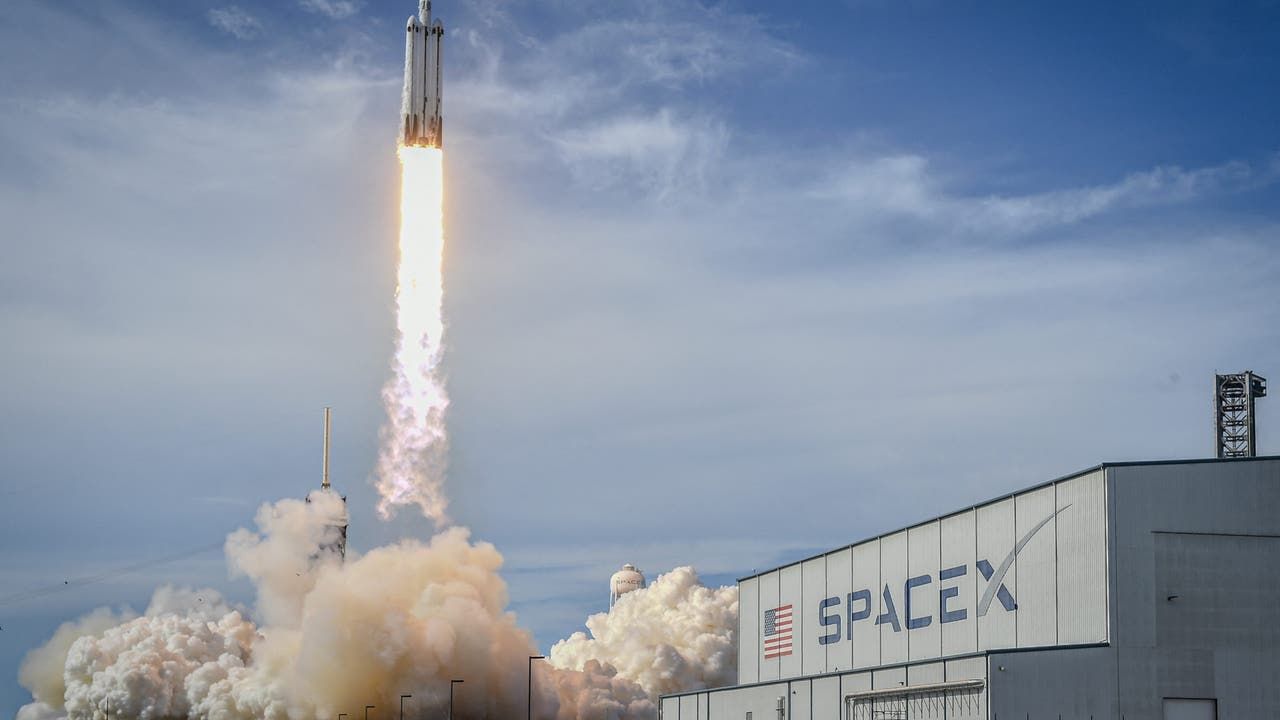
SpaceX is set to launch its Bandwagon-5 rideshare mission before dawn on Monday, carrying the company's Starfall reentry capsule and 31 customer payloads into orbit. The SpaceX Bandwagon-5 flight is scheduled to lift off from Space Launch Complex 40 at Cape Canaveral Space Force Station during an hour-long window that opens at 6:30 a.m. EDT (1030 UTC).
The 32 payloads will ride aboard a Falcon 9 rocket flying a southeasterly trajectory. The rideshare mission model, splitting launch costs among multiple customers, has made flights like this a workhorse of the small-satellite industry.
Launch window and weather
Weather is the main watch item. The 45th Weather Squadron forecast a 55 percent chance of acceptable conditions during the window, warning that a cold front along southern Florida will bring gusty winds approaching constraints at liftoff, plus a moderate-to-high risk of unacceptable weather at the booster recovery site.
The mission will fly on Falcon 9 first-stage booster B1085, making its 19th flight after carrying NASA's Crew-9, Fram2, Firefly's Blue Ghost Mission 1 and 10 batches of Starlink satellites. About nine minutes after liftoff, the booster will attempt to land on the droneship A Shortfall of Gravitas: which would be the 167th landing on that vessel and the 672nd Falcon booster landing overall.
Spaceflight Now will carry live coverage of the countdown beginning about an hour before liftoff. Rideshare flights like this one have become routine for SpaceX, but the mix of payloads, from pharmaceutical research to navigation satellites, shows how much of the orbital economy now rides on shared launches.
On board
The headline payload is Starfall, SpaceX's uncrewed reentry capsule, which first flew in June. Described by the company as a microgravity lab for researchers and entrepreneurs, the vehicle is about 0.75 meters tall and 3.1 meters in diameter with a mass of roughly 2,100 kilograms, according to a Federal Aviation Administration assessment: which also noted a single capsule can support up to 1,000 kilograms of payload.
Beyond the headline capsule, 20 of the remaining 31 customer payloads were arranged by multinational mission manager Exolaunch. They include four radio-frequency monitoring satellites from Virginia-based HawkEye 360, four communications satellites for Finland's Iceye, and six navigation satellites from California-based Xona Space Systems.
It is not the only reentry vehicle on board. Varda Space Industries is flying its W-7 capsule, the company's ninth reentry capsule to date, carrying an experiment with the cancer drug Protac to test whether microgravity can improve its solubility, a step that could lead to more practical cancer treatments.
Also aboard is the Starburst-1 demonstration mission from Portal Space Systems. The 260-kilogram spacecraft is designed to perform orbital maneuvers and support customer payloads of up to 50 kilograms, in a flight the company says is fully funded to prove its capabilities ahead of customer missions advertised from 2027.
Skywatchers have one more reason to look up: the Seattle Times noted the launch could produce a space jellyfish, a glowing atmospheric display caused by rocket exhaust at high altitude, as an encore to a previous display. If the timing and twilight line up, the space jellyfish could be visible across parts of Florida.
If all goes to plan, the SpaceX Bandwagon-5 rideshare mission will extend the company's rapid launch cadence: and, if the twilight timing cooperates, treat early risers to a space jellyfish encore over the Space Coast.