
Delhi air quality stays poor as Star Health urges care
Delhi's AQI stayed very poor from 2 to 9 November, touching 382 on 6 November, as Star Health urged families across Delhi NCR to take precautions.
by Trends DeskNovember 19, 20264 min read
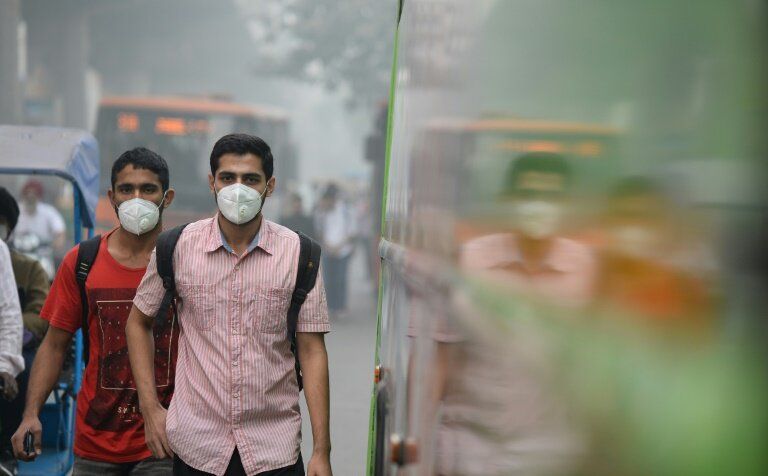
Delhi air quality stayed in the very poor range for eight straight days, and an insurer is urging families across the National Capital Region to take precautions and seek medical advice early. Delhi's Air Quality Index entered the very poor category on 2 November at 324 and stayed there through 9 November, touching 382 on 6 November, the season's highest so far, according to the Central Pollution Control Board. It reached 376 on Diwali, the city's highest Diwali-day reading since 2021, before easing to 299, in the poor range, on 10 November.
Star Health and Allied Insurance Company Limited has urged families in Delhi, Noida, Ghaziabad, Faridabad and Gurugram to limit outdoor exposure and seek medical advice early to limit the health risks of air pollution. Prolonged exposure to fine particulate matter can harm respiratory and cardiovascular health, especially for children, senior citizens, pregnant women and people with pre-existing conditions. The advisory, issued on 12 November, points to a shift in how families are coping as Delhi air quality stays poor: more of them are choosing medically supervised treatment at home when that is suitable.
Delhi air quality through the week
The week's readings show how stubborn the smog has been. The city average eased to 304 on the morning of 10 November, with Gurugram at 321, Noida at 313 and Faridabad at 310, and to 299 by 4 pm. The Commission for Air Quality Management invoked Stage II of the Graded Response Action Plan on 2 November and Stage III across the NCR on 6 November. The Indian Institute of Tropical Meteorology forecast very poor air on 11 and 12 November, and the India Meteorological Department expects no rain in Delhi until 15 November. Delhi air quality is therefore likely to stay poor through the week, with little relief from the weather.
Mannu Batura, Business Head at the insurer, said more Delhi NCR families are choosing medically supervised treatment at home when appropriate. He said that between April and September 2026, home health care use among eligible policyholders in the region was 4.4 times the level a year earlier. The insurer recorded a 344 per cent year-on-year rise in home health care use among eligible policyholders in Delhi NCR, to about 17,600 in April to September 2026 from about 4,000 a year earlier. Mannu Batura urged families to limit unnecessary outdoor exposure and seek medical advice early for a persistent cough or breathlessness.
Delhi air quality and home health care
The rise in home care reflects the pressure that Delhi air quality puts on hospitals and clinics during the smog season. Eligible policyholders can get doctor-prescribed care at home under cashless cover, including nursing, blood tests, monitoring, IV fluids and injections, subject to policy terms. The insurer also offers unlimited teleconsultations for policyholders through the policy period, and a helpline called Talk to Star on 7200 222 333, where callers press 1 for care at home or 2 for planned hospitalisation. People who are not policyholders can get a free virtual doctor consultation from 8 am to 8 pm through the insurer's customer app, by signing up and selecting telemedicine.
Precautions as Delhi air quality stays poor
The advisory lists practical steps for families while Delhi air quality stays poor. People should avoid outdoor hours in the early morning and late evening, when pollution peaks, and wear a well-fitted N95 mask outdoors, since cloth and surgical masks offer much less protection against fine particles. Windows should stay shut at peak hours, and incense, mosquito coils and smoking should be avoided indoors. Exercise should move indoors when the AQI is very poor or worse, and inhalers, cardiac medication and prescriptions should be kept ready, with no doses skipped. Families should see a doctor early for a persistent cough, breathlessness, wheezing, chest tightness or palpitations, and seek immediate help for severe breathing difficulty or chest pain.
Star Health began operations in 2006 as India's first standalone health insurance company, and it now has more than 900 offices, 8.7 lakh agents, over 17,000 network hospitals and more than 18,500 employees. It was the first health insurance company in India to settle over one crore claims. The Graded Response Action Plan stays in force across the NCR, and the forecast points to very poor Delhi air quality for at least two more days.
Related articles in Health
View all Health →Browse more stories in Health.