
Supreme Court CEC immunity law challenge listed for reply
The Supreme Court on 4 November sought the Centre's response to petitions challenging the lifelong immunity Section 16 gives the CEC and Election Commissioners.
by Trends DeskNovember 19, 20264 min read
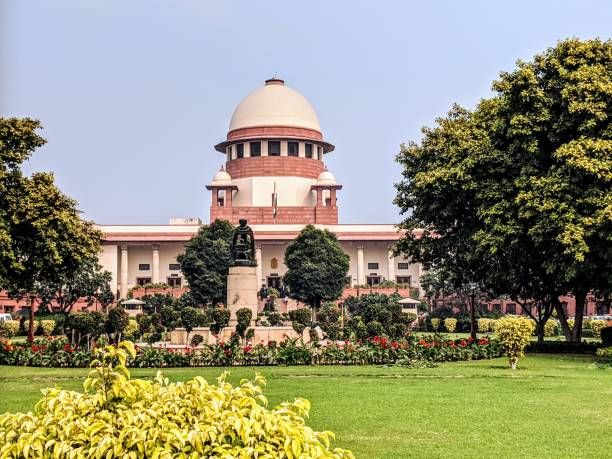
The Supreme Court on 4 November sought a response from the Union government and the Election Commission of India on petitions challenging a law that gives the Chief Election Commissioner and Election Commissioners blanket, lifelong immunity from legal action. A bench headed by Chief Justice of India Surya Kant issued notice to both the Centre and the Election Commission and listed the petitions for 18 December. The Supreme Court CEC immunity law case will test whether the immunity survives a challenge on constitutional grounds.
The Supreme Court CEC immunity law petitions challenge Section 16 of the Chief Election Commissioner and Other Election Commissioners (Appointment, Conditions of Service and Term of Office) Act, 2023. The petitions were filed by Rashtriya Janata Dal MP Manoj Jha, represented by advocate Tanya Srivastava, and by advocate Arun Kumar Agrawal, represented by advocate Neha Rathi. A bench of Chief Justice Surya Kant and Justices Joymalya Bagchi and V. Mohana issued the notice while hearing a separate set of petitions on the Special Intensive Revision of electoral rolls.
Section 16 says no court shall entertain or continue any civil or criminal proceedings against any person who is or was a Chief Election Commissioner or an Election Commissioner for anything done or said when, or in the course of acting or purporting to act, in the discharge of official duty. The protection applies during the official tenure and after retirement. The petitioners say the provision is unconstitutional, goes beyond the powers given to the Election Commission of India, and violates the basic structure of the Constitution.
The Supreme Court CEC immunity law petitions say the provision bars the jurisdiction of constitutional courts and interferes with the power of judicial review, which is part of the basic structure of the Constitution. They say that until the 2023 Act was passed, Parliament had not granted any blanket immunity to Election Commissioners. The petitioners point to Article 361 of the Constitution, under which the President and the Governors of states enjoy express constitutional immunity for acts done in performance of their official powers and duties. The Supreme Court CEC immunity law petitions argue that no such express immunity exists for Election Commissioners.
Supreme Court CEC immunity law: what the provision says
The petitioners say the immunity under the provision has no exception, even for acts allegedly done without good faith or outside the officials' jurisdiction. Other constitutional functionaries who enjoy protection for acts done in the course of their duties usually have it only for acts done or intended to be done in good faith. Under the provision, the Chief Election Commissioner and Election Commissioners have blanket immunity without any such exception, and the petitioners say that approach is unconstitutional and disproportionate.
The Supreme Court CEC immunity law plea also says the issue has gained significance because of alleged irregularities reported in the conduct of the ongoing Special Intensive Revision of electoral rolls. The petitioners say the blanket protection deprives citizens of the civil and criminal remedies otherwise available against the Chief Election Commissioner and Election Commissioners. They have urged the court to declare the provision unconstitutional.
The Supreme Court CEC immunity law petitions and the next date
The court has not ruled on the provision. It has only asked the government and the poll body for their replies. The 2023 Act, as first introduced, did not contain any provision granting such blanket immunity to the Chief Election Commissioner and Election Commissioners. The immunity clause was added to the law during its passage through Parliament.
The Supreme Court CEC immunity law bench issued notice on 13 October on a petition by the Association for Democratic Reforms, an election watchdog, and tagged it with an earlier plea by the non-governmental organisation Lok Prahari. The petitions filed by Manoj Jha and Arun Kumar Agrawal will be heard on 18 December, while the separate Special Intensive Revision matter returns on 19 November. Section 16 remains in force.
Meta title: Supreme Court CEC immunity law challenge listed for reply Meta description: The Supreme Court CEC immunity law petitions challenge Section 16 of the 2023 Act, which gives the CEC and Election Commissioners lifelong immunity. Meta keywords: basic structure, Election Commission of India, Manoj Jha, Arun Kumar Agrawal OG title: Supreme Court CEC immunity law challenge listed for reply OG description: The Supreme Court CEC immunity law petitions challenge Section 16 of the 2023 Act, which gives the CEC and Election Commissioners lifelong immunity. OG type: article Meta robots: index follow Canonical URL: https://www.matrimonyjustice.com/supreme-court-cec-immunity-law-response Structured data (JSON-LD): {"@context": "https://schema.org", "@type": "NewsArticle", "headline": "Supreme Court CEC immunity law challenge listed for reply", "description": "The Supreme Court CEC immunity law petitions challenge Section 16 of the 2023 Act, which gives the CEC and Election Commissioners lifelong immunity.", "mainEntityOfPage": "https://www.matrimonyjustice.com/supreme-court-cec-immunity-law-response"} Status: READY_BLOCKED_AT_UPLOAD
Related articles in Law & Government
View all Law & Government →Browse more stories in Law & Government.