
Supreme Court leaves Maryland gun law in place
The Supreme Court declined without comment to hear a challenge to Maryland's limits on carrying guns in places the state calls sensitive.
by Trends DeskNovember 19, 20263 min read
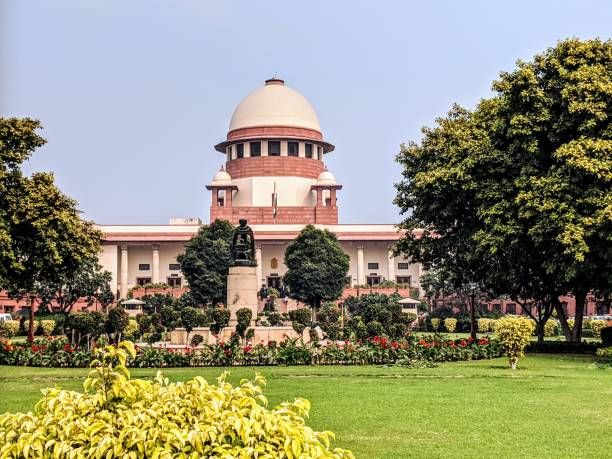
The Supreme Court declined on Monday to consider a challenge to a Maryland law restricting where people can carry guns. The Maryland gun law bars carrying concealed weapons into schools, mass transit, bars and other areas the state calls sensitive places. The high court declined the case without comment, but Justice Clarence Thomas wrote separately to say he is skeptical about the law and others like it. The Maryland gun law will stay in effect while the justices turn to other gun cases.
The case, Novotny v. Moore, was brought by gun-rights groups, including the Maryland affiliate of the National Rifle Association, and several firearms-owning residents. They asked the Court to review a decision of the 4th U.S. Circuit Court of Appeals, which had largely upheld Maryland's restrictions. The Maryland gun law dispute reached the Court after a divided appeals court ruling in January 2026, and the denial leaves that ruling in place.
What the Maryland gun law covers
Maryland enacted the limits after the Supreme Court's 2022 decision in New York State Rifle and Pistol Association v. Bruen, which set a history and tradition test for gun measures. The state's 2023 law, signed by Governor Wes Moore, added bans at college campuses, hospitals, power plants, amusement parks and places that sell alcohol or cannabis for on-site consumption. Older limits already covered public transit, casinos, schools and public protest sites. The Maryland gun law now reaches across the everyday places where people gather, from state parks to healthcare facilities, and the state calls them sensitive places.
A federal judge in 2023 upheld some of the location limits and blocked others, and both sides appealed. The 4th Circuit then approved the disputed bans, though it struck down a separate restriction on private property open to the public. That part of the ruling was not restored by Monday's denial. The denial does not mean the Supreme Court itself has decided that every challenged restriction is constitutional.
Why the Maryland gun law drew a challenge
Novotny v. Moore challenged the bans as a breach of the Second Amendment, arguing that the state had stretched the idea of a sensitive place too far. The 4th Circuit disagreed, holding that each law banned firearms in a place the state could treat as sensitive. The Maryland gun law case asked the justices to test that view against the history and tradition standard the Court set in Bruen. None of the justices dissented from the denial, and the Court gave no reason for turning the case away.
The refusal comes as the Court prepares to hear arguments over state laws banning AR-15s and similar semiautomatic firearms, measures often called assault weapons bans. Those cases, from the Chicago area and Connecticut, will be heard next month. The Maryland decision leaves the gun debate open, with the justices set to weigh a different kind of ban in the weeks ahead.
What Thomas said
Justice Clarence Thomas agreed with the denial, but not because the state's theory looked strong. He wrote that each restricted Maryland location raises distinct issues and that the lawsuit challenged them too broadly. Thomas, who wrote the 2022 majority opinion in Bruen, said he would consider the issue in a more narrowly focused case. The Maryland gun law may yet face that test, and Thomas signalled that he would vote to take up a future challenge drawn more tightly.
For now, nothing changes for Maryland gun owners: the sensitive places rules that were already on the books remain the law. The Maryland gun law stays in force, and the next word on the issue will come in a narrower case, or in the AR-15 arguments next month.
Related articles in Law & Government
View all Law & Government →Browse more stories in Law & Government.