
Supreme Court split over federal agency fines power
The Supreme Court seemed divided over federal agency fines in a case asking whether the Labor Department can order a farm to pay over $550,000.
by Trends DeskNovember 19, 20264 min read
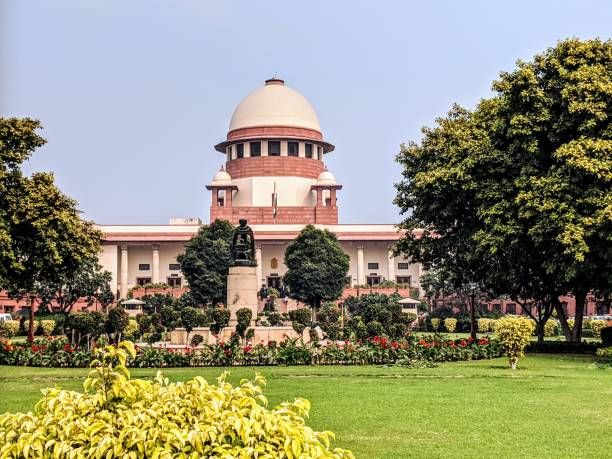
The Supreme Court seemed divided on Tuesday over whether federal agencies can impose fines on businesses that break federal law. The justices heard argument in Department of Labor v. Sun Valley Orchards, which asks whether the Labor Department can use its own judges to impose federal agency fines of more than $550,000 on a New Jersey farm, plus back wages. The case turns on who decides when a business has broken the law: the agency or a federal court with a jury. The argument showed how far apart the justices are on federal agency fines.
Sun Valley Orchards is a farm in New Jersey that hires seasonal workers through the H-2A visa program. The Department of Labor found the farm had broken several program rules, including unsafe drinking water, 20-bunk rooms, broken sinks and unpaid wages. The department's own judges ordered the farm to pay more than $550,000 in federal agency fines and back wages. Sun Valley challenged the order, arguing that the government cannot decide its own claim for money without a jury trial.
A federal district court sided with the department, ruling that the dispute involved public rights Congress may assign to agency judges. The Third Circuit reversed that ruling in July 2025, holding that the department cannot decide a private contract dispute before its own judges. The Supreme Court agreed to hear the case and consider two questions: whether Article III bars the department from collecting money from employers in its own proceedings, and whether the statute behind the H-2A program, 8 U.S.C. section 1188(g)(2), authorizes it to do so.
The Third Circuit relied heavily on the Supreme Court's 2024 decision in SEC v. Jarkesy, which held that the Securities and Exchange Commission could not impose federal agency fines for securities fraud where the defendant was entitled to a jury trial. Robert Johnson of the Institute for Justice, arguing for the farm, said the dispute rests on a contract and belongs in federal court. Deputy Solicitor General Sarah Harris, arguing for the Department of Labor, said Congress gave the secretary of labor power to "impose" fines on employers in the program and that federal judges lack the resources to handle every such dispute.
Several Republican-appointed justices pressed Harris on whether immigration power covers money penalties. Chief Justice John Roberts told her, "It seems to me you're trying to extend broad authority beyond the justification of its application." Justice Clarence Thomas said the case cannot rest on immigration authority alone: "You can't rely on immigration as a basis for this." Justice Brett Kavanaugh took the firmest line, calling the court's 1987 decision in Tull v. United States a "fairly definitive statement" that civil penalties can only be enforced in court.
The court's three liberal justices pushed back. Justices Elena Kagan, Sonia Sotomayor and Ketanji Brown Jackson said immigration was central, because the program protects domestic workers from being undercut by foreign labor. Kagan noted that Jarkesy itself said some subjects, including immigration, call for the public rights exception. Sotomayor asked how disruptive it would be for federal courts to take over enforcement. Harris warned that a ruling that civil penalties must always go to Article III courts would be the "nuclear option" for federal agency fines.
What federal agency fines are at stake in the Sun Valley case
The stakes reach beyond one farm. If the court limits the disputes agencies may decide through their own judges, agencies could lose a tool they use to impose federal agency fines and enforce worker protections. Agency tribunals generally move faster than federal courts, and a ruling against the department could shift many cases onto federal judges. A decision is expected in coming months.
How the court may rule on federal agency fines
The argument left no clear sign of where the majority stands. The conservative justices sounded doubtful that the H-2A program's employer requirements fall within the public rights exception, while the liberal justices sounded ready to accept the government's view. Justice Amy Coney Barrett sounded cautious about broad executive power, and Roberts questioned the government's reading of a 1909 decision that allowed $100 administrative fines on shipping companies. A narrow ruling could turn on the wording of the H-2A statute. A broad one could reach federal agency fines across the government.
Whatever the court decides, the ruling will set the terms for how the Labor Department and other agencies can impose federal agency fines on employers who break federal rules. The decision will come later in the term.
Related articles in Law & Government
View all Law & Government →Browse more stories in Law & Government.