
Toyota hydrogen fuel cell Hilux targets 2027 Dakar debut
Toyota Gazoo Racing will race a hydrogen fuel cell Hilux at the 2027 Dakar Rally, using the desert race to test fuel cell tech for a road-going truck.
by Trends DeskNovember 19, 20264 min read
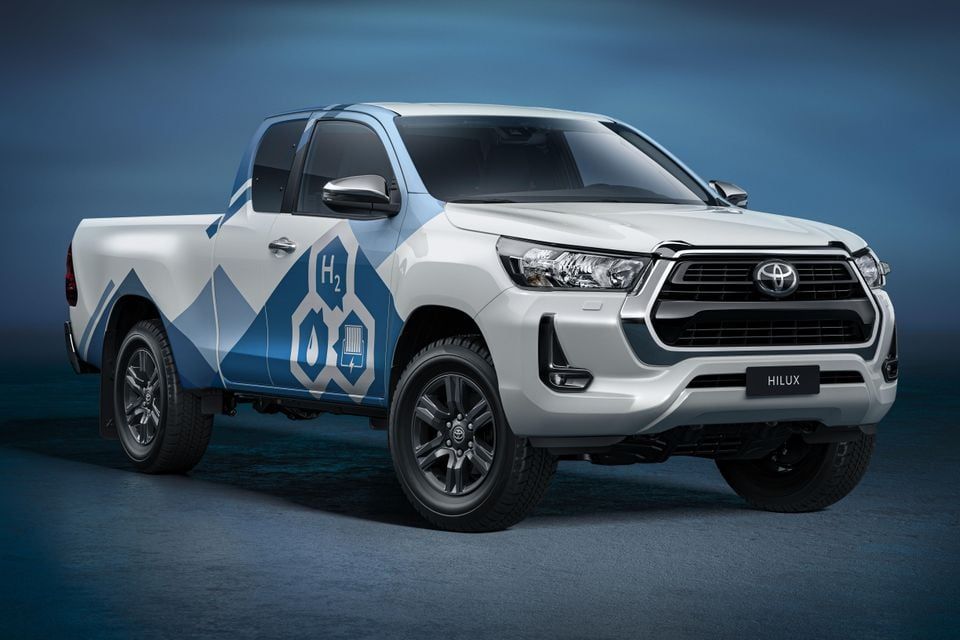
Toyota Gazoo Racing will race a hydrogen fuel cell Hilux at the Dakar Rally in January 2027, in the first test of the company's hydrogen fuel cell technology in desert competition. The truck, called the DKR GR FC Hilux, will run in the Dakar Future Mission 1000 category, a class for experimental vehicles and new technology. The Dakar Rally 2027 runs from January 1 to 15 in Saudi Arabia, and the hydrogen truck will cover about 1,000 kilometers of Dakar stages.
The hydrogen fuel cell Hilux replaces the twin-turbo petrol V6 of the standard DKR GR Hilux with a zero-emission hydrogen powertrain. Two fuel cell stacks in the hydrogen fuel cell Hilux produce 400 kW combined, roughly the output of three Toyota Mirai fuel cell cars. Four high-pressure hydrogen tanks of the type used in the Mirai hold 8.4 kg of hydrogen between them. The truck's only tailpipe emission during desert running will be water vapor. Toyota calls the setup a "2.5-generation" fuel cell system, blending parts from its second-generation production fuel cells with newer elements from its third-generation architecture.
The Dakar Rally runs over two weeks across about 8,000 km of Saudi Arabian desert. The hydrogen fuel cell Hilux will tackle roughly 621 miles of special stages in the Future Mission 1000 class, which was set up in 2024 to test new technology vehicles over 1,000 km. Construction is complete, Toyota said, and the truck is undergoing dynamic testing before its debut. Development and assembly took place at Toyota's European research and development facility in Zaventem, Belgium.
How the hydrogen fuel cell Hilux works
The DKR GR FC Hilux keeps the same tubular frame, safety cell, suspension and brakes as the petrol version, with the hydrogen powertrain fitted in place of the V6. The two fuel cell stacks and four hydrogen tanks sit in a truck that is 4.5 meters long, the same size as the premier Ultimate category for the World Rally-Raid Championship. Dania Akeel will drive the truck. Akeel was a Dakar Rally stage winner in 2025 and won the Challenger class at the World Rally-Raid Championship round in Abu Dhabi.
The project is a joint effort. Overdrive Racing, which runs the Toyota Gazoo Racing rally-raid team, worked on the build with Toyota Motor Corporation and Toyota Racing in Cologne, alongside DENSO, Toyo Tires and IAV. Jameel Motorsport, Toyota and Lexus's Saudi Arabian distributor, will manage local logistics and support. The Dakar Rally marks the first of five rounds in the World Rally-Raid Championship series.
Why the hydrogen fuel cell Hilux races Dakar
Toyota is using the Dakar Rally as a proving ground for fuel cell technology. The testing will focus on fuel cell downsizing, cooling performance, durability and energy management, all under desert heat, rough terrain and long stages. Toyota said data gathered during the rally will feed into its commercial vehicle plans, including a road-going Hilux Fuel Cell truck planned for 2028. That truck is expected to offer a driving range beyond 400 kilometers and a towing capacity of up to 2.5 tonnes.
The hydrogen fuel cell Hilux is the latest step in a program that has already included hydrogen-powered Corollas, GR Yaris prototypes and the HySE hydrogen buggy project. It will also be the first time Toyota combines hydrogen and fuel cell technology in a single motorsport campaign. Toyota Gazoo Racing has used racing to test new technology for years, and the company said the Dakar Rally's mix of heat, rough ground and long stages makes it a strong test for fuel cells.
What the hydrogen fuel cell Hilux means for road cars
The race truck is a test bed, not a production car. The road-going hydrogen fuel cell Hilux is planned for 2028, with a target range of more than 250 miles and a maximum towing capacity of 5,500 pounds. Thailand's Board of Investment has approved a hydrogen fuel cell line at Toyota's Ban Pho plant, with production of the fuel cell Hilux due to start in December 2027. Output is planned at 3,000 vehicles a year at first, for export markets including Europe, Australia and New Zealand.
The DKR GR FC Hilux will make its competitive debut from January 1 to 15, 2027, at the Dakar Rally 2027. It will not chase the overall class win. Instead, the hydrogen fuel cell Hilux is entered in the Dakar Future Mission 1000 category, where the test is whether a hydrogen truck can finish 1,000 km of desert stages.
Related articles in Autos & Vehicles
View all Autos & Vehicles →Browse more stories in Autos & Vehicles.