
Union fight over foreign arbitral awards tests India
The Supreme Court dismissed the Union's challenge to foreign arbitral awards favouring Vedanta and Ravva Oil, warning that enforcement fights hurt India.
by Trends DeskNovember 19, 20263 min read
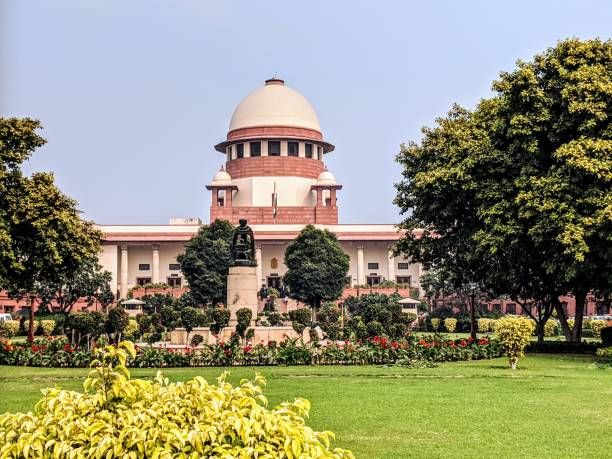
The Supreme Court has dismissed the Union government's challenge to the enforcement of two foreign arbitral awards in favour of Vedanta Limited and Ravva Oil (Singapore) Pte Limited, and warned that long fights over enforcement hurt India's credibility as a place to do business. A bench of Justices J. B. Pardiwala and Manmohan heard the case in November 2026 and dismissed the Union's appeal against a Delhi High Court judgment of 1 July 2026.
The bench, led by J. B. Pardiwala, questioned the government's resistance to enforcing the foreign arbitral awards even after courts in Malaysia had examined them. "And we talk about all of this arbitration and seat and this and that? ... Nobody will trust you," the bench observed, raising concerns about the effect of drawn-out litigation on India's standing as an arbitration destination. The court noted that the High Court had considered all relevant matters and that no part of it warranted the Supreme Court's intervention.
The dispute goes back to a 1994 production sharing contract between the central government and a consortium of companies to develop the Ravva oil field in the Krishna-Godavari Basin. Disputes over the contract led to arbitration in Kuala Lumpur. A tribunal passed a partial award in October 2004, leaving the question of quantification open, and the award was upheld by the Malaysian Federal Court in 2011.
In July 2014, the government issued show-cause notices seeking recovery of about $99 million from the companies. A reconstituted tribunal passed a final award in October 2016. The government opposed enforcement of the foreign arbitral awards, citing limitation, public policy and the tribunal becoming functus officio, a term for a body that has finished its task and has no further power.
On 1 July 2026, Justice Jasmeet Singh of the Delhi High Court rejected those objections in a 67-page judgment and allowed the petition filed by Vedanta and Ravva Oil for enforcement of the foreign arbitral awards. The court held that the enforcement petition was within limitation and that the tribunal had kept jurisdiction over quantification. The Supreme Court's order of 2 November 2026 is confined to dismissing the Union's special leave petition against that judgment.
Foreign arbitral awards and the wider pattern
A study published in Arbitration International points to a wider pattern behind the disputes over foreign arbitral awards. Researchers Mohit Yadav, Gaurav Pathak and Anush Ganesh analysed more than 2,000 petitions filed in the Delhi High Court between 2021 and 2024. They found that government entities challenged awards in 825 cases, compared with 412 in which they defended awards. Appeals challenging awards had a success rate of 14.66 per cent, with 50 in their favour out of 341 decided cases.
The researchers found that government entities were involved in 62.28 per cent of the cases filed under Section 34 of the Arbitration and Conciliation Act, 1996, the provision used to challenge an award. They found a mismatch between India's policy of promoting arbitration and the government's readiness to challenge adverse awards. Their study focused on appeals under Section 34, and the pattern it describes sits behind the fight over these foreign arbitral awards.
Foreign arbitral awards and the credibility question
The Supreme Court's concern about India's credibility as an arbitration destination comes from that gap between policy and practice in cases over foreign arbitral awards. The court has also flagged long delays in the execution of awards in a separate case, asking the Law Commission of India to study reform of the framework for enforcing them. In that case, the parties were still litigating more than 24 years after an award made in 2002.
Related articles in Law & Government
View all Law & Government →Browse more stories in Law & Government.