US apartment market reset tests owners on financing
US apartment market owners face refinancing deadlines in 2026, with 13% of multifamily mortgage balances due to mature this year.
by Trends DeskNovember 19, 20264 min read
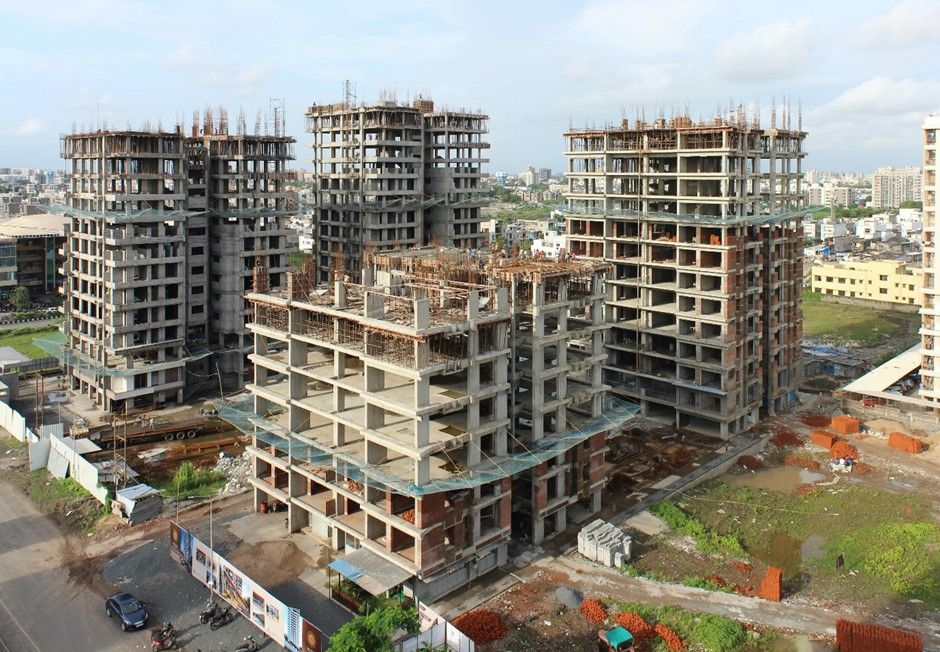
The US apartment market reset is testing owners on financing as much as on price, according to a November 4, 2026 report from Global Banking and Finance. An apartment building can stay occupied while its financing becomes hard to sustain, and that tension sits at the center of the current correction.
The Mortgage Bankers Association estimated that 13% of outstanding mortgage balances backed by multifamily properties would mature in 2026. Those maturities bring refinancing decisions into focus for owners and lenders in the US apartment market. A loan that was workable at a lower rate may not work at the rate available when it comes due, and rental income had to cover the new payment.
The Federal Reserve found in its May 2026 Financial Stability Report that commercial property prices had further stabilized after significant declines, while vulnerabilities linked to upcoming refinancing remained. Price stabilization had not removed financing risk. Owners still faced the question of whether the income from a property could support new borrowing on current terms.
Financing pressure in the US apartment market
Bruce Fraser, managing director of Elkhorn Capital Partners, a real estate private equity firm focused on multifamily properties, said the correction tested whether a property's income and financing could support ownership through a difficult market. He said some difficulties began when buyers treated inexpensive borrowing as a lasting condition.
Fraser pointed to owners who relied on temporary interest-rate caps, which limit exposure to rising rates, without preparing well enough for their expiration. The lesson, in his view, was to judge financing over the full ownership period, including what happens when protections end or loans mature.
"We're never going to bet an asset on rates going down or cap rates going down," Fraser said. Capitalization rates relate a property's operating income to its value. His point was that an investment should not need more favorable valuation conditions to justify its purchase price.
Rents and building in the US apartment market
Rental income in the US apartment market also faced pressure in parts of the country. Harvard's Joint Center for Housing Studies reported that asking rents for professionally managed apartments fell 0.6% from a year earlier in the fourth quarter of 2025. Declines in the South and West drove that national result, showing how much location mattered in the US apartment market.
Construction starts in the US apartment market slowed without disappearing. Harvard found that 488,000 multifamily units were completed in 2025, down 20% from 2024. Construction starts stayed above their pre-pandemic average, a second construction starts signal that building had not stopped. Together, those findings argued against assuming either a uniform recovery or an immediate shortage across the whole country, and the US apartment market varied widely by location.
Location deserved the same attention as financing, Fraser said. He placed weight on employment growth, housing affordability, and competing apartment supply, considered together. A growing employment base could support rental demand, while substantial nearby development could still limit the rents an owner could achieve. Expected rents had to make sense for the households a property served, and Fraser favored locations where rent took a smaller share of household income than the national average.
Underwriting in the US apartment market
Fraser said timing alone was not enough. "Timing can get you a discount, but the underwriting is what tells you whether the discount's enough," he said. Underwriting is the process of assessing a property's income, expenses, debt, and risks before deciding what to pay. A lower purchase price did not settle the questions about operating needs, financing costs, and local competition.
Debt maturities could bring sellers' expectations closer to buyers' valuations, Fraser said. He cautioned against treating a seller's financial difficulty as proof that a buyer had found value. The price still had to reflect what the property needed to operate, what its financing would cost, and how much competition it faced nearby.
Fraser said his hedge fund experience in the financial crisis shaped how he assessed risk. He focused on the cash remaining after expenses and debt payments, on opportunities to reduce borrowing, and on whether an investment could be held through weaker market conditions. Waiting could become more workable when the original purchase left room for setbacks, he said, but investors who assumed they could always sell quickly could find fewer choices when financing became harder to obtain. The US apartment market reset, in his assessment, came down to whether a property could sustain ownership if recovery took longer than expected.