US government backs OpenAI in Times copyright case
The US government has backed OpenAI in its copyright dispute with The New York Times, arguing that training AI models on published writing is fair use.
by Trends DeskOctober 24, 20264 min read
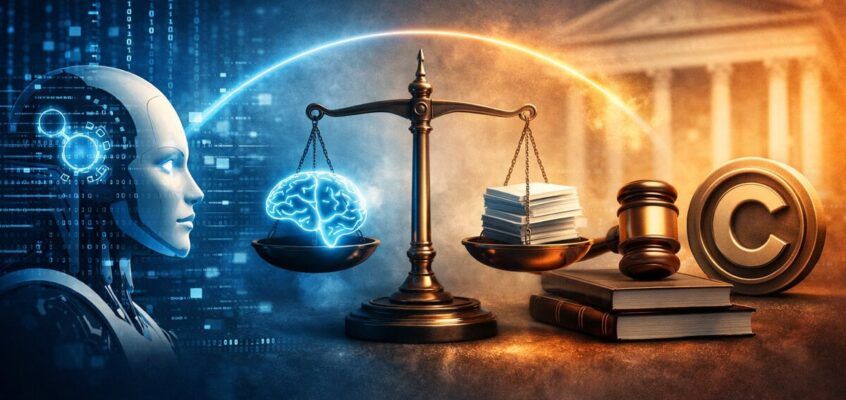
The United States government has backed OpenAI in the OpenAI copyright case brought by The New York Times, arguing that training artificial intelligence models on published writing is protected by copyright law, according to a report in Reuters. The Justice Department set out that position in a 20-page statement filed on 1 September in Manhattan federal court. It supported OpenAI's argument that AI training using troves of writings found on the internet falls under the fair use doctrine, a part of copyright law that allows some uses of protected work without permission. The filing does not decide the case, but it puts the government's view on the record in one of the most closely watched disputes about AI and copyright.
The Justice Department wrote that the creative possibilities and public benefits of training large language models on such material far outweigh any competitive harm, as reported by Reuters and the Associated Press. It told the court that siding with The New York Times and other publishers who argue the practice violates copyright law would thwart creative and scientific progress while hindering American prosperity and economic mobility. That argument links law to science, the economy and national security. The government also said AI models can help national security officials analyse and draw inferences from real-world facts, such as those conveyed in newspaper articles, since facts themselves are not protected in the same way as expression.
Why the OpenAI copyright case matters
The OpenAI copyright case turns on a question that now sits at the centre of the AI industry: whether copying published work to teach a model is a transformative use, or whether it is commercial copying that harms the market for the original work. The newspaper alleges that OpenAI and Microsoft used millions of its articles without permission to build ChatGPT. OpenAI argues that the training process is different from reproducing articles for readers, because a model learns statistical patterns from the material rather than storing and republishing the work itself. The government's filing adopts the second view, describing AI training as highly transformative, an important consideration in the fair use doctrine analysis.
The filing in the OpenAI copyright case is a statement of interest, which means the government is offering its legal view to the court without joining the case as a party. A judge is not bound by that view, and the court must still weigh the evidence, the statutory factors and the disputed facts about how AI training was done and how outputs affect publishers. The statement addresses only the training phase, not the separate claim about verbatim outputs.
What the government argued in the OpenAI copyright case
In the OpenAI copyright case, the government argued that constraining model development under a misunderstanding of the fair use doctrine would thwart creative and scientific progress while hindering American prosperity and economic mobility. It said the United States has a strong interest in the court rejecting any argument that training large language models on copyrighted texts violates copyright law. To illustrate the difference between learning from work and reproducing it, the filing drew on the example of a teenage Joan Didion typing out Ernest Hemingway's stories to learn how the sentences worked, an act the government said was not infringement. The point of the example, as reported, is that studying and learning from protected writing is not the same as publishing it as your own.
Associate Attorney General Stanley Woodward was quoted as saying that AI dominance is important to promote national security, prosperity and economic mobility for Americans, and that the administration would not let the country fall behind foreign rivals on the basis of an incorrect understanding of copyright law. That language joins a legal argument to a policy argument. The filing cited executive orders on AI leadership and innovation.
What the OpenAI copyright case still has to decide
The OpenAI copyright case still has to decide the issues the government's filing leaves open, including how the models were trained, what the outputs actually do, and whether any market harm to publishers has been shown. Other cases in the same area as the OpenAI copyright case have reached different answers on different facts, and a ruling in this case will not by itself rewrite copyright law for every AI company. For now, the government's intervention gives OpenAI a powerful ally in court, but the judge in Manhattan still has to decide whether the training at issue in this case falls within that doctrine.