
US oil refineries pushed harder as profits double
United States oil companies are squeezing more fuel from refineries and bringing shuttered plants back online, as ExxonMobil and Chevron doubled profits.
by Trends DeskNovember 19, 20264 min read
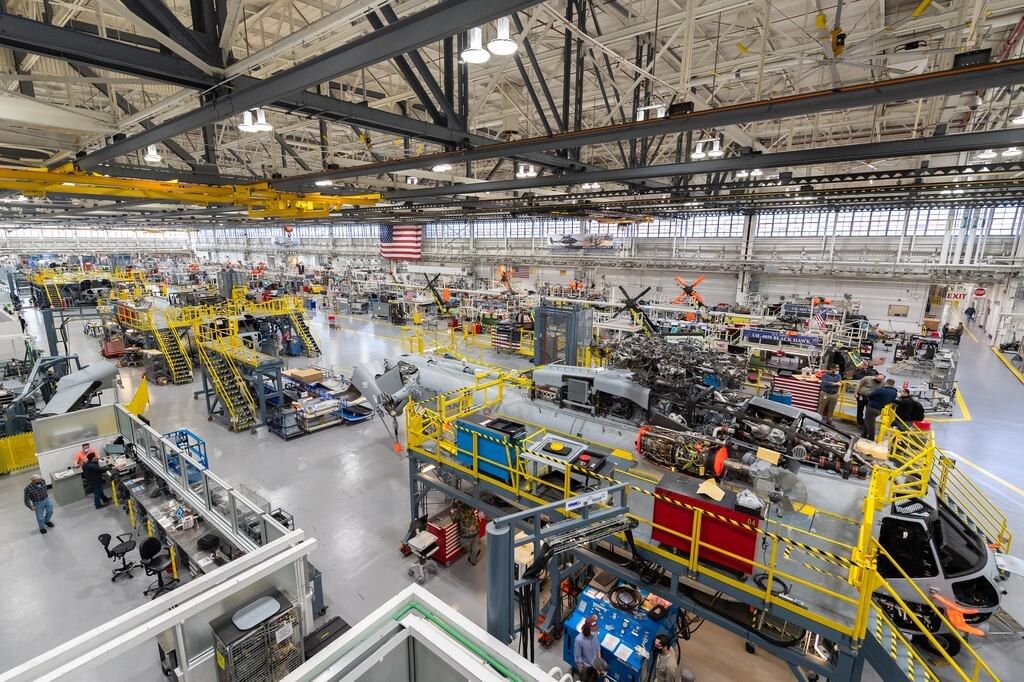
United States oil companies are investing to squeeze more fuel from oil refineries and bringing shuttered plants back online, in response to conflicts in Russia and Iran. ExxonMobil chief executive Darren Woods said on Friday that the company had achieved "record fuels utilization" outside of the Middle East, pointing to 100 percent crude utilization at US Gulf Coast oil refineries. Chevron said it achieved record throughput at oil refineries during the quarter, as oil refineries in the United States ran harder.
Both companies reported a more than doubling of quarterly profits on Friday. ExxonMobil profits for the third quarter came in at $15.4 billion, more than double the $7.5 billion in the year-ago period. Chevron profits were $9.9 billion, compared with $3.5 billion in the year-ago quarter. The profits came as oil companies gained from spiking commodity prices and refining margins, according to the report.
Oil refineries run at record rates in the Gulf
Woods said ExxonMobil had reached 100 percent crude utilization at its United States Gulf Coast oil refineries. Chevron chief executive Mike Wirth said the company was reinvesting to bring more energy to a supply-constrained market. His words were: "We're reinvesting to bring more energy to a supply-constrained market." Chevron vice chairman Mark Nelson said about 10 percent of world refining capacity remains offline.
The push to run oil refineries harder comes, and oil refineries are now central to the supply picture, as gasoline prices in the United States remain above $4 per gallon and diesel prices linger near all-time highs above $6 per gallon. It records that companies are investing to raise output and restart plants, while prices remain high.
Woods told analysts on an earnings conference call that there were a "lot of variables" behind the crunch in the supply of diesel and other refined items. Besides lost capacity in the Middle East and Russia from Ukrainian drone strikes, Woods cited a decline in Chinese refined output. He added: "My guess would be it will take certainly well through to next year before we see things getting back closer to normal. But it could be longer than that."
Oil refineries face lost capacity abroad
The report points to lost refining capacity outside the United States as a reason for tight supply of diesel. Attacks by Ukraine on Russian plants had cut output from plants that accounted for 6.5 percent of global refining capacity in 2025, according to KPMG. The International Energy Agency said in September that just five Russian refineries remain unaffected by drone attacks launched by Ukraine since the Russian invasion in 2022.
Russia's normal volume of 6.5 million barrels a day at 32 refineries had fallen to just 3.8 million barrels per day, its lowest level in 20 years, according to the International Energy Agency. An October 21 report from Rystad Energy warned that Russia could become a net importer of gasoline and diesel in 2027. On Friday, Russia's deputy prime minister for energy issues, Alexander Novak, told a reporter from state television that Ukraine had resumed attacks on Russian plants, hitting three oil refineries and one gas-chemical complex.
Iran's blockage of shipments through the Strait of Hormuz has also taken crude oil off the market. Executives pointed to a cutback in output from Asian plants. It records that the blockage, the attacks on Russian plants and the fall in Chinese refined output were all cited by executives as factors behind the tight diesel supply.
Refining margins and the outlook for diesel supply
Nelson said he expected refining margins to moderate as refinery runs recover and export flows increase, but that the change will take time. His words were: "I would expect margins to eventually moderate as refinery runs recover and export flows increase. But that will take some time." The comment applies to margins, the gap between the cost of crude and the price of refined fuel, which has been wide during the supply squeeze.
Woods said in a press release: "In the third quarter, we continued to rise to the challenge of meeting global energy needs." The statement came with the third quarter results that showed ExxonMobil profits at $15.4 billion. Chevron profits of $9.9 billion were reported on the same day. Price increases and supply shortfalls have sparked protests in parts of Asia, Latin America and Europe, according to the report. Surging gasoline and diesel prices have become a political problem for President Donald Trump, whose administration has pressed oil companies to soften the blow on consumers.
Related articles in Business & Industrial
View all Business & Industrial →Browse more stories in Business & Industrial.