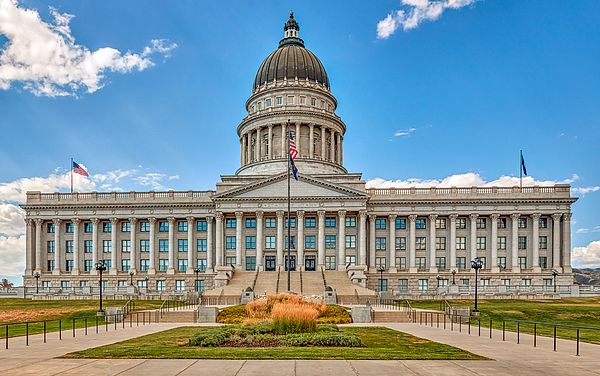
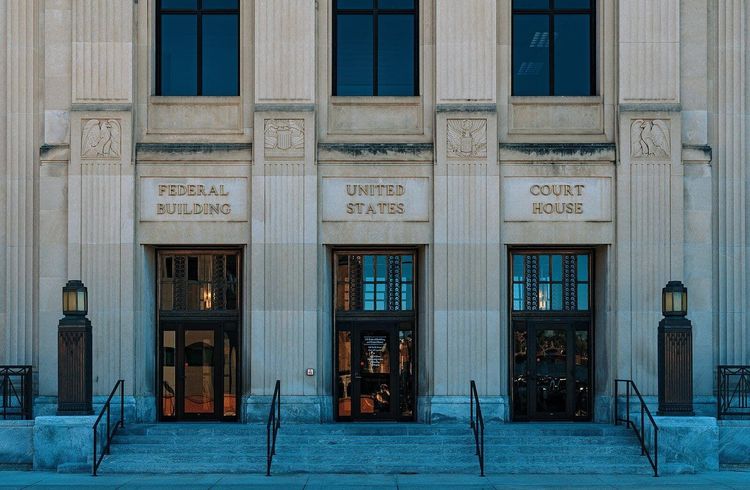
A federal judge dismissed the Justice Department lawsuit seeking Utah voter rolls, ruling the state database falls outside Title III of the Civil Rights Act.
by Trends Desk•October 25, 2026•3 min read
The Utah voter rolls ruling
A federal judge on October 23, 2026, dismissed with prejudice a United States Department of Justice lawsuit that sought to force Utah officials to hand over the state's unredacted voter registration database. United States District Judge David Barlow ruled that Utah's statewide voter database falls outside Title III of the Civil Rights Act of 1960. The dismissal was the federal government's 27th consecutive district court loss in its nationwide push to obtain confidential voter files, according to reporting on the ruling.
Barlow ruled that the statute's requirement to preserve records that "come into" an official's possession does not apply to the Utah voter rolls, because Lieutenant Governor Deidre Henderson's office develops, manages and maintains the voter registration database itself. "An ordinary English speaker would not say that she has come into possession of something that she created, established, and maintained," Barlow wrote. He added that courts have "no warrant to elevate vague invocations of statutory purpose over the words Congress chose."
Deidre Henderson, a Republican, is Utah's chief election officer. She had already given the Justice Department a publicly available version of the state's voter file, while refusing to hand over the full voter registration database. She refused to disclose confidential records, including full dates of birth, driver's licence numbers and partial Social Security numbers. The Justice Department sued Henderson in February 2026 after she declined to sign a proposed agreement governing access to the voter data. She later became the subject of a separate Justice Department investigation.
## Why the Utah voter rolls fall outside the statute
Title III of the Civil Rights Act of 1960 was enacted amid widespread racial discrimination in voter registration, and its purpose was to combat voter suppression. Barlow noted that history in his ruling, but held that the history does not stretch the statute's words to cover a database the official created and maintains. The judge, who was nominated to the federal bench by President Donald Trump in 2019, ruled that the preservation duty in Title III applies to records that come into an official's hands from elsewhere, not to records the official's own office builds.
The distinction matters for the wider dispute over voter data. The Justice Department has pursued voter registration records from states across the country, arguing that federal law entitles it to inspect records tied to elections. State officials in many of those cases have resisted handing over unredacted files, citing privacy laws that protect voters' personal details. Courts have now rejected the federal government's position in 27 consecutive district court cases, according to the tally reported with the Utah voter rolls ruling.
## What the Utah voter rolls decision leaves open
The dismissal with prejudice means the Justice Department cannot refile the same claim against Deidre Henderson on the same theory. The government can appeal the Utah voter rolls ruling to the Tenth Circuit Court of Appeals, although it has not yet announced whether it will do so. The Utah voter rolls ruling does not affect the publicly available version of the Utah voter file that Henderson already provided, and it does not resolve the separate investigation into Henderson.
For Utah voters, the immediate result is that their confidential registration details stay out of federal hands under this lawsuit. The case is one part of a larger national fight over who controls voter registration data and how much of it the federal government can demand. That fight continues in other courts, but the Utah voter rolls decision adds to a run of decisions that have read the relevant federal statute narrowly and kept unredacted state voter files closed.