Wall Street falls as AI spending costs weigh on stocks
Wall Street stocks closed lower on Oct 23 as AI spending costs and the coming earnings week kept investors cautious, Reuters reported.
by Trends DeskOctober 25, 20264 min read
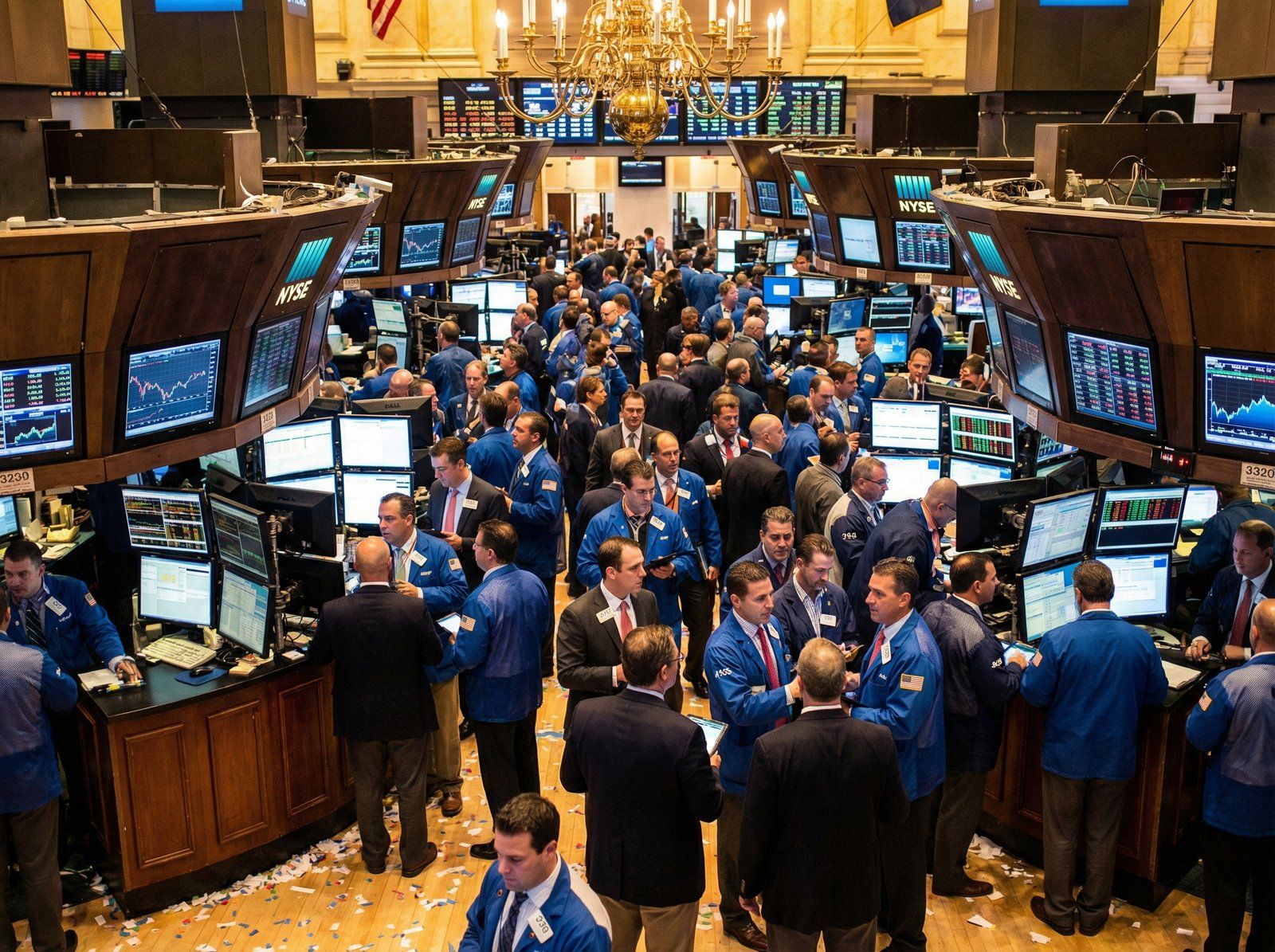
Wall Street stocks closed lower on Friday, October 23, as AI spending costs stayed at the centre of investor debate after a turbulent week for the technology trade. Reuters reported that the main indexes fell even as technology shares steadied, and traders turned their attention to a busy slate of corporate earnings and a Federal Reserve meeting in the week ahead.
The Dow Jones Industrial Average fell 652.82 points, or 1.23 percent, to 52,215.16. The S&P 500 lost 39.75 points, or 0.52 percent, to 7,623.68. The Nasdaq Composite lost 53.52 points, or 0.21 percent, to 25,955.34. For the week, the S&P 500 fell 0.5 percent and the Nasdaq dropped 0.7 percent, while the Dow rose 0.4 percent, its third straight weekly gain.
The Nasdaq Composite had suffered its biggest one-day drop since June the day before, as concern flared over financing costs to support heavy AI investment spending. On Friday, the S&P 500 technology sector posted a 0.35 percent gain, a modest recovery that did not lift the wider market. Most S&P 500 sectors fell, including declines of well over 1 percent for the consumer staples and consumer discretionary groups as well as the financial sector.
AI spending costs test tech shares
The question facing the market is how companies will pay for data centres, chips and power, and when that spending will turn into durable earnings. AI spending costs have become the yardstick against which each new earnings report is read, because the sums involved are large and the payoff is spread over years rather than quarters. Traders who had bid up companies tied to the AI boom now want proof that money poured into servers and specialised chips will produce steady profit.
Kristina Hooper, chief market strategist at Man Group, said: "There is still fallout from the questioning of the AI trade. There is certainly the potential that we see less invested in an AI data center build-out next year than has been projected. So I certainly think that is giving pause." Her comment captures the mood that ran through Friday trading, where steadier technology shares sat beside broad declines elsewhere.
Next week, about one-third of S&P 500 companies report quarterly results, including Alphabet, Microsoft and Amazon, three AI hyperscalers whose capital spending forecasts will be closely watched on Wall Street. Their plans will give investors a fresh read on AI spending costs at the companies doing most of the building. A forecast that holds steady may calm nerves, while a sharp rise may renew the debate about funding. Either way, the reports will shape how the market prices technology shares into the end of October.
AI spending costs and the week ahead
Beyond earnings, the Federal Reserve meeting will frame the week. Investors looked ahead to the policy decision as they weighed borrowing costs for companies and households alike. Higher financing costs make large investment programmes harder to fund, and they also change how investors value future earnings. That link explains why a debate about AI spending costs can move the whole market as well as technology stocks.
The energy sector rose 2.5 percent, hitting a record high. Brent crude hit its highest level since late April, after Houthi attacks in Saudi Arabia stoked concern over further disruption to energy supplies from the Middle East. Energy was the clear exception on a day when most groups fell, and its strength underlined how geopolitical supply worries can sit beside a technology-led selloff in the same session.
AI spending costs after Friday trading
Friday closed a week in which the market tried to balance two stories at once. One story is the long run of investment in artificial intelligence, which has driven gains for large technology companies. The other story is the cost of that investment, and whether earnings will arrive fast enough to justify it. AI spending costs link the two stories, because they decide how much debt or new share issuance companies may need.
Wall Street stocks will get more evidence on AI spending costs in the days ahead, from earnings reports and from the Federal Reserve meeting. Until then, Friday left the market in a cautious place: technology shares steadier than the day before, most other sectors lower, and the Dow still ahead for the week despite its sharp Friday fall. The S&P 500 and the Nasdaq Composite ended the week lower, a reminder that a steadier Friday does not by itself end a turbulent week.