
Wisconsin court to hear Act 10 appeal
The Wisconsin Supreme Court has agreed to hear a challenge to Act 10, the 2011 law that limited collective bargaining for most public employees in the state.
by Trends DeskNovember 19, 20263 min read
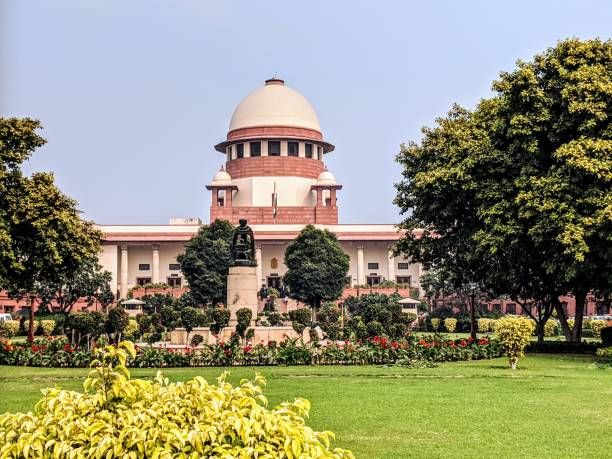
The Wisconsin Supreme Court has agreed to hear an appeal challenging the constitutionality of Act 10, the 2011 law that changed collective bargaining for most public employees. The court gave no reasons in its order. The case returns Act 10 to the state's highest court more than a decade after earlier rulings upheld the law.
Dane County Judge Jacob Frost ruled in late 2024 that Act 10 was unconstitutional under the state's equal protection clause. The Wisconsin Court of Appeals reversed that ruling. The plaintiffs, who filed the case in November 2023, argue that the law treats general municipal employees differently from public safety employees, who are exempt from most of its terms. The Seventh Circuit rejected a similar claim under the United States Constitution in 2013, and the Wisconsin Supreme Court rejected related challenges in 2014. The circuit court had denied a motion to dismiss the case in July 2024 but rejected most of the plaintiffs' claim at that stage.
What Act 10 changed for public workers
Act 10 was signed by then Governor Scott Walker in 2011. It limits collective bargaining for most public sector unions to salaries only and caps salary rises at the rate of inflation. The law has been upheld repeatedly in state and federal court, according to the Wisconsin Institute for Law and Liberty, which has defended it since it was passed. The institute, known as WILL, was founded in 2011 in part because of the legal fights over the law. WILL says it has taken part in many of the legal efforts over the law and published policy work on its effects.
WILL deputy counsel Lucas Vebber said the court had agreed to hear the appeal over a law that has stood since 2011. "The Wisconsin Supreme Court has agreed to hear the appeal regarding the constitutionality of Act 10, a law that has stood since 2011 and been upheld repeatedly in court," Vebber said. "WILL has fought to protect Act 10 since its enactment because of the substantial benefits it has provided to Wisconsin taxpayers and local governments. For 15 years, legal challenges have failed because the law was passed by a duly elected Legislature, signed by the Governor, and meets every constitutional requirement. We stand ready to make that case once again."
The cost of repealing Act 10
WILL research puts the cost of repealing the law at more than $2 billion a year, with $1.5 billion falling on schools and nearly $500 million on municipalities. Democratic lawmakers have said they plan to overturn the law and restore collective bargaining, and Governor-elect David Crowley and new Assembly Speaker Greta Neubauer have said the same. Lucas Vebber said the institute was ready to argue the case again. Crowley told WISN's Up Front that he was not worried about WILL's figures. "I'm not worried about what WILL is putting out there as it relates to analysis," he said. "What we need to be focusing on is what that long-term fiscal sustainability looks like for the state of Wisconsin."
What happens next
No date has been set for argument, and the court's order gave no timetable. The appeal will test whether the distinction between general employees and public safety workers can stand under the state's equal protection clause. The court now has five liberal and two conservative judges, according to the report on the order. A ruling against the law would reopen bargaining rules that have shaped Wisconsin schools and town halls for 15 years.
Related articles in Law & Government
View all Law & Government →Browse more stories in Law & Government.