
Worried about an AI bust? So is the Federal Reserve
Almost every Federal Reserve official raised concerns about what an AI bust could do to the financial system, according to minutes of the Fed's October meeting.
by Trends DeskNovember 19, 20264 min read
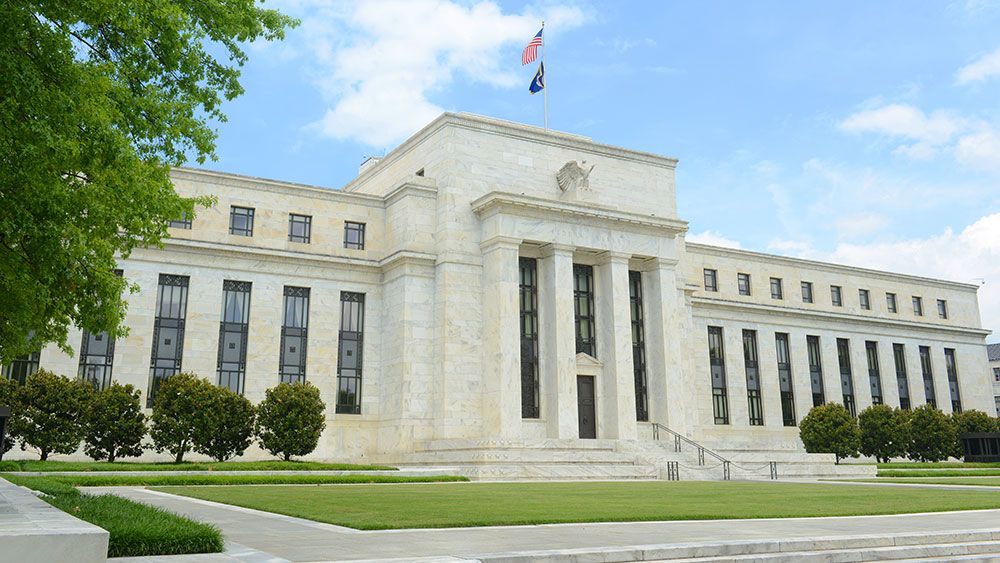
Almost every Federal Reserve official raised concerns last month about what could happen to the financial system if the artificial intelligence boom disappoints investors, according to minutes of the Fed's October meeting released on Wednesday. The minutes opened with an unusual section about risks to the financial system, and the fear of an AI bust ran through it. The Washington Post reported the discussion on November 18.
Fed officials noted that AI-related debt had grown rapidly, much of it through complex and opaque financing structures, according to the minutes. Fed staff singled out risks from circular financing arrangements among AI-related firms, in which chipmakers and other suppliers invest in or lend to the companies that buy their products. The buildout has become one of the economy's major engines, as tech companies borrow heavily to build data centers and buy the chips to fill them. If the payoff does not come and an AI bust follows, officials worry, the losses could spread to the investors and lenders paying for it.
Fed officials have flagged the risk of an AI-driven market drop in their minutes since late last year, but never with nearly every official weighing in. The doubts were spreading on Wall Street at the same time.
Minutes open with an unusual warning
The October meeting opened with a section about the risks of an AI bust to the financial system, a rare way to start the record. The staff warning went further, pointing to circular financing arrangements in which chipmakers and suppliers invest in or lend to the firms that buy their products.
Its semiannual financial stability report, released on Friday, found that 87 percent of market contacts cited AI as the top risk to the financial system, up from 50 percent in the spring survey and about 30 percent a year ago. AI now ranks ahead of a broad market sell-off, which 52 percent named. Debt sold to fund advanced computing passed $680 billion by October.
In October, Google's stock market value dropped by half a trillion dollars in a single day, a reminder of how fast an AI bust can hit the market. The Fed's report breaks the AI worry into three parts: share prices, the complex deals used to finance data centers, and cybersecurity.
Why the AI bust worry grew
The AI bust worry grew because the numbers behind the boom are so large. Kevin Warsh, the Federal Reserve chairman, said on Monday that central bank staff have started modeling how artificial intelligence could reshape the United States economy, including scenarios where the technology raises unemployment even as the economy grows. He was speaking at the Fed's Productivity and Jobs conference in San Francisco.
Warsh described three possible paths: a productivity boom that benefits workers, a boom that leaves workers behind, and an AI bust that drags down stocks and economic growth. "These are illustrative scenarios, not forecasts," he said, explaining that staff are using simple models to test what might happen over the next several years. The Fed is preparing for different outcomes, not predicting which one will happen.
Governor Michael Barr warned on Monday that the AI construction boom is increasingly financed through long-term computing leases, energy contracts and financial guarantees. The Fed estimates that the potential maximum value of these off-balance-sheet obligations now exceeds $3 trillion. Both point to the same concern: the financing behind the boom is hard to see in full.
What happens if the AI bust arrives
At his news conference after the meeting, Kevin Warsh did not mention officials' concerns about AI debt. The minutes, released on Wednesday, show the discussion was far more pointed behind closed doors. Almost every official raised concerns, and the minutes opened with a warning that officials had not given in this form before.
The Fed does not say a crisis is coming. Its survey is small, polling two dozen market contacts, and a risk named by 87 percent is a shared worry rather than a forecast. The central bank's next policy meeting is scheduled for December 8 and 9, and Warsh did not propose an interest-rate change in his Monday remarks.
What the minutes do show is that the AI bust has moved from a market debate to a central bank concern. The officials who set interest rates are now weighing what an AI bust would mean if the payoff from trillions of dollars in AI spending does not arrive.
Related articles in Finance
View all Finance →Browse more stories in Finance.