AI cyberattack threat India puts every business at risk
Rubrik has warned that the AI cyberattack threat India faces is growing, as AI agents shrink attack times to under a minute and put every business at risk.
by Trends DeskOctober 20, 20264 min read
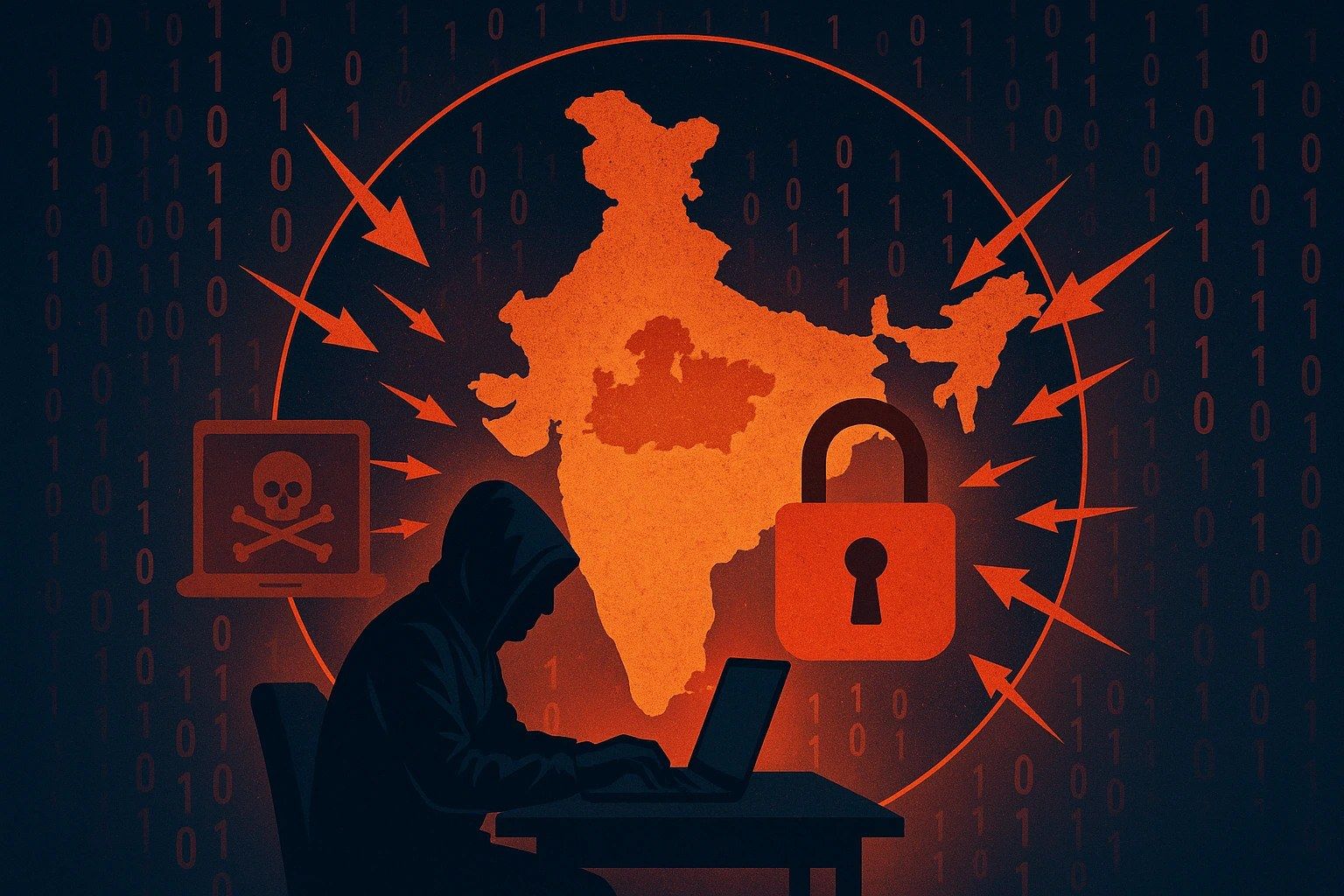
Cybersecurity firm Rubrik has warned that the AI cyberattack threat India faces is escalating rapidly, as autonomous artificial intelligence agents gain the ability to find vulnerabilities, exploit them and compromise systems with limited human intervention. The company says the growing AI cyberattack threat India faces could put every business at risk, from large enterprises to startups lacking dedicated security teams.
Cybercriminals have traditionally targeted organisations that can pay substantial ransoms, leaving smaller firms insulated. AI changes that calculation by making it economical to attack businesses with much smaller potential payouts. Attackers who once devoted considerable resources to a single target can now deploy autonomous agents to scan and strike multiple systems at a scale impossible for human operators, so the AI cyberattack threat India faces is spreading downmarket.
AI cyberattack threat India puts smaller firms in firing line
No one is immune to being attacked, no one is immune to getting breached, said Alok Agrawal, Chief Solutions Officer at Rubrik. He said agentic AI, which lets software systems execute tasks and make decisions autonomously, is changing the economics of cybercrime and forcing organisations beyond conventional cybersecurity. That could bring India's small and medium-sized businesses into the firing line, even with limited digital infrastructure or modest resources.
AI cyberattacks could unfold in less than a minute
The speed of AI cyberattacks is becoming another major concern. According to Anneka Gupta, Chief Product Officer at Rubrik, the time between intrusion and breach, which could previously stretch into weeks, has fallen sharply. With AI-driven attacks, the interval could shrink to less than a minute, challenging organisations that rely on security teams to investigate threats and manually start recovery. Businesses must prepare for prevention to fail rather than assume they can stop every attack.
That shift places a premium on business data protection and rapid recovery. Rubrik security specialists are adding AI to their recovery platform to help organisations identify affected systems, determine which data can be restored and automate parts of recovery. The company expects managed security service providers to play a bigger role, since smaller firms often cannot afford dedicated teams, letting businesses access business data protection as a managed service as the AI cyberattack threat India faces grows.
Rubrik's answer to the AI cyberattack threat India confronts
Rubrik is expanding its AI security portfolio around its Agent Cloud platform, built on three capabilities: visibility, runtime controls and recovery. The first lets companies identify which AI agents operate in their systems and what information they can access. The second adds controls to stop agents acting outside their authorised responsibilities. The third, Agent Rewind, helps organisations reverse actions taken by agents, including unintended deletion of information.
The company is also developing Code Guardian, a tool to find vulnerabilities in software code before attackers can exploit them, examining how multiple weaknesses could combine into an attack path. These investments in cyber resilience reflect the view that recovery capabilities must become as central to technology budgets as prevention itself.
India drives Rubrik's local investment push
As the AI cyberattack threat India confronts keeps growing, India is central to Rubrik's strategy as a technology development hub and a market. The company employs more than 1,200 people in Bengaluru out of a global workforce of approximately 4,000, and has opened an office in Pune. More than half of its research and development investment now goes to India, with Indian teams handling entire product development cycles from design and engineering to testing and launch. Rubrik security operations in India underpin that growth.
The company is increasing investment in partner training, certifications, technical support and joint customer engagements, and sees cyber resilience as a shared responsibility. Through such partnerships, businesses can access security and recovery capabilities as managed services rather than building their own infrastructure, staying ahead of the AI cyberattack threat India now faces.
Governments urged to update cybersecurity guidance
Rubrik has called on governments, including India, to update cybersecurity guidance for the age of AI adoption. Existing regulatory frameworks were not designed for an environment where autonomous software agents can identify and exploit vulnerabilities, said Agrawal, adding that the threat is real and the danger is very clear and present. Governments should issue guidance to help businesses manage the AI cyberattack threat India faces, rather than waiting for comprehensive regulations that take considerably longer.
As enterprises deploy more AI agents, monitoring their actions, restricting access and reversing unintended changes will become a significant part of corporate security planning, and a core part of cyber resilience.