AI-exposed graduates face weaker starts, study finds
A US Census Bureau study reports AI-exposed graduates saw a five point fall in initial employment and a 13 percent fall in initial quarterly earnings.
by Trends DeskOctober 25, 20263 min read
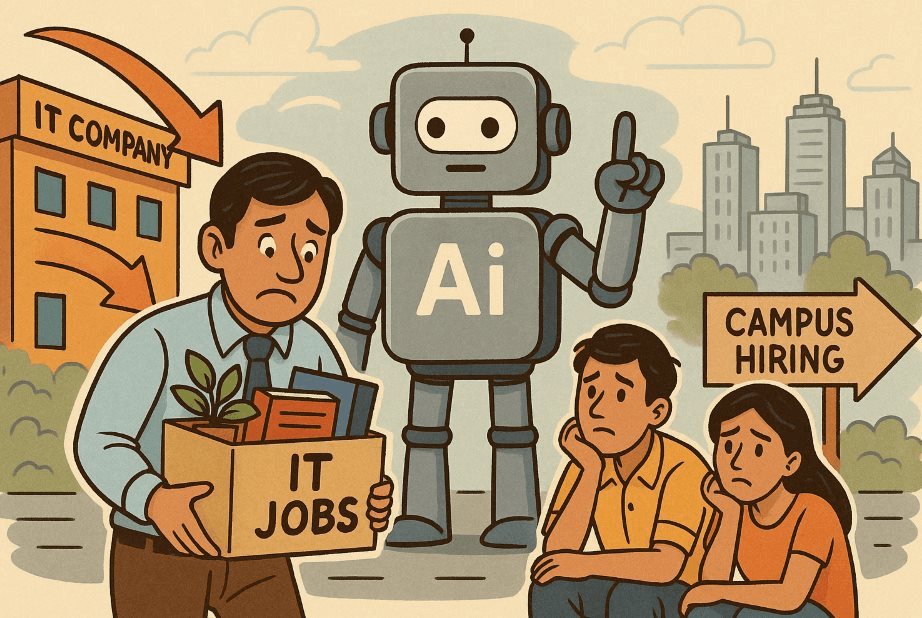
AI-exposed graduates entered the job market on weaker terms after ChatGPT arrived in late 2022, according to a September 2026 study from the US Census Bureau. The study is titled Graduating into Disruption: Labor Market Outcomes for AI-Exposed College Majors, and its authors are Cody Orr, Lee C. Tucker and Lawrence Warren.
The researchers grouped college majors by how exposed their work is to artificial intelligence, and they tracked initial employment for AI-exposed graduates in the quarter after graduation. They then compared outcomes for graduates in the most exposed tenth of college majors with graduates in less exposed fields. For AI-exposed graduates, the likelihood of initial employment fell by five percentage points in regression adjusted estimates, while initial earnings fell by 13 percent.
The study used administrative employment records. It covered about 29 percent of bachelor degrees issued in the United States between 2016 and 2024, as reported by Staffing Industry Analysts. Computer science, information systems and other software related fields dominated the most exposed tenth of college majors, that report said.
What AI-exposed graduates faced after graduation
The change began soon after large language models became widely available, the Census Bureau abstract said. Employment, earnings and job switching patterns for the most exposed college majors began to diverge immediately after the introduction of ChatGPT in late 2022.
For AI-exposed graduates, the earnings fall was large enough to compare with graduating into a large recession, the authors wrote. That comparison describes the size of the fall in initial earnings. It does not claim that the wider economy was in a recession at the time.
The effects faded as graduates moved further from labour market entry, the abstract said. They remained substantial for the most exposed majors, even after that fading. The study therefore describes a sharp early effect, rather than a brief dip that vanished at once.
How AI-exposed graduates moved into other work
About half of the fall in initial earnings came from lower pay within the industries that employed these graduates, the study found. The other half came from a shift in industry mix, as graduates took work in lower wage sectors such as restaurants and retail.
That shift matters because it changed where AI-exposed graduates started, as well as what they were paid, and it also changed the pattern of initial employment for the group. Some graduates who found work in traditionally higher paying industries still received lower pay on average, the study said. Once graduates found work, they were more likely to work in lower paying industries than less exposed graduates.
The researchers also examined job switching patterns and self employment and graduate school enrolment. A summary of the paper noted that rising self employment and graduate school enrolment could explain up to half of the employment drop. Remote work was also tested, and controlling for remote work barely changed the results in that summary, although remote work and AI exposure were highly correlated across majors.
What the study leaves open for AI-exposed graduates
The study does not, on its own, settle why hiring changed. It records a change in outcomes for the most exposed college majors after ChatGPT arrived, and it separates that change into pay within industries and movement between industries. It does not name a single employer decision as the cause for every graduate.
Readers should also note the scope of the work. It is a study of early outcomes, based on administrative records and on a grouping of college majors by AI exposure. Later outcomes, later cohorts and other measures of hiring may give a different picture, and the authors present the recession comparison as a measure of size, rather than as a claim about the whole economy.
The Census Bureau paper was released as working paper CES-WP-26-56, with results approved for release under authorisation number CBDRB-FY26-CES011-011. The paper reports 2,284,900 observations for the industry decomposition figure, a count that shows the scale of the records used.