California unemployment rate steady at 5.1% in September
California unemployment rate steady at 5.1% in September 2026, down 0.4% from a year earlier, with education and health jobs leading gains.
by Trends DeskOctober 18, 20263 min read
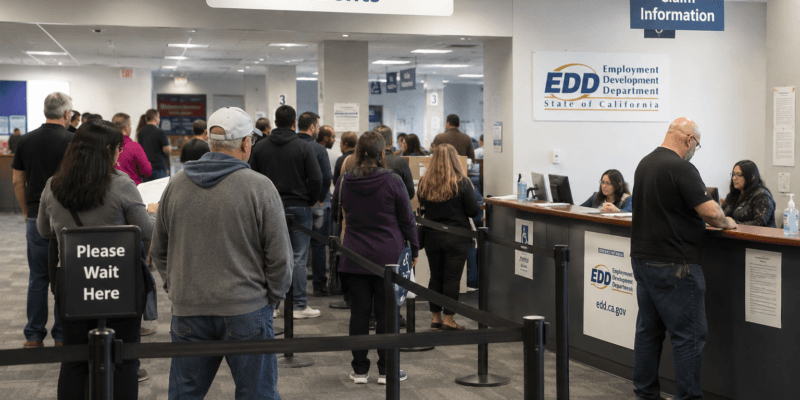
The California unemployment rate held steady at 5.1 percent in September 2026, according to the latest state jobs data, unchanged from the prior month but down four-tenths of a percentage point from a year earlier. A flat California unemployment rate suggests the nation's largest state labor market is finding its footing after a year of uneven hiring, with job creation concentrated in a handful of resilient industries. Private education and health services once again led the way in monthly gains, continuing a pattern in which care and learning sectors have carried much of the state's employment growth.
The September 2026 employment figures arrive as workers and employers watch for signals about the economy's direction. The state's jobless rate has hovered above the national average for much of the past two years, as technology-sector retrenchment, high housing costs and slower population growth weighed on hiring. Against that backdrop, a stable reading with a meaningful year-over-year improvement gives policymakers a cautiously encouraging data point. The California jobs report has become a closely watched barometer of whether the state's economy is stabilizing.
Private education and health services added the most positions during the month, extending a long-running trend in which hospitals, clinics and private schools have been the steadiest source of new hiring. Demand for health care keeps rising as the population ages, while steady enrollment has allowed private educational institutions to keep adding teachers and support staff. These education and health jobs have become the backbone of the state's employment growth, and the September 2026 employment data confirm their outsized role once again.
Where the jobs came from
The composition of September's gains shows how narrow the engine of job creation has become. While education and health employers expanded payrolls, other major sectors showed far less momentum, a dynamic that has defined the California labor market for much of 2026. The California unemployment rate may be stable, but the underlying mix reveals an economy dependent on a few service industries rather than broad-based expansion. That concentration is the California jobs report's quiet warning beneath the steady headline.
Labor economists note that health care hiring is less sensitive to economic cycles than technology or construction, which explains its outsize role. These education and health jobs tend to persist through downturns, cushioning the broader labor market when other sectors retrench. For workers, that resilience is the practical takeaway from the latest September 2026 employment release.
The year-over-year decline of 0.4 percentage points is the more telling figure. A year ago, the California unemployment rate stood higher, and the steady downward drift since then shows the labor market absorbing workers at a gradual but consistent pace. For job seekers, that means a slowly improving environment, particularly in health care, education and related support occupations.
For job seekers
For workers, the California jobs report offers a mixed but manageable picture. Unemployment at 5.1 percent means competition for open roles remains real, yet continued hiring in education and health points to concrete opportunities for those with relevant skills or a willingness to retrain. Community colleges have expanded short-term credential programs aimed at health care support roles, which continue to show strong demand across the California labor market.
Wage growth has moderated from the rapid pace of earlier in the decade without stalling. Employers in the leading sectors report ongoing difficulty filling positions, keeping upward pressure on pay for nurses, medical assistants and classroom support staff. That dynamic is why the California unemployment rate matters beyond the headline: it shows where bargaining power still sits with workers.
The rest of the year
Economists will watch whether hiring can broaden in the final months of the year. Holiday-season retail and logistics recruiting typically provides a seasonal lift, though e-commerce has changed its shape. Construction and manufacturing remain sensitive to interest rates and business investment decisions still working through the economy. For now, the California unemployment rate data tell a story of steadiness rather than strength, and whether stability turns into broader momentum is the question coming reports must answer.