Eveready non-battery push nears 45% of revenue
Eveready's non-battery business will account for 45% of revenue, the CEO said, as lighting and electricals near parity with batteries.
by Trends DeskOctober 21, 20263 min read
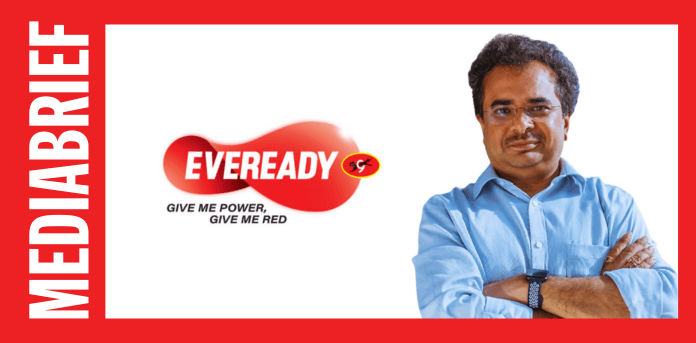
Eveready's non-battery business is set to account for 45 per cent of revenue, the chief executive said, marking a milestone in the battery maker's diversification, according to Outlook Business. The Eveready non-battery share spans lighting, flashlights and consumer electricals, and the Eveready non-battery milestone shows how far the company has travelled from its dry-cell origins.
The Kolkata-headquartered company has spent recent years building its non-battery portfolio. As a battery maker in India, Eveready is betting that lighting and electrical accessories can grow faster than the mature dry-cell category.
The shift matters because batteries, while stable, offer limited growth. Consumer electricals open larger addressable markets and benefit from India's infrastructure build-out and premiumisation trends, and diversification hedges against category disruption.
Eveready non-battery: the diversification engine
The Eveready non-battery portfolio centres on lighting, LED bulbs, battens and luminaires, alongside a modernised flashlight business now built around rechargeable and LED variants. The brand's deep distribution reach into small towns is a genuine competitive edge.
Management argues the trusted Eveready brand transfers well to adjacent categories, and the Eveready diversification story hinges on converting that trust into shelf space. New electrical accessories broaden the company's presence in retail outlets.
Margins in lighting can be thinner than in batteries, but volumes compensate. The challenge for any consumer electricals push is to keep investing in brand and distribution while defending profitability as competition intensifies.
Eveready non-battery push: what investors watch
With the Eveready non-battery share nearing 45 per cent, the stock moves closer to consumer-electrical peers than to pure battery makers. Eveready diversification will be judged on whether the newer businesses can sustain growth without dragging down overall returns, the key question for a battery maker in India in transition.
Execution risks remain: lighting is brutally competitive and price erosion is constant. The flashlight business must also keep innovating as rechargeable technology commoditises, even as working-capital intensity rises with a wider product range.
The company's distribution muscle is central to the story. Eveready's network reaches deep into semi-urban and rural India, markets where electrical brands often struggle for shelf space. That reach, built over decades selling batteries and flashlights, is now being pointed at lighting and accessories.
Competition, however, is unforgiving. Lighting has seen relentless price erosion as LED technology commoditised, and large electrical conglomerates defend their turf aggressively. Sustaining growth at acceptable margins will require constant product refreshes and tight cost control.
The lighting industry's structure favours strong brands with deep distribution, which plays to Eveready's strengths. While online channels grow, much of India's lighting demand still flows through electrical retailers and wholesalers, where relationships and credit terms matter as much as product specs.
Analysts covering the stock will now parse the segmental disclosures more closely, looking for the revenue split, margin trajectory and capital allocation between the legacy battery business and the newer ventures. Clear reporting will help the market price the transition.
The 45 per cent marker also sets a public benchmark against which future management commentary will be measured, raising the bar for delivery in coming quarters.
For now, the 45 per cent figure is a statement of intent as much as achievement. It tells shareholders the Eveready non-battery journey is about becoming a diversified electricals company, with batteries as the foundation, not the ceiling.
Management has said the shift toward non-battery lines will be gradual and funded through internal accruals rather than fresh debt.