Glucose Monitors Add 5 Hours in Healthy Range Daily
Continuous glucose monitors help type 2 diabetes patients spend five more hours a day in a healthy blood sugar range, per research reported by Medical Xpress.
by Trends DeskOctober 18, 20263 min read
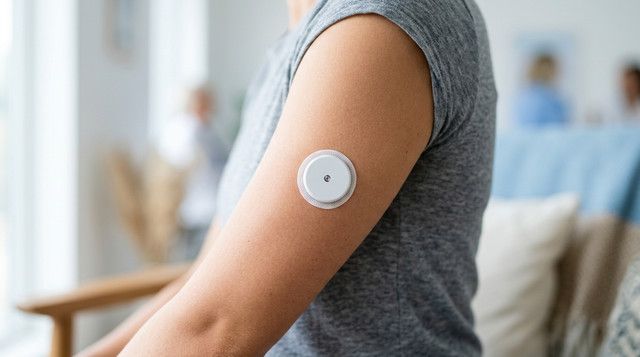
People with type 2 diabetes who use continuous glucose monitors spend about five more hours a day in a healthy blood sugar range than those who don't, according to research reported by Medical Xpress. The finding adds to the evidence that these small wearable sensors, which track blood sugar around the clock, improve day-to-day control.
How the monitors work
A tiny sensor worn on the skin, usually on the arm or abdomen, measures glucose in the fluid between cells and sends a reading to a phone or receiver every few minutes. A finger-prick test captures one moment. A monitor shows whether blood sugar is rising, falling or holding steady, with arrows for direction and speed, and can sound an alert before levels go too high or too low.
That lets people act early. Someone who sees a higher-than-expected reading after a meal can take a short walk, instead of finding out about the spike hours later.
Five more hours in range
"Time in range," the share of the day blood sugar stays within target, now sits alongside the better-known A1C test as a measure of diabetes control. Five extra hours a day is a lot. It means fewer spikes after meals, fewer dips overnight and less of the swinging blood sugar linked to fatigue, complications and long-term organ damage. Type 2 accounts for the vast majority of diabetes cases worldwide.
Beyond type 1
The sensors used to be prescribed mainly for people with type 1 diabetes or those on insulin. They are spreading into type 2 care because they have become more affordable and because the evidence keeps showing that real-time feedback changes behaviour. When patients can see what a meal, a walk or a missed dose does to their numbers, they adjust. Clinicians say that visibility is the whole point: it turns a condition you can't see into one you can watch.
Not everyone with type 2 diabetes needs one. Guidelines generally reserve the devices for people who struggle to hit targets with standard care. For patients whose blood sugar swings widely despite medication, or who have overnight lows they don't notice, the data can reveal patterns that quarterly lab tests miss. Over weeks and months, dawn spikes, post-dinner plateaus and weekend swings show up, and doctors can adjust medication timing, diet advice and exercise plans to the patient's actual routine.
The coverage question
Health systems have a stake too. Better time in range slows the damage behind the most expensive complications, such as kidney disease and vision loss, and may reduce emergency visits for severe highs and lows. As insurers decide whether to cover the devices, results like this help the case that they keep people healthier and, over time, cheaper to treat.
Experts caution that no device replaces the basics: balanced eating, regular movement, taking medication as prescribed and routine checkups. The research suggests continuous feedback makes those basics easier to stick with.