NBFC borrowings stay high as RBI flags bank links
NBFC borrowings grew 23.3 per cent in the year to December 2025, the RBI October Bulletin says, while bank loans and market paper funded more than 77 per cent.
by Trends DeskOctober 26, 20263 min read
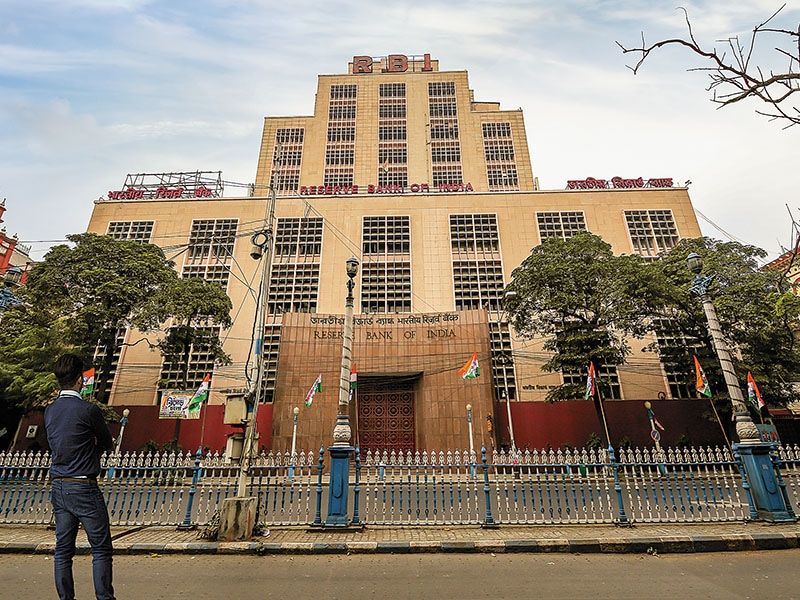
NBFC borrowings kept growing in 2025 even as the sector reported stronger profits and better loan books, the Reserve Bank of India said in its October 2026 Bulletin, released on October 23, 2026. Borrowings grew 23.3 per cent from a year earlier. Bank loans and market instruments such as debentures and commercial paper accounted for more than 77 per cent of funding, a level the central bank said calls for close watch from a systemic risk point of view.
NBFC borrowings and the funding mix
The Bulletin review covered the non-bank financial company sector through December 2025. It found that NBFC borrowings stayed tied to outside funding, with banks and debt markets supplying most of the money. The Reserve Bank of India said the link between non-bank lenders and banks remains an area that needs close monitoring, since stress in one part of the system can reach the other. The report did not present the funding mix as a new problem, but it kept the link in plain view.
Retail loans and industry kept driving credit growth. Retail loans made up 35.9 per cent of total NBFC credit at the end of December 2025, while industry made up 45.4 per cent. Secured lending, close to three-fourths of total advances, was the main growth driver. Vehicle loans stayed the largest retail segment, though their growth slowed. The shape of the loan book behind NBFC borrowings, with secured loans in the lead, helps explain why the sector could report better loan quality while still leaning on outside funds.
NBFC borrowings beside stronger loan books
The financial measures beside NBFC borrowings improved. The gross non-performing asset ratio improved to 2.7 per cent at the end of December 2025, while net non-performing assets fell to 0.9 per cent, a gain in asset quality. Capital buffers stayed strong, with capital adequacy, measured by the capital-to-risk weighted assets ratio, at 25.2 per cent, well above the regulatory floor of 15 per cent. Those capital adequacy buffers give lenders room to absorb losses, but they sit beside a funding profile that still depends on banks and markets for most of its money.
Gold loans were the standout retail segment. Loans against gold jewellery rose nearly 60 per cent from a year earlier, as high gold prices raised both collateral value and borrowing limits. The rise in gold loans shows how a change in one asset price can move lending fast. It also shows why the central bank tracks retail segments one by one, rather than treating retail credit as a single block.
NBFC borrowings and the wider October Bulletin
The October Bulletin carried four articles: the state of the economy, the transmission of bank lending rates, the review of the NBFC sector, and a study of economic activity across states. The state of the economy article said geopolitical frictions in West Asia and supply chain disruption had added to inflation pressure. A separate article on lending rates found that fresh lending rates fell by 93 basis points after a 125 basis point cut in the policy repo rate between February 2025 and March 2026.
The Bulletin also found rising use of artificial intelligence and digital tools by non-bank lenders. Text analysis of annual reports pointed to more focus on AI-driven customer applications, governance systems, digital infrastructure and data analytics. The shift in business models adds a new thread to supervision, since lenders now pair a traditional funding mix with newer tools for finding customers and managing risk.
The review, as reported by The Hindu BusinessLine on October 23, 2026, described a sector that lost some ground in market share even as profits and loan quality improved. The figures for NBFC borrowings point to a mixed picture: stronger buffers and better asset quality on one side, and continued reliance on outside borrowing on the other. The Reserve Bank of India left that balance as the main point for readers to watch in the months ahead.