Stock Market Crash Wipes Rs 5 Lakh Crore Off Dalal Street
A stock market crash on October 19 wiped out over Rs 5 lakh crore as the Sensex fell 876 points and the Nifty 257 amid banking, crude and FPI pressure.
by Trends DeskOctober 21, 20263 min read
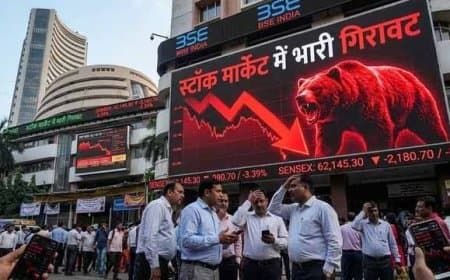
Mumbai: A stock market crash shook Dalal Street on Monday, October 19, as heavy selling in banking shares, surging fuel prices and continued foreign investor exits combined to wipe more than Rs 5 lakh crore off investor wealth in a single session. The stock market crash ended a brief two-session winning streak for India's benchmark indices and dragged midcap and smallcap shares down with it.
The BSE Sensex plunged about 1,000 points in intraday trade before closing 876 points lower, while the NSE Nifty 50 slipped 295 points intraday and finished the day down 257 points, according to market data reported by NDTV. The Sensex Nifty tank also hit the broader market, with the Nifty Midcap 100 and Nifty Smallcap 100 indices ending in the red alongside the large-cap benchmarks.
Stock market crash: banking stocks lead the fall
Heavyweight private lenders were the epicentre of the selling. HDFC Bank, ICICI Bank and Axis Bank together accounted for more than half of the Sensex's decline as investors reassessed September-quarter earnings, NDTV reported. The banking stocks sell-off pulled the private banking index down 1.7 per cent for the session, underlining how a handful of heavyweights can move the entire market.
HDFC Bank fell nearly 3 per cent during the session, with investors also seeking clarity on the lender's senior leadership, including the appointment of a successor to deputy managing director Kaizad Bharucha. Axis Bank dropped around 5 per cent intraday after its quarterly performance fell short of market expectations on some key measures, extending the banking stocks sell-off through the afternoon.
Stock market crash deepens as fuel costs stay high
Crude prices remained the second major worry for investors. Brent crude traded around $108–109 a barrel during Monday's session, despite easing from recent highs, amid supply concerns and tensions around the Strait of Hormuz, the vital corridor for global energy shipments. Reports of attacks on tankers in the region have deepened fears of disruptions to oil flows.
For India, which imports a large share of the oil it consumes, elevated crude oil prices are a multi-front problem. Higher prices inflate the import bill, put pressure on the rupee and add to inflation risks, while squeezing the profitability of companies that depend heavily on fuel and petroleum products. The combination made the day's stock market crash especially sharp.
Stock market crash and the FPI outflows question
Foreign portfolio investor selling added a third layer of pressure. Foreign investors had withdrawn around Rs 52,100 crore from Indian equities in October up to the latest available data cited on Monday, making it one of the heaviest monthly outflows of the year. The FPI outflows followed net withdrawals of Rs 35,861 crore in September, continuing a trend of foreign caution toward Indian equities.
Higher crude prices, rising US bond yields and a stronger dollar have made global investors wary of emerging markets, and the FPI outflows behind the stock market crash reflect that caution, analysts say. Heavy foreign selling can depress share prices, dent sentiment and put pressure on the rupee, particularly when it coincides with a rising import bill from expensive crude oil prices.
Professor Abhinav Tripathi, senior economic expert, told NDTV the market's immediate direction will hinge on corporate earnings, crude oil prices and foreign fund flows. "Investors will closely track upcoming quarterly results for signs of strength in corporate profits and consumer demand. Banking stocks will remain in focus as the market assesses lenders' margins, asset quality and management commentary," he said.
Developments in the Middle East will also matter for the next leg. A sustained rise in oil prices could keep inflation fears alive and make it harder for Indian equities to regain momentum, Tripathi added. For now, the stock market crash and the Sensex Nifty tank of October 19 have reminded investors how quickly sentiment can reverse when heavyweight stocks, fuel costs and global flows all turn hostile at once. Whether the stock market crash becomes a buying opportunity or a deeper correction depends on earnings, crude and flows.