Suzuki overtakes Honda as Japan's second largest carmaker
Suzuki overtakes Honda as Japan's second largest carmaker by global sales, after India supplied about 60 percent of its April-September 2026 sales.
by Trends DeskNovember 19, 20264 min read
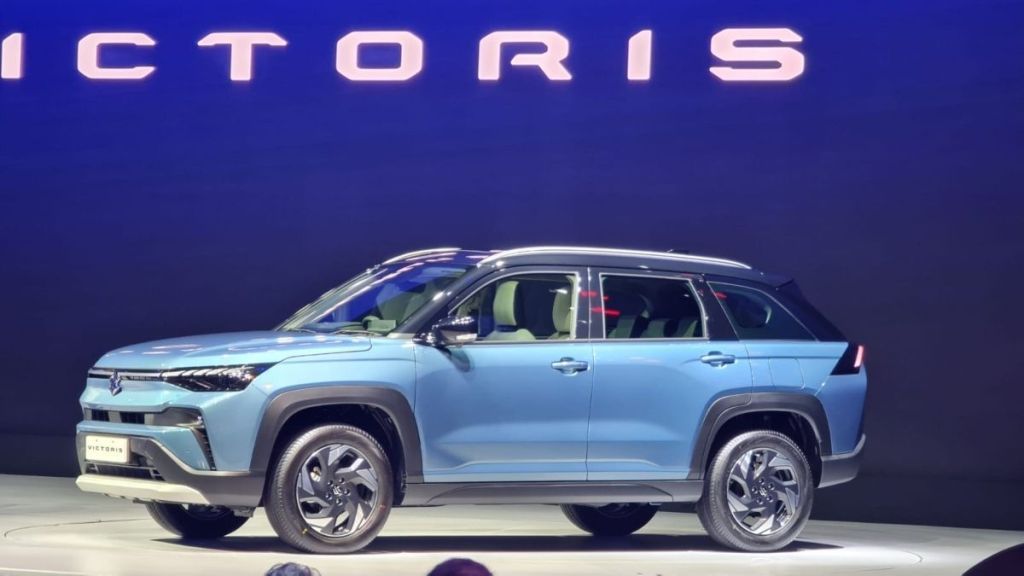
Suzuki has moved ahead of Honda to become Japan's second largest carmaker by global vehicle sales, behind Toyota, and India is the reason for the shift. Suzuki overtakes Honda on the strength of Maruti Suzuki sales in India, which now account for about six out of every ten Suzuki cars sold worldwide. The latest six-month figures show how far that dependence has grown, and they follow Suzuki moving ahead of Honda in the full financial year ending March 2026 as well. In other words, Suzuki overtakes Honda across a full year and across the latest half year, not in a single month.
Suzuki global sales reached 18,24,006 vehicles between April and September 2026, up 19.9 percent over the same period last year. Of that total, 11,00,260 were domestic wholesales in India, an increase of 35.4 percent. Suzuki's home-market sales in Japan fell slightly to 3,54,040 units, while sales in all other overseas markets combined stood at 3,69,706. Dividing 11 lakh India sales by the worldwide tally of 18.24 lakh gives India a share just above 60 percent. That share counts domestic sales only, leaving out cars built in India for export.
Maruti Suzuki India sales drive Suzuki overtakes Honda
Maruti Suzuki India sales grew far faster than sales in Suzuki's other markets. Overseas sales outside India rose only 4.3 percent, and the Japanese domestic market declined 0.3 percent. India's 35.4 percent increase supplied much of the 19.9 percent worldwide gain. Suzuki reported record first-half sales in India, Latin America and Africa, but India supplied by far the largest volume.
The production figures point the same way, and they help explain why Suzuki overtakes Honda on volume even though the two firms differ in size and reach elsewhere. Suzuki built 13,29,617 vehicles in India during April to September, out of 19,03,896 worldwide, which means about 70 percent of its global production came from India. Production in India rose 26.6 percent and was the highest ever for the first half of a financial year. That total covers cars built for export and for domestic buyers. Models such as the Fronx, Swift, Dzire and eVitara help Suzuki use India as a manufacturing base for demand abroad, and Maruti's rising export shipments mean plants here serve more than one market.
Honda's position moved in the other direction, in part because of China. Honda China production fell from 3,25,742 vehicles to 1,31,716 in April to September 2026, a drop of nearly 60 percent, as local electric vehicle makers gained ground. Honda has a much larger presence in North America, long relying on the Civic, CR-V and Accord. Its business in China, however, has contracted sharply. Suzuki has avoided much of that pressure because it does not compete in China or the United States as a mainstream passenger car brand.
What Suzuki overtakes Honda means for the ranking
Sales volume alone should not be read as a ranking of profits or vehicle technology. The two companies sell different types of cars and operate in different markets. Suzuki's strength lies in smaller, relatively affordable cars sold in India, Japan and several developing markets. That mix gives it a different risk profile from Honda, and it is the mix behind the fact that Suzuki overtakes Honda on sales volume in this period. It is less exposed to China's electric vehicle price war, but it is far more dependent on demand in India.
That dependence cuts both ways. Strong Maruti Suzuki India sales can lift Suzuki's global ranking, as the April to September figures show. A slowdown in domestic demand, tougher competition from Tata, Mahindra, Hyundai and Kia, or limits on production would be felt directly at the Japanese parent. Any of those shifts could narrow the gap that Suzuki overtakes Honda has opened in the sales ranking. Suzuki global sales would fall with India, because India now supplies about 60 percent of sales and about 70 percent of production.
The result is also more than a one-month change, which is why the Suzuki overtakes Honda result reads as a sustained shift rather than a blip in the data. Suzuki overtakes Honda in the six months to September 2026 after doing the same across the full year to March 2026. Honda China production remains the clearest drag on Honda's total, while Maruti Suzuki India sales remain the clearest lift for Suzuki. The next half-year figures will show whether India can keep growing at that pace, or whether the gap narrows.