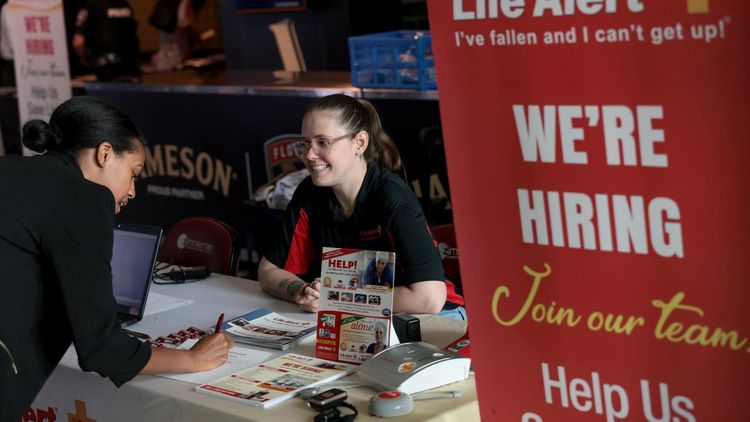
Job Openings Steady at 7.1 Million as Hiring Gets Selective
Job openings held near 7.1 million in August as hires, quits, and layoffs stayed flat — a sign employers are hiring more deliberately.
by Trends DeskOctober 19, 20263 min read
American employers are sitting on millions of open positions: but filling them has become a slower, pickier process. There were approximately 7.1 million job openings in August, while employers made around 5.2 million hires, according to the latest labor turnover data. Voluntary quits held at 3.1 million and layoffs and discharges were little changed at 1.6 million. The picture is one of an economy that is neither collapsing nor booming: plenty of postings, but hiring that has grown markedly more deliberate.
The backdrop is a softening employment report. Nonfarm payrolls rose by just 29,000 in September, well short of forecasts, and the unemployment rate ticked up to 4.2 percent. The labor force participation rate climbed to 61.8 percent, meaning more Americans are looking for work even as employers pull back on the pace of hiring: the latest sign of a labor market losing momentum and a shift in hiring trends that economists have tracked through much of 2026.
Hires and quits
The turnover figures tell a consistent story. Hires of roughly 5.2 million lagged well behind the 7.1 million open positions, a gap that reflects how selective employers have become about skills and experience. The quits rate, a closely watched gauge of worker confidence, stayed at 3.1 million voluntary departures, suggesting employees are not rushing to jump ship. Layoffs and discharges held nearly steady at 1.6 million, a sign that while companies are cautious about adding staff, they are not yet cutting broadly.
Taken together, the numbers describe hiring trends that have shifted from speed to scrutiny. Employers are taking longer to fill roles and demanding closer matches on skills and experience. For job seekers, that means longer searches and more competition for each posting; for companies, it means vacancies stay open longer even when the economy is not producing many new jobs.
What does that selectivity look like in practice? Open roles stay posted longer, interview rounds stretch out, and candidates face closer scrutiny of their skills and experience before offers go out. The 5.2 million hires recorded in August show that companies are still bringing people on: just on a more deliberate timetable. For workers, the takeaway is that a long search does not necessarily signal a weak resume; in this market, even strong candidates wait longer for the right match.
Slower to fill
Economists describe the current moment as one of deliberate hiring. Rather than racing to staff up, businesses are weighing each addition: a posture shaped by economic uncertainty and by the memory of over-hiring in the post-pandemic surge. The result is a market where the quits rate stays muted, layoffs stay low, and openings churn slowly instead of snapping shut.
For job seekers, the picture cuts both ways. Workers with in-demand skills still hold leverage, but those in contracting fields face a thinner set of options. The steady 1.6 million figure offers some comfort, job losses are not spiking, yet the slow pace of hiring means unemployment can edge up even without a wave of pink slips, exactly as September's 4.2 percent reading showed.
For now, job openings remain historically elevated even as the filling of those roles slows. Whether the coming months bring a pickup in hiring or a further cooling in the labor market will depend on how employers read the economy: but the era of easy, fast hiring appears to be over. For workers navigating this market, patience and sharper targeting of applications matter more than volume.