Graduate unemployment India: the jobs gap
India's graduate labour participation rate fell to 52.26% in September, its lowest in five years, even as employed graduates rose by 2.1 crore in a year.
by Trends DeskOctober 24, 20263 min read
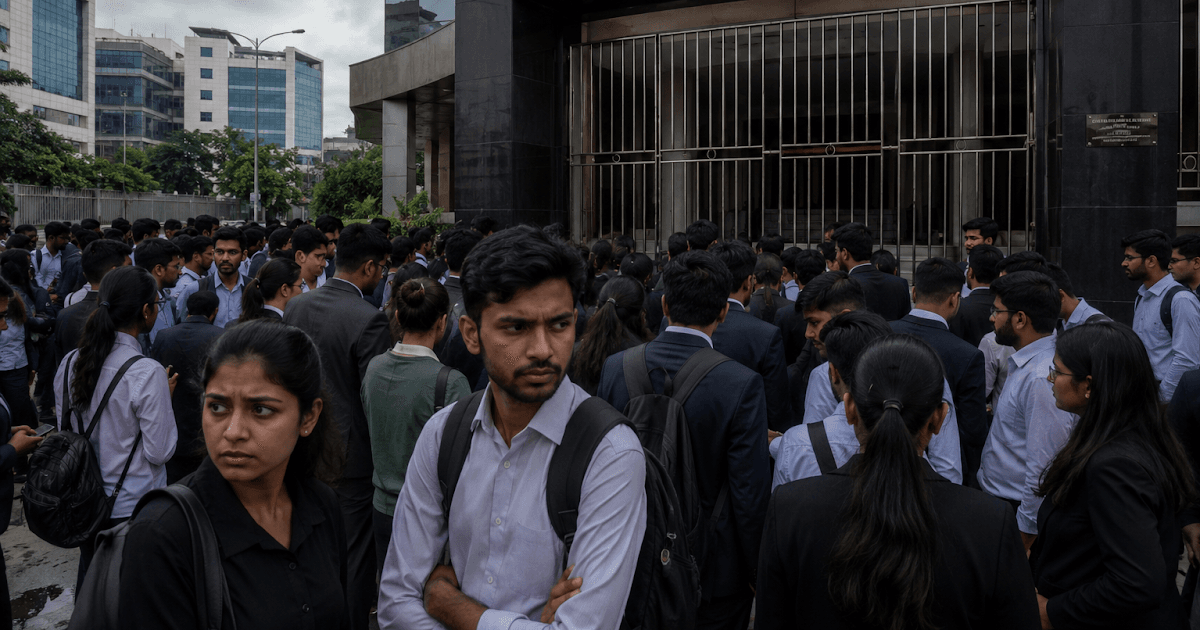
More Indians are earning degrees, but fewer of the country's graduates are active in the labour market. The share of graduates with higher education who are either employed or looking for work fell to 52.26 per cent in September, the lowest graduate labour participation rate in at least five years, according to the Centre for Monitoring Indian Economy (CMIE). The labour participation rate captures graduates who are employed and the unemployed among them who are actively looking for jobs, as a proportion of the total graduate population. The figures describe the centre of the graduate unemployment India challenge: education is expanding faster than the work meant to absorb it.
CMIE estimates that around 10 crore graduates were employed in September, an increase of more than 2.1 crore compared with September 2025. Over the same period, the number of graduates actively seeking work fell by more than 30 lakh. The graduate population grew 28.6 per cent over three years, outpacing employment growth of 26.8 per cent, while salaried employment grew just 11.9 per cent.
Why the participation rate is falling
The slow growth of salaried work may account for the decline in graduates actively seeking work, according to analysis based on the CMIE data. Salaried work carries greater income stability and formal employment. A lower number of active job seekers does not necessarily mean unemployment has fallen, because people who stop looking for work may no longer be counted as actively seeking employment. The figures alone do not establish whether graduates are moving into self-employment, pursuing further study or withdrawing from the labour market.
Graduate unemployment India in official data
The State of Working India 2026 report by Azim Premji University puts the longer trend in numbers. The number of young graduates rose nearly 13-fold, from around 5 million in 1983 to 63 million in 2023, while unemployed graduates rose from under one million to around 11 million, a 16-fold increase over four decades. Graduate unemployment among people below the age of 25 is close to 40 per cent, and graduates made up nearly two-thirds of India's unemployed population in 2023. The mismatch between degrees and employment has widened steadily since the mid-2000s, as higher education expanded much faster than the creation of quality work. About 5 million graduates were added annually between 2004 and 2023, compared with only 2.8 million employed. India added 83 million jobs between 2021-22 and 2023-24, but nearly 40 million were in agriculture, indicating a trend towards informal work. Much of the increase came from women entering self-employment or agriculture with low earnings, and salaried earnings and the graduate earnings premium have stagnated.
Graduate unemployment India and salaried work
Government data shows a similar pattern. The Periodic Labour Force Survey (PLFS) found unemployment among Indians aged 15 to 29 rose to 16.2 per cent in June 2026, the highest since monthly estimates began in April 2025. The statistics ministry has cautioned that monthly figures can fluctuate with seasonal factors and academic cycles. The gap between the growth in the educated population and salaried employment is significant because salaried work is often tied to greater income stability and formal employment. The estimates should also be read with care next to official employment data, since the organisation and the government's survey use different methods.
For millions of families, a college degree no longer guarantees stable employment. As of September, India's graduate labour participation rate stood at 52.26 per cent, the lowest in data going back to October 2021.