India car sales H1 FY27: Maruti, Tata gain share
Car sales across 14 makers reached 26,36,926 units in April to September 2026, up 27.16%. Maruti led with 10,80,240 units and Tata moved to second place.
by Trends DeskOctober 26, 20263 min read
Car sales across 14 manufacturers reached 26,36,926 units in April to September 2026, up 27.16% from 20,73,764 units in the same period last year, according to RushLane's analysis of H1 FY2027 data. India car sales H1 FY27 added 5,63,162 units year on year, and Maruti and Tata together accounted for about 71% of that increase. The figures cover dealer dispatches for the makers in the RushLane dataset, and they show a market led by Maruti, with Tata in second place.
India car sales H1 FY27: Maruti extends its lead
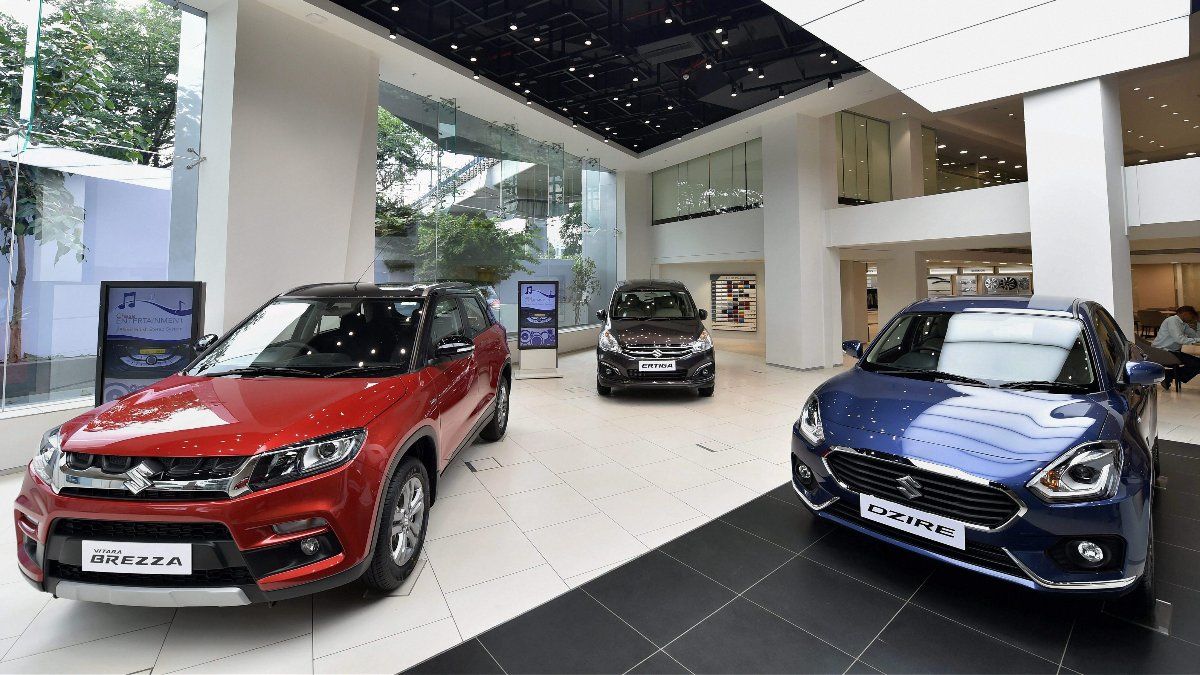
In India car sales H1 FY27, Maruti recorded 10,80,240 units, up 35.80% from 7,95,447 units a year earlier, an increase of 2,84,793 units. Maruti Suzuki market share rose to 40.97% from 38.36%, a gain of 2.61 percentage points, the largest share increase in the group. RushLane links the gain to new launches such as the Victoris and updated Brezza and Baleno models, and to a broad spread of high-volume models. The Dzire led the market in the half year, while the WagonR, Ertiga, Fronx, Swift and Baleno also featured among the top 10 sellers.
Tata Motors car sales reached 3,76,840 units, up from 2,64,028 units, an increase of 1,12,812 units. That put Tata in second place, ahead of Mahindra at 3,58,142 units, up from 2,97,570 units. Hyundai followed with 3,05,146 units, up from 2,71,780 units. Toyota recorded 1,73,127 units and Kia recorded 1,68,683 units, up from 1,31,006 units. The order at the top shows Tata moving ahead of Mahindra, while Hyundai stayed fourth despite higher volumes than a year earlier.
India car sales H1 FY27: smaller makers mixed
India car sales H1 FY27 data for smaller makers was mixed: MG recorded 43,318 units, up from 37,946 units, and Skoda recorded 36,328 units, almost flat against 36,217 units a year earlier. Honda reached 30,287 units, up from 25,133 units, and Renault reached 23,123 units, up from 17,584 units. Nissan posted the fastest percentage growth in the group, rising to 20,401 units from 8,948 units, more than doubling its volume. Volkswagen was one of the few makers to fall, down to 15,130 units from 17,499 units, and Jeep slipped to 1,414 units from 1,577 units. Citroen grew to 4,745 units from 2,913 units.
Maruti Suzuki market share gains and Tata Motors car sales growth together explain most of the half-year increase, since their combined additional volume of about 3,97,605 units was close to seven tenths of the total increase. Mahindra added 60,572 units and Kia added 37,677 units, while Hyundai added 33,366 units. Passenger vehicle sales India totals show that the half-year expansion was broad, but it was concentrated at the top, with the two largest gainers taking most of the extra volume.
India car sales H1 FY27: what buyers should note
Passenger vehicle sales India data for the half year are dispatch figures, which count cars sent to dealers rather than cars registered to buyers. Dispatch growth can run ahead of retail sales when dealers build stock before the festive season, and it can lag retail sales when dealers sell from existing stock. Readers should therefore read the India car sales H1 FY27 total as a factory and dealer pipeline figure, not as a count of cars bought by customers in the same six months.
The India car sales H1 FY27 figures also come from a 14-maker dataset, so they exclude some luxury makers and any maker outside the set. Within that set, the market added more than five lakh units in six months, Maruti strengthened its lead, and Tata moved into second place. The next test for the market will be whether retail sales in the festive quarter absorb the higher dispatches, or whether dealer stock builds further after September.