DeepSeek US ban targets federal agency IT systems
US Homeland Security has ordered civilian agencies to remove DeepSeek products from IT systems and halt purchases, citing data-transfer risks to China.
by Trends DeskOctober 20, 20264 min read
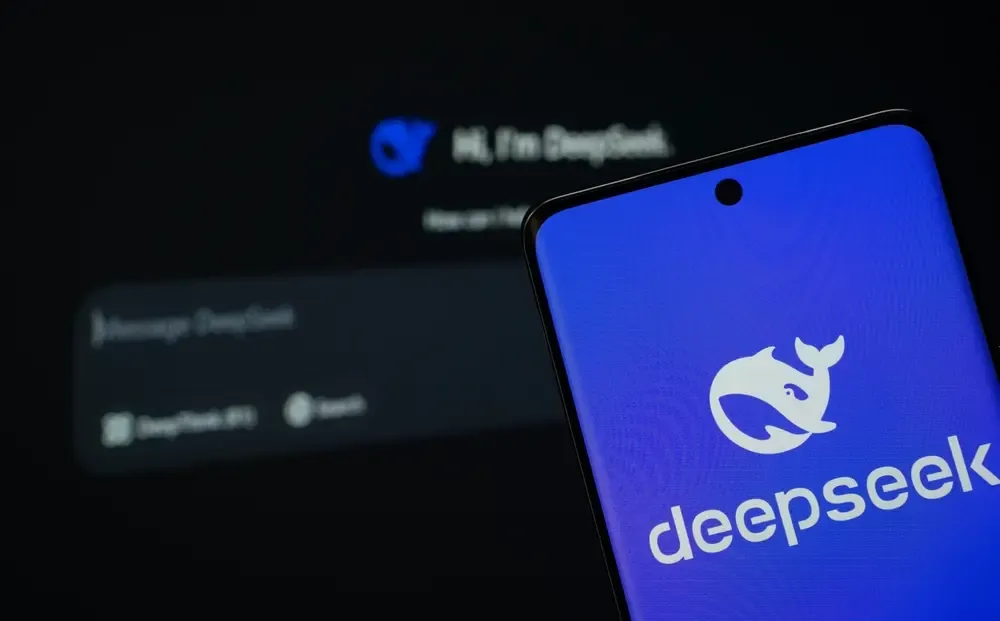
The United States is stripping leading Chinese artificial intelligence models from its civilian bureaucracy. The DeepSeek US ban, set out in a homeland security order published on Monday, directs federal agencies to remove DeepSeek products and third-party services built on the Chinese company's models from their IT systems. The directive also bars agencies from buying any new products that use DeepSeek, marking the first time Washington has applied a government-wide exclusion order to a generative AI system.
DHS said the Chinese artificial intelligence models pose "multiple threat vectors" and warned of a possible sensitive data transfer to China if the technology is used by government staff or contractors. The department added that DeepSeek use "could produce actionable intelligence on US persons and/or government agencies", and that "the models themselves may contain malware or other security vulnerabilities".
A July memo from the department, made public on Monday, told federal agencies to monitor traffic flowing in and out of government websites to address the potential risks from DeepSeek. The order itself was dated July 24 but was only filed for the Federal Register on October 19, with publication scheduled for October 20, meaning it sat unseen for nearly three months before the DeepSeek US ban became known.
DeepSeek US ban covers third-party products built on the model
The scope of the DeepSeek US ban reaches well beyond DeepSeek's own applications. It covers third-party products and services developed using DeepSeek implementations, a sweeping definition that could catch vendors whose tools quietly embed the Chinese company's open-weight models. DHS instructed agencies to watch network traffic, add logging and guard against data leaks until the purge of federal agency systems is complete, with the Cybersecurity and Infrastructure Security Agency offering technical help to agencies unable to comply alone.
Agencies can seek exemptions, but the bar is high. Under the DeepSeek US ban, exception requests must be submitted to DHS in writing within 60 days of the order's issuance, justified, for example, by a mission-critical function that would fail without the tool or by national interest. The order applies to civilian agencies but carves out national security systems and secure compartmented information systems.
The homeland security order anchored its case partly in DeepSeek's own privacy policy, which places the company's servers in China, and cited a 2025 audit of DeepSeek's iOS application by security firm NowSecure that found data-handling flaws. The department's sensitive data transfer concerns rest on the argument that prompts entered into DeepSeek applications could be combined with public records to profile American officials. Critics note the iOS audit examined the consumer app rather than open-weight models an agency might run on its own servers, and that key details behind the "multiple threat vectors" assessment were not published.
What drove the DeepSeek US ban after months of pressure
The government-wide order caps more than a year of escalating action against the Hangzhou-based company. The Department of Commerce and the US Navy had already banned DeepSeek on government devices, while New York, Tennessee and Virginia imposed their own restrictions on state personnel. Members of Congress introduced bills last year aimed at keeping the chatbot off government devices, and DeepSeek's rapid rise, its R1 model matching leading US systems while reportedly costing about $6 million to train, intensified scrutiny across federal agency systems.
The Chinese Embassy in Washington did not immediately comment on the DeepSeek US ban. DHS said it will review the exclusion within a year and annually thereafter, leaving open whether other Chinese open-weight models, such as Alibaba's Qwen or Moonshot's Kimi, could face similar treatment under the same 2018 supply-chain security law.
DeepSeek US ban fits a wider crackdown on Chinese technology
The move lands amid a broader Trump administration squeeze on Chinese technology. The Federal Communications Commission is set to vote on October 29 on barring Chinese laboratories from testing electronic devices for use in the US market, when 82 per cent of US electronics were tested in China last year. Earlier measures included a ban on new models of Chinese drones and Chinese-made consumer routers.
For agencies and contractors, the immediate task is an inventory of where DeepSeek code may be running, chatbots, coding assistants, search tools, vendor platforms, and its removal from federal agency systems. Until that work is complete, the DeepSeek US ban keeps one of the world's most downloaded AI models firmly outside the machinery of the American state.