German Industry Job Losses Near Half Million Since 2019
German industry has shed 496,000 jobs since 2019, a 7.1 per cent fall, with car makers and metal producers worst hit, an Ifo study shows.
by Trends DeskOctober 20, 20263 min read
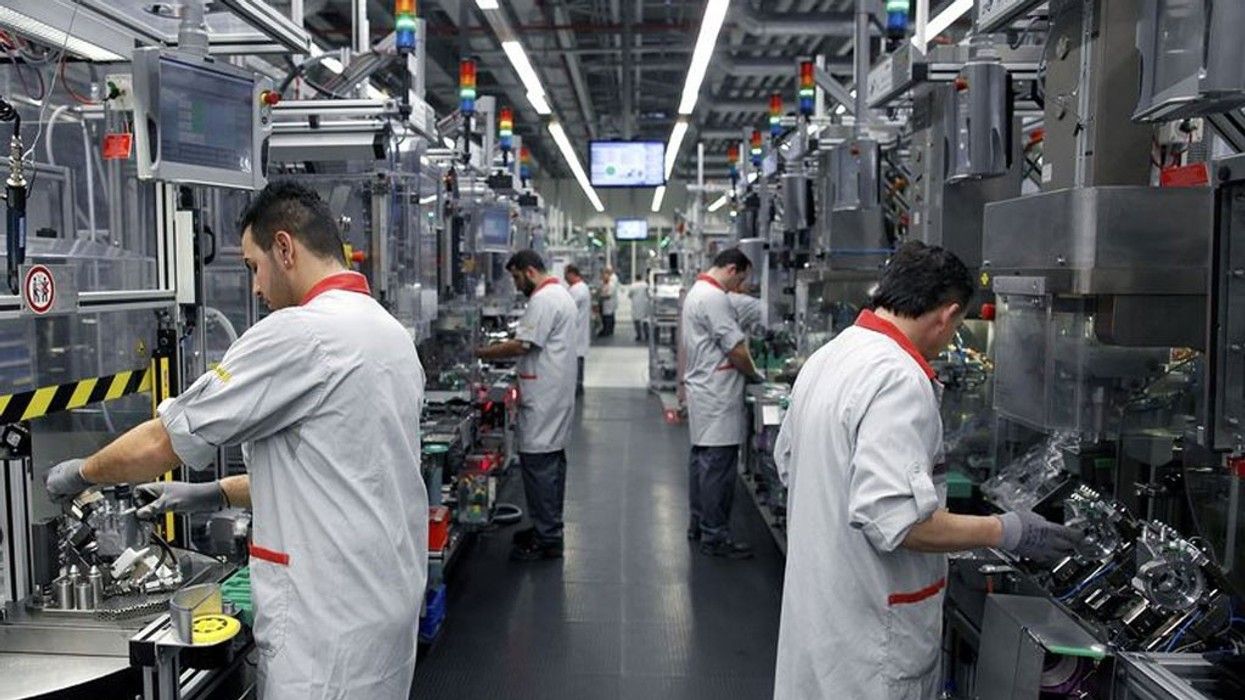
German industry has shed nearly half a million jobs since 2019, an Ifo study showed on Monday, as manufacturers grapple with mounting competitive pressure. At the end of 2025, 496,000 fewer people were working in the sector than at the start of 2019, a drop of 7.1 per cent, and the German industry job losses show little sign of reversing. The figures confirm that Europe's largest economy is living through a painful industrial transformation.
Joachim Ragnitz, managing director at Ifo, said the country was undergoing an accelerated structural shift. Ironically, the very sectors that have sustained our prosperity up to now are shrinking, he said, warning that the new jobs are for the most part not being created where Germany is especially productive and innovative. That, he added, may slow down the country's growth potential in the future.
The pain is concentrated in three heavyweight sectors. The automotive industry and its suppliers cut 123,500 jobs, a drop of 13 per cent, manufacturers of metal products cut 115,600 jobs, while 64,500 positions went in mechanical engineering. Together these three sectors account for around 60 per cent of the manufacturing jobs lost, according to Ragnitz's calculations, underlining how the auto sector slump has become the face of the crisis.
Where the German industry job losses are concentrated
Employment is shrinking in almost all industrial sectors, which the study says is likely a result of declining competitiveness, particularly against China. High energy costs, sluggish demand in key export markets and the costly transition to electric vehicles have combined to erode the advantages German manufacturers once took for granted. As German industry job losses mount in car plants and steel works, the debate in Berlin has shifted from whether deindustrialisation is happening to how far it will go.
For India, the German experience carries a double message. On one hand, the erosion of German industrial employment creates openings for Indian manufacturers and component suppliers as global supply chains diversify away from high-cost locations. On the other, it is a warning that even world-leading engineering clusters can hollow out when competitiveness slips, a lesson New Delhi's policymakers are watching closely.
Services boom as German industry job losses mount
While factories shed workers, the service sector created more than 2.2 million jobs over the same period, primarily in health and social services and in public administration. The German industry job losses are therefore part of a wider structural shift in which employment migrates from tradable, high-productivity manufacturing toward domestic services. Economists note that this pattern is not unique to Germany, but the speed of the change has surprised even seasoned observers.
The concern, as Ragnitz puts it, is that the replacement jobs are not in the industries where Germany is most innovative. For India, where services already dominate output but manufacturing jobs remain politically prized, the lesson is to pursue both: keep building competitive factories while preparing workers for a service-led future. Protecting industrial employment requires constant investment in skills, infrastructure and energy costs.
What the German industry job losses mean for India's workforce
German companies have long been major employers and investors in India, from car plants to engineering centres, and the German industry job losses at home could accelerate their push into lower-cost locations abroad. Indian engineers, technicians and managers with experience in automotive and precision manufacturing may find new opportunities as firms rebalance production. The auto sector in particular is deepening ties between the two countries as supply chains are redrawn.
Yet the broader warning stands: the German industry job losses show that no manufacturing base is safe from global competition. For India's workforce, the takeaway is that skills, productivity and adaptability matter more than geography. Countries that keep investing in industrial employment and innovation will capture the jobs that others lose.