Out-of-School Children Rise to 273 Million, UNESCO Says
The number of out-of-school children has risen for the seventh year running to 273 million, UNESCO's 2026 Global Education Monitoring Report says.
by Trends DeskOctober 20, 20264 min read
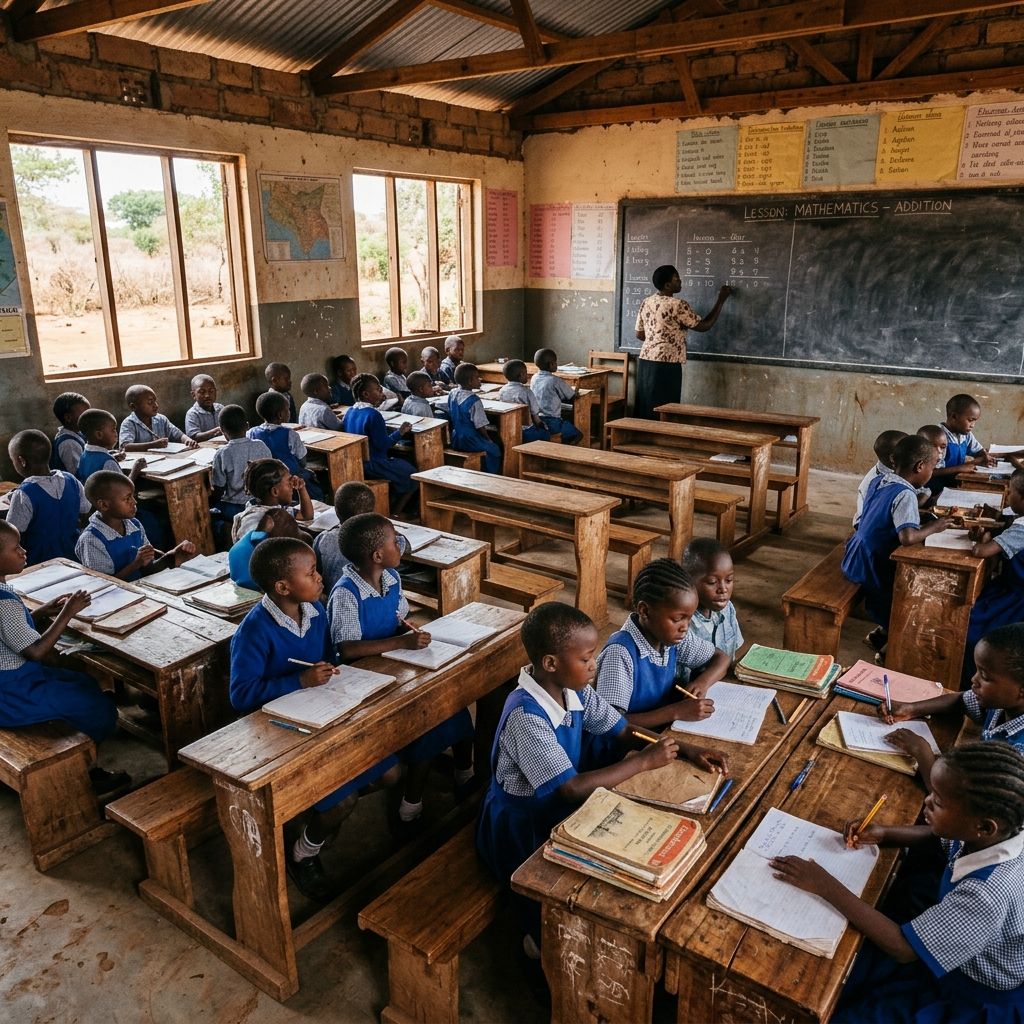
The number of children and young people deprived of education has risen for the seventh consecutive year, reaching 273 million, according to UNESCO's 2026 Global Education Monitoring Report. The finding confirms an alarming trend: the out-of-school children total keeps climbing even as global enrolment has grown overall since 2000. One in six children of school age worldwide is now excluded from education, and only two in three students complete secondary school.
Population growth is the largest driver, with progress in keeping children in school slowing across almost every region since 2015 and decelerating sharply in sub-Saharan Africa. Crises have compounded the problem: over one in six children live in conflict-affected areas, and ongoing regional tensions in the Middle East have forced many schools to close. In conflict zones from Sudan to Gaza, millions of children are out of the classroom and at heightened risk of falling behind permanently. Each new emergency adds to the global out-of-school children count.
Yet the report also documents real progress. With 1.4 billion students enrolled in 2024, global enrolment in primary and secondary education has increased by 327 million, or 30 per cent, since 2000, equivalent to more than 25 additional children accessing school every minute. Some countries have reduced out-of-school rates by at least 80 per cent since 2000, including Madagascar and Togo among children, Morocco and Viet Nam among adolescents, and Georgia and Turkiye among youth, while Cote d'Ivoire halved its rates across all age groups.
Why out-of-school children numbers keep rising
Beyond demography and war, the report points to shrinking budgets. As donor funding retreats, programmes such as school grants and meal schemes that were never fully absorbed into national budgets now face collapse, even though meal schemes exist in 84 per cent of countries. Earlier drives to make education affordable improved access but compromised quality, raising dropout rates, while costs such as transport, after-school care and meals remain barriers for poor families. For the out-of-school children caught in this squeeze, free schooling alone is not enough.
India illustrates both the progress and the challenge. The country has dramatically expanded primary enrolment over two decades, yet keeping adolescents in school through secondary completion remains difficult, particularly for girls in poor households and children in remote areas and conflict zones. Gender gaps in primary and secondary education have largely closed on average across South Asia, with Nepal's girls rapidly catching up to boys through sustained reforms, but learning outcomes still lag behind enrolment almost everywhere.
What works to bring out-of-school children back
The report stresses that no single policy fixes exclusion, but the evidence points to combinations that work. In 14 African countries, making education compulsory and not just free added over a year of schooling for both girls and boys, with larger gains when child labour laws are enforced. Factors outside education matter too: electrification alone has been linked to nearly a full extra year of schooling in Cambodia, and school feeding programmes add up to half a year of learning for every 100 dollars spent in low- and middle-income countries, proving that targeted spending brings out-of-school children back into classrooms.
Financing design is equally important. The share of countries deploying transfers to subnational governments, schools, students and households to benefit disadvantaged populations has more than quadrupled in 25 years, and 76 per cent of countries now have policies to reallocate resources toward disadvantaged schools. Yet a new index shows only 8 per cent of countries are making the most of those mechanisms. Lifting primary enrolment further will depend on money reaching the poorest schools, not just national averages improving.
The road ahead for out-of-school children in India
For India, the priorities mirror the global findings: protect school budgets as donor-style central schemes evolve, keep mid-day meal and school feeding programmes fully funded, and focus on the transition from primary to secondary completion where dropout rates spike. Digital tools can help reach remote learners, but only where connectivity and teacher support exist. With the world's largest school-age population, India's choices will shape the global out-of-school children figures for the coming decade.
UNESCO says it will continue working with governments, ministers, civil society and youth representatives to shape the post-2030 education agenda. The message of the 2026 report is that the out-of-school children crisis is solvable: countries that combine compulsory schooling, targeted financing and support beyond the classroom are bringing millions back. The question is whether the world will fund what works.