AI Training for Teachers Mandatory in Bihar Universities
Bihar will make AI training for teachers mandatory in state universities under UGC's Guru Dakshata programme, with the schedule due before November.
by Trends DeskOctober 19, 20263 min read
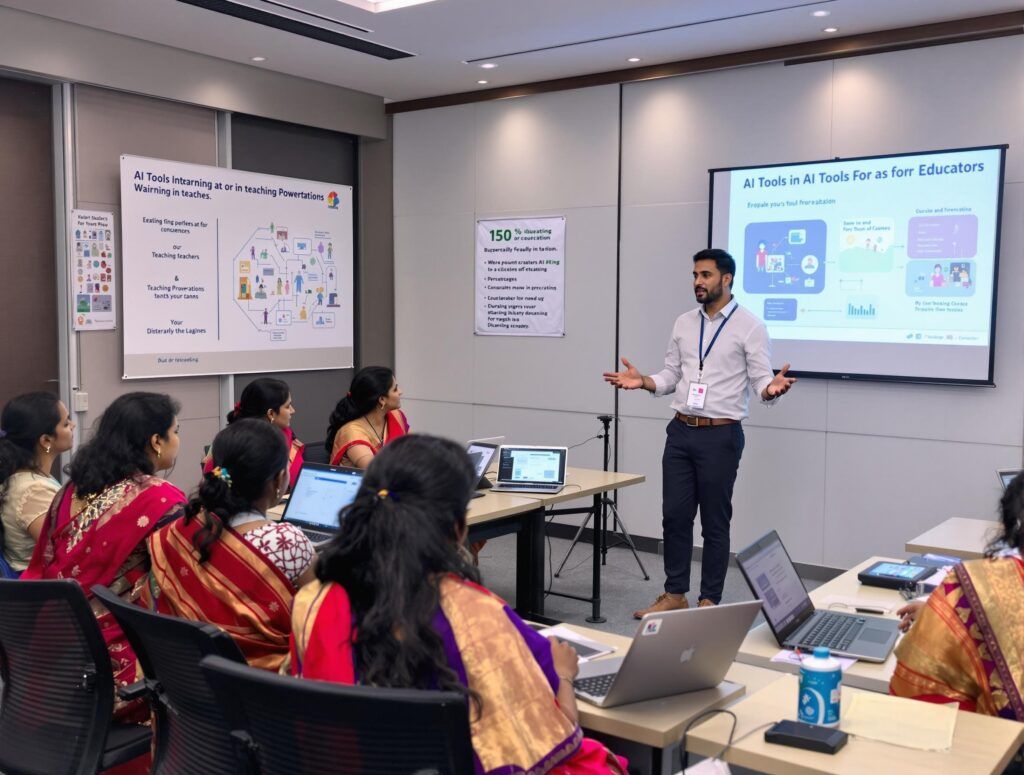
Patna, October 19 — The Bihar government is preparing to make AI training for teachers mandatory across all state universities and constituent colleges, equipping faculty members to use artificial intelligence in classroom teaching, lecture planning, question-paper preparation and the evaluation of answer scripts.
The initiative, to be implemented under the University Grants Commission's (UGC) Guru Dakshata faculty development programme before November, marks a major expansion of faculty training beyond Patna University, where the programme has primarily been conducted so far. The Bihar State Higher Education Council (BSHEC) is finalising the training schedule, which will be circulated to universities for implementation. Officials said AI training for teachers would be the centrepiece of the expanded schedule.
AI Training for Teachers Under the UGC Programme
According to BSHEC vice-chairman N K Agrawal, AI training for teachers aims to improve teaching quality and promote academic excellence, professional ethics and human values in line with the National Education Policy (NEP 2020). Faculty members will also be trained in the effective use of information and communication technology (ICT) to help them adopt modern teaching methods and make classroom learning more interactive and efficient.
The extension of the programme to every state university follows directions from the governor, who is also the chancellor of state universities. Separate programmes will be organised at the university and college levels, and the move comes as the state prepares to introduce a comprehensive AI policy for its universities — signalling a wider push towards technology-assisted teaching and assessment across Bihar universities and their constituent colleges.
How the AI Training for Teachers Will Be Implemented
Once the BSHEC schedule is circulated, universities will be expected to roll out the training across departments before November. Faculty development experts say the rollout will need careful planning, and AI training for teachers must extend beyond a single workshop to cover lecture design, formative assessment, grading and the ethical use of classroom data.
The proposed AI policy could have significant implications for academic administration, particularly in the preparation of question papers and the evaluation of answer scripts. Officials have acknowledged that the use of AI in assessment will require safeguards relating to accuracy, transparency, data privacy, academic integrity and human oversight — areas where poorly designed automation could do real harm if left unchecked.
Safeguards and the Road Ahead for AI Training for Teachers
The Guru Dakshata programme, Agrawal said, is aligned with NEP 2020's emphasis on technology-enabled education and is intended to modernise teaching practices while keeping professional judgement at the centre of the classroom. The programme is expected to encourage teachers to use AI as a supporting tool without replacing their own expertise.
However, effective implementation will depend on adequate practical training for teachers and the availability of necessary infrastructure across Bihar universities. University administrators say computer laboratories, reliable internet connectivity and hands-on workshops will be critical if the AI training for teachers is to translate into genuine changes in classroom practice rather than remaining a paper exercise.
The Bihar move places the state among the early movers in formalising AI literacy for higher-education faculty at scale. With the November deadline approaching, universities are expected to begin nominating faculty and identifying nodal officers once the BSHEC circulates its schedule. Whether the programme meets its ambitions will depend on the quality of the hands-on sessions and on universities treating the training as the start of a longer shift towards technology-assisted teaching rather than a one-time compliance exercise.