JNU Hunger Strike: John Brittas Writes to President Murmu
CPI(M) MP John Brittas wrote to President Murmu seeking intervention in the JNU hunger strike, in its 16th day, over rustications and the CPO manual.
by Trends DeskOctober 19, 20263 min read
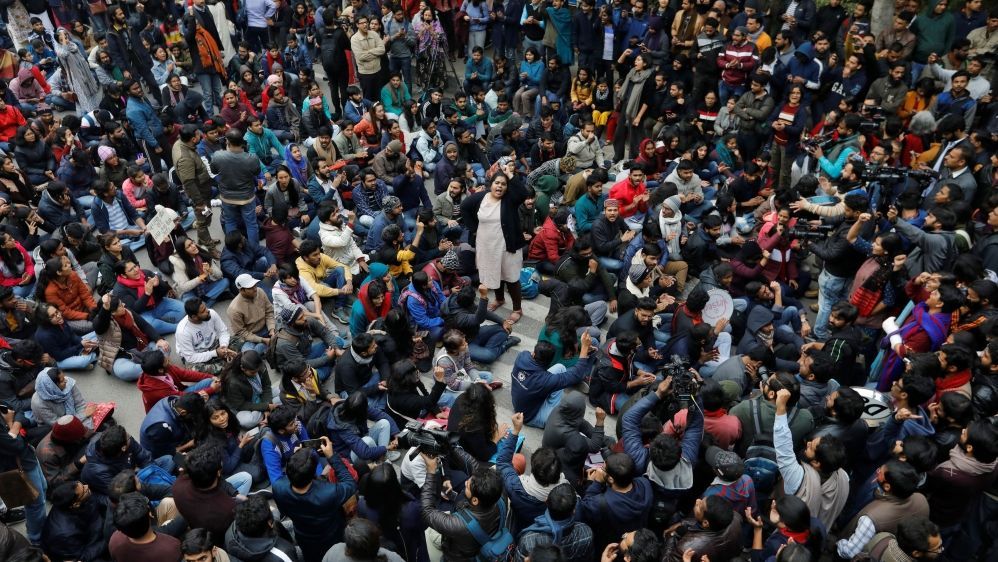
New Delhi, October 19 — CPI(M) Rajya Sabha MP John Brittas has written to President Droupadi Murmu seeking urgent intervention over the indefinite JNU hunger strike by Jawaharlal Nehru University Students' Union (JNUSU) representatives and other JNU students, which began on October 3 and entered its 16th day on Sunday.
President Murmu is the official Visitor of Jawaharlal Nehru University. In his letter dated October 18, Brittas sought the President's intervention in the JNU hunger strike, asking for the revocation of rustication orders against elected Students' Union representatives, the withdrawal of objectionable provisions of the Chief Proctor's Office (CPO) Manual and an expedited resolution of the students' longstanding grievances.
What John Brittas Told the President About the JNU Hunger Strike
Brittas wrote that the failure of the university administration to address the genuine and longstanding concerns of the student community had prolonged the JNU hunger strike and contributed to the deteriorating health of the participating JNU students, creating what he described as a situation warranting urgent intervention.
He raised concerns over the rustication of elected Students' Union representatives, including the former JNUSU president, for nearly eight months, saying their exclusion had affected the functioning of the Students' Union and weakened the mechanism through which students collectively raise grievances. He also objected to CPO Manual provisions providing for what he described as exorbitant fines and stringent disciplinary measures for several forms of protest and assembly, warning that such measures could diminish the space for legitimate democratic expression within the university.
The JNU Hunger Strike and the President's Powers Under Section 8
Brittas recalled that Jawaharlal Nehru University was established under the Jawaharlal Nehru University Act, 1966, which identifies social justice, secularism and a democratic way of life among the university's foundational principles. The Act designates the President of India as the Visitor of the university and confers powers to review its functioning and issue appropriate directions. Invoking these powers, Brittas urged President Droupadi Murmu to intervene under Section 8 of the Act and take up the matter with the university administration.
Recalling his own years as a JNU student, Brittas stressed the importance of preserving an environment where students could express their views, question arbitrary decisions and collectively raise concerns. He cautioned that disproportionate disciplinary measures could discourage students from raising legitimate grievances for fear of punitive action — a concern, he said, that extended well beyond those directly affected, particularly as issues relating to gender justice, equal opportunity, admissions and basic campus facilities remained unresolved.
Unresolved Grievances Behind the JNU Hunger Strike
The JNU hunger strike participants have cited a long list of unresolved grievances, and the prolonged impasse has assumed serious proportions in view of the risks to the health of the participating JNU students. Brittas's letter asks the President to ensure the revocation of the rustication orders, the withdrawal of the objectionable CPO Manual provisions and an expeditious resolution of the outstanding grievances.
There was no immediate response from the university administration to the letter. The JNU hunger strike, now into its third week, continues to draw attention to questions about student representation, disciplinary norms and the space for protest on one of India's most politically active campuses.
The letter marks the latest escalation in a dispute that has simmered on the campus for months. With the strike entering its third week and no resolution in sight, observers say the onus is now on the university administration to engage with the elected representatives and address the demands before the health situation of those on protest deteriorates further.