Karnataka apartment law: new rules reshape Bengaluru homes
Karnataka has notified the new Karnataka apartment law, replacing 50-year-old statutes with tougher rules on associations, redevelopment and builders.
by Trends DeskOctober 17, 20264 min read
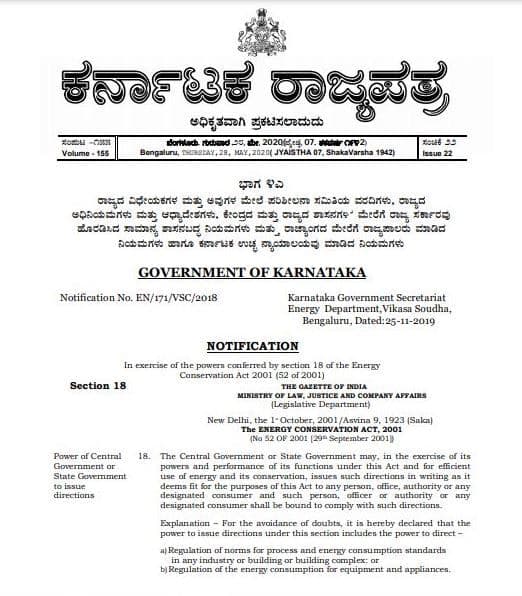
Bengaluru, Oct 17 — The Karnataka government has notified the Karnataka Apartment (Ownership and Management) Act, 2026, bringing into force an overhaul of how apartment complexes across the state are owned, governed and redeveloped. The new Karnataka apartment law replaces two statutes that have stood for more than five decades — the Karnataka Apartment Ownership Act, 1972, and the Karnataka Ownership of Flats Act, 1972. The notification marks the final step in a legislative process that moved swiftly through the state legislature. The Assembly passed the Bill on August 21, 2026, and the Legislative Council cleared it three days later, after which it received the Governor's assent. With the commencement notification now issued, the provisions of the Karnataka apartment law take effect across the state, applying to apartment projects of more than eight units. ## Karnataka apartment law replaces 1972 statutes Introducing the Bill, Bengaluru Development Minister Krishna Byre Gowda said rapid urbanisation and scarce land had created problems the existing framework could not answer. The 1972 legislation, alongside the Real Estate (Regulation and Development) Act, left grey areas around common areas such as roads, clubhouses and open spaces, and offered no clear route for rebuilding ageing blocks in Bengaluru housing stock. Under the new Karnataka apartment law, every completed apartment project must have a single registered apartment owners association. Promoters must form and register the apartment owners association within three months of allotting a majority of flats; a designated competent authority can step in and act, or penalise defaulting promoters. Common areas will be held by the owners themselves, with a deemed conveyance mechanism for older projects where developers never transferred the title. The apartment owners association must acknowledge receipt of the handover records and forward a copy to the competent authority, creating a paper trail that has often been missing in builder-buyer disputes. ## How the Karnataka apartment law changes redevelopment One of the most consequential provisions of the Karnataka apartment law concerns the redevelopment of ageing buildings. Thousands of residential complexes built in Bengaluru over the last three decades face structural fatigue, yet owners have often been trapped by the absence of a legal mechanism to rebuild. The new statute replaces the Apartment Ownership Act of 1972 with a unified governance framework for redevelopment. The law allows redevelopment with 75 per cent owner consent, setting the redevelopment consent threshold for the first time, with dissenting owners' properties subject to compulsory acquisition at twice the prevailing market value — a provision that has drawn sharp attention from resident groups. Mandatory structural safety audits will apply once buildings complete thirty years, with fresh certificates required every five years thereafter. ## Promoters face tougher penalties The Karnataka apartment law tightens builders' handover duties. Promoters must hand over fifteen categories of records — sanctioned plans, completion certificates, fire and lift compliance documents, insurance policies and equipment warranties — within sixty days of the occupancy certificate. Maintenance deposits and corpus funds must be transferred to the association, with full financial disclosures mandatory. Penalties are sharper: flouting promoters face fines of up to ₹1 lakh, plus ₹1,000 per day of continued violation. A designated competent authority, vested with powers similar to a civil court, will oversee associations and enforce the law's provisions. The government must also appoint a first appellate authority to dispose of appeals within 90 days and a second appellate authority with a 30-day timeline. Civil courts are barred from matters within the authorities' jurisdiction — a step meant to cut litigation that has raised concerns about access to the ordinary judicial system. ## Residents raise concerns over official powers Civic groups have flagged the sweeping powers granted to officials. The competent and appellate authorities will be constituted at local level — in gram panchayats, municipalities and municipal corporations — to adjudicate disputes between owners, associations and developers. Critics argue that barring civil court jurisdiction concentrates too much authority in executive hands. The final text also bars non-owners from regular or commercial use of community facilities, removing an earlier exception. For Bengaluru housing, where gated communities have multiplied across the city's periphery, the Karnataka apartment law's success will depend on how fairly the new authorities use their powers and apply the redevelopment consent rules. Whether the Karnataka apartment law delivers will become clear once the authorities begin functioning. Resident bodies are meanwhile advised to locate registration papers, verify their governing statute and check conveyance of common areas before the compliance regime begins.
Related articles in Law & Government
View all Law & Government →Browse more stories in Law & Government.


