NEET Youth: 25% Idle in 250 Districts, Data Shows
MoSPI's first district-level labour estimates: in nearly 250 districts, over a quarter of Indians aged 15-29 are outside employment, education and training.
by Trends DeskOctober 18, 20264 min read
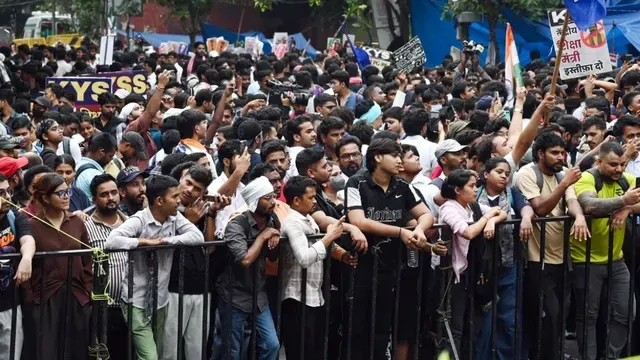
NEW DELHI: More than one in four young people are outside education, employment and training in nearly 250 districts across India, the country's first district-level labour estimates show, putting a sharp geographic lens on the scale of NEET youth disengagement. The data, released on September 18 by the Ministry of Statistics and Programme Implementation under the revised Periodic Labour Force Survey sampling design, is the first official attempt to map youth joblessness district by district.
The numbers are sobering. In 23.7 per cent of districts, the NEET youth rate — the share of people aged 15 to 29 who are not in employment, education or training — crossed 30 per cent. Another 45.9 per cent of districts fell in the 20 to 30 per cent band, while 26.1 per cent recorded rates between 10 and 20 per cent. Only 4.2 per cent of districts kept their NEET youth share below 10 per cent. Overall, 76.2 per cent of districts stayed under the 30 per cent mark, but the concentration of high rates in certain regions points to deep local disparities.
The estimates use the usual status approach, measuring activity over the preceding 365 days, and cover everyone aged 15 to 29 who was simultaneously outside employment, education and training during the reference period. The government has cautioned that the NEET category is not the same as unemployment: unemployment counts only those actively looking for work within the labour force, while NEET includes many who have stopped looking altogether. Still, the district labour data exposes how unevenly India's demographic dividend is distributed.
Where NEET Youth Rates Run Highest
The district-level breakdown shows stark regional extremes. Anugul in Odisha recorded the highest youth NEET rate in the country at 56.1 per cent, followed by Kendrapara at 51.4 per cent and Dhenkanal at 45.3 per cent, all in the same state. Tenkasi in Tamil Nadu recorded 44.9 per cent, while North Delhi stood at 44.3 per cent — evidence that the problem is not confined to poorer states. At the other end, Nabarangapur in Odisha reported the lowest NEET youth rate at just 4.1 per cent, a 52-point gap that underlines how local conditions shape outcomes.
Economists say the Odisha clustering may reflect migration patterns and local labour markets where formal job creation lags the number of school and college leavers. North Delhi's high reading, meanwhile, points to urban pressures — expensive private education, long job queues and intense competition for a limited pool of formal roles. The variation suggests that national averages hide as much as they reveal about the youth unemployment India is grappling with.
How District Labour Data Explains the Divide
Beyond the headline rates, the MoSPI PLFS release offers clues about who is most affected. Previous national estimates from the survey put the all-India NEET share at roughly one in four young people, a figure the district breakdown now gives a local address. Researchers say the gender dimension is stark: earlier survey rounds found young women far more likely to be NEET than young men, with caregiving responsibilities, safety concerns and discouragement after repeated rejections pushing many out of the labour force entirely. Among tertiary-educated youth, the NEET share climbs higher still — a reminder that degrees alone do not guarantee pathways into work, and that the youth unemployment India faces is as much about job quality as job quantity.
What NEET Youth Need From Policy
Policy experts say the findings should reshape skilling and employment programmes. Because the NEET youth problem varies so sharply by district, they say, one-size-fits-all schemes are unlikely to work: districts with rates above 40 per cent need intensive, locally anchored interventions, from apprenticeships linked to nearby industry to transport and hostel support that makes training accessible. The data also strengthens the case for better local labour market information, so students and training providers can see which skills are actually in demand nearby. As the next district-level release under the revised MoSPI PLFS design is awaited, the numbers set a baseline against which future progress — or the lack of it — can finally be measured, district by district.
For now, the message from the numbers is unmistakable: behind every national average on NEET youth lie hundreds of local stories, and fixing the NEET youth challenge will require policies built district by district, not just announced from New Delhi.