NITI Aayog Flags Big Skills Mismatch for Graduates
A NITI Aayog report finds only 8.25% of Indian graduates work in jobs matching their qualifications, flagging outdated curricula and a deep skills gap.
by Trends DeskOctober 18, 20263 min read
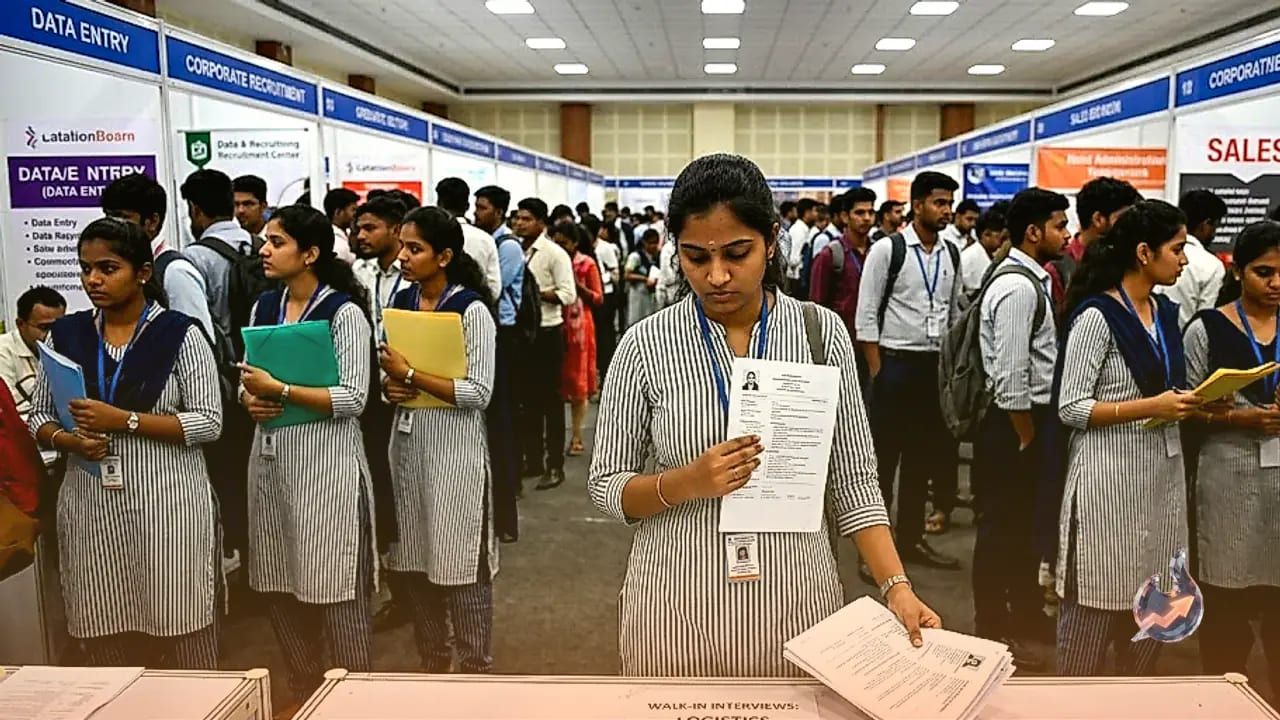
NEW DELHI: Only 8.25 per cent of India's graduates work in jobs that match their qualifications, a new NITI Aayog report has found, flagging a deepening disconnect between what colleges teach and what employers need. The report, titled 'Reimagining Skilling for Viksit Bharat@2047' and released in August, warns that graduate unemployment has climbed to 13 per cent — more than four times the national average of 3.2 per cent.
The NITI Aayog analysis, which draws on Economic Survey 2024-25 data, finds the crisis is sharpest for women: 20.4 per cent of women graduates are unemployed. It estimates that about 3.4 crore undergraduates are enrolled nationwide, with more than 2 crore pursuing BA, BSc and BCom programmes that often have weak direct links to employment. The scramble for secure work is visible in government hiring too — the report notes 1.86 crore applicants chasing roughly 55,000 openings.
What the NITI Aayog Report Found
At the heart of the NITI Aayog findings is a curriculum problem. Outdated syllabi, scarce practical training and weak labour-market information leave graduates underprepared, the report says, while placement-linked and apprenticeship pathways remain limited or unaffordable. Students from low-income households often cannot afford additional skilling alongside college fees and private tuition; some take low-paying jobs for stability, while others struggle to enter the workforce at all. The result is widespread underemployment — and a skills gap India can ill afford as it chases its 2047 development goals.
Graduate Unemployment Hits 13 Per Cent
The 13 per cent graduate unemployment figure stands out against the 3.2 per cent national unemployment rate, underscoring how educated joblessness has become a distinct crisis. A March 2026 NITI Aayog working paper had already noted the tension: employability reached 70-78 per cent in professional institutions and 55-58 per cent among university-college graduates in 2025, yet employers still report graduates lacking workplace-ready skills. The report adds that graduates who acquire additional skills earn on average Rs 7,000 more in monthly starting salary — evidence that targeted training pays.
Fixing the Skills Gap India Faces
To close the divide, the NITI Aayog report recommends integrating employability and entrepreneurship skills from Classes 6 to 12, specialised vocational 'Kaushal Tracks' from Class 9, apprenticeship-embedded degree programmes, stronger public-private partnerships, a National Credit Framework and a Digital Skills Passport to track learning and work experience. It also takes aim at the social stigma around vocational education: fewer than one in 12 secondary schools currently offer vocational subjects, and ITI and diploma pathways are still widely seen as second-tier options. Finance Minister Nirmala Sitharaman has separately called for a revamp of the skilling architecture, echoing the report's Viksit Bharat skilling proposals.
Can the NITI Aayog Skilling Blueprint Deliver?
Whether the Viksit Bharat skilling blueprint translates into jobs will depend on implementation and industry buy-in, the report acknowledges. Proposals for a national credit and skills passport, modular delivery and published placement records still need university adoption and measurable industry partnerships. The NITI Aayog has framed the moment as a reset of the debate on educated unemployment — but with 8.7 crore young Indians already outside education, employment and training, the window for incremental reform is narrowing. The report makes one thing clear: the Viksit Bharat skilling push must move from paper to placements, and fast.